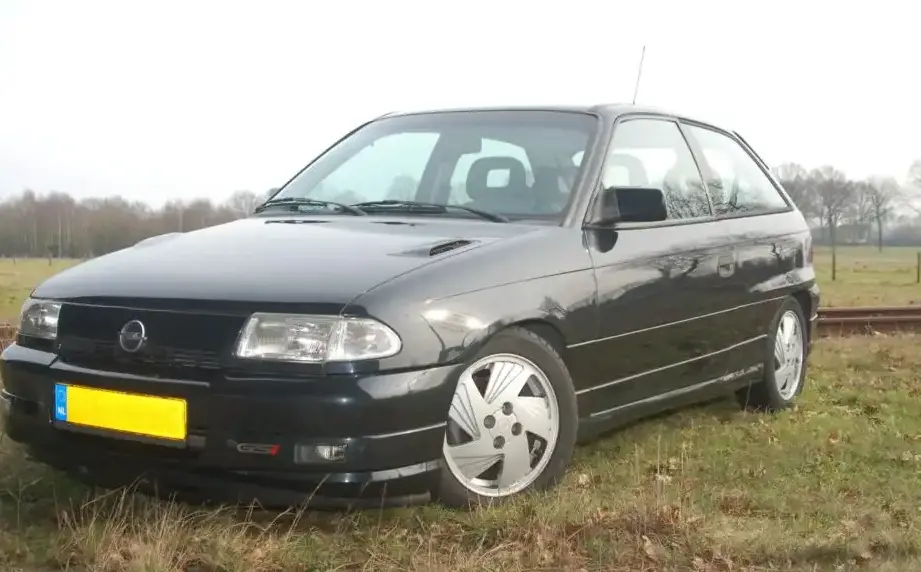
The Opel Astra G Cabrio 2.2 DTI, produced between July 2002 and June 2005, represented a compelling offering in the European compact convertible market. This variant, powered by a 2.2-liter turbocharged diesel engine, aimed to provide a blend of reasonable performance, fuel efficiency, and open-air driving enjoyment. It sat within the broader Astra G Cabrio range, which itself was based on the Astra G (H-platform) and offered a more affordable alternative to premium convertibles. The 2.2 DTI was positioned as a mid-range option, offering more power and refinement than the base petrol engines, but at a lower price point than the more powerful, and often petrol-fueled, higher trim levels.
Technical Specifications
| Brand | Opel |
| Model | Astra |
| Generation | Astra G Cabrio |
| Type (Engine) | 2.2 DTI (125 Hp) |
| Start of production | July, 2002 |
| End of production | June, 2005 |
| Powertrain Architecture | Internal Combustion engine |
| Body type | Cabriolet |
| Seats | 4 |
| Doors | 2 |
| Fuel consumption (urban) | 8.9 l/100 km (26.4 US mpg, 31.7 UK mpg, 11.2 km/l) |
| Fuel consumption (extra urban) | 5.1 l/100 km (46.1 US mpg, 55.4 UK mpg, 19.6 km/l) |
| Fuel consumption (combined) | 6.5 l/100 km (36.2 US mpg, 43.5 UK mpg, 15.4 km/l) |
| CO2 emissions | 176 g/km |
| Fuel Type | Diesel |
| Acceleration 0 – 100 km/h | 11 sec |
| Acceleration 0 – 62 mph | 11 sec |
| Acceleration 0 – 60 mph | 10.5 sec |
| Maximum speed | 205 km/h (127.38 mph) |
| Emission standard | Euro 3 |
| Weight-to-power ratio | 11.4 kg/Hp, 87.4 Hp/tonne |
| Weight-to-torque ratio | 5.1 kg/Nm, 195.8 Nm/tonne |
| Power | 125 Hp @ 4000 rpm |
| Power per litre | 57.6 Hp/l |
| Torque | 280 Nm @ 1500-2750 rpm (206.52 lb.-ft. @ 1500-2750 rpm) |
| Engine layout | Front, Transverse |
| Engine Model/Code | Y22DTR |
| Engine displacement | 2171 cm3 (132.48 cu. in.) |
| Number of cylinders | 4 |
| Engine configuration | Inline |
| Cylinder Bore | 84 mm (3.31 in.) |
| Piston Stroke | 98 mm (3.86 in.) |
| Compression ratio | 18.5:1 |
| Number of valves per cylinder | 4 |
| Fuel injection system | Diesel Commonrail |
| Engine aspiration | Turbocharger, Intercooler |
| Valvetrain | SOHC |
| Engine oil capacity | 5.5 l (5.81 US qt | 4.84 UK qt) |
| Coolant | 7.9 l (8.35 US qt | 6.95 UK qt) |
| Kerb Weight | 1430 kg (3152.61 lbs.) |
| Max. weight | 1850 kg (4078.55 lbs.) |
| Max load | 420 kg (925.94 lbs.) |
| Trunk (boot) space – minimum | 330 l (11.65 cu. ft.) |
| Fuel tank capacity | 52 l (13.74 US gal | 11.44 UK gal) |
| Length | 4267 mm (167.99 in.) |
| Width | 1709 mm (67.28 in.) |
| Width including mirrors | 1989 mm (78.31 in.) |
| Height | 1390 mm (54.72 in.) |
| Wheelbase | 2606 mm (102.6 in.) |
| Front track | 1474 mm (58.03 in.) |
| Rear (Back) track | 1462 mm (57.56 in.) |
| Front overhang | 812 mm (31.97 in.) |
| Rear overhang | 849 mm (33.43 in.) |
| Drag coefficient (Cd) | 0.30 |
| Minimum turning circle | 11 m (36.09 ft.) |
| Drivetrain Architecture | ICE drives front wheels |
| Drive wheel | Front wheel drive |
| Number of gears | 5 gears, manual transmission |
| Front suspension | Independent, McPherson with coil spring and anti-roll bar |
| Rear suspension | Semi-independent, coil spring |
| Front brakes | Ventilated discs |
| Rear brakes | Disc |
| Assisting systems | ABS |
| Steering type | Steering rack and pinion |
| Power steering | Hydraulic |
| Tires size | 205/50 R16 |
| Wheel rims size | 7J x 16 |
INTRODUCTION
The Opel Astra G Cabrio 2.2 DTI, launched in 2002, was a key component of Opel’s strategy to offer a diverse range of convertible options. Building upon the success of the Astra G hatchback and saloon, the Cabrio version provided an affordable entry point into the convertible market. The 2.2 DTI variant, utilizing Opel’s Y22DTR engine, was introduced to cater to drivers seeking improved fuel economy and torque compared to the petrol alternatives. This model year saw updates to the Astra G range, including refinements to the Cabriolet’s chassis and interior. The Astra G Cabrio competed with rivals such as the Peugeot 307 CC and Renault Megane Cabriolet, offering a slightly more practical and traditionally styled alternative.
Powertrain & Engine Architecture
The heart of the Astra G Cabrio 2.2 DTI is the Y22DTR engine, a 2.2-liter inline-four cylinder diesel. This engine is a direct injection common rail diesel, meaning fuel is delivered to the cylinders at extremely high pressure via a common rail system, optimizing combustion. The Y22DTR features a single overhead camshaft (SOHC) valvetrain operating four valves per cylinder. A turbocharger with an intercooler is employed to boost power output and improve torque across the rev range. The engine produces 125 horsepower at 4000 rpm and a substantial 280 Nm (206.52 lb-ft) of torque between 1500 and 2750 rpm. The engine was paired with a five-speed manual transmission, providing a balance between fuel efficiency and driver engagement. While an automatic transmission was available on other Astra G models, it was not offered with the 2.2 DTI engine.
Driving Characteristics
The 2.2 DTI-equipped Astra G Cabrio offered a distinctly different driving experience compared to its petrol-powered siblings. The high torque output of the diesel engine meant strong acceleration from low speeds, making it well-suited for everyday driving and overtaking maneuvers. While not a sports car, the 2.2 DTI could reach 0-60 mph in approximately 10.5 seconds and achieve a top speed of 127.38 mph. The five-speed manual transmission provided precise gear changes, and the gear ratios were optimized for maximizing fuel efficiency and torque delivery. Compared to the 1.8-liter petrol versions, the 2.2 DTI felt more relaxed at highway speeds, requiring less frequent gear changes. However, it lacked the high-revving enthusiasm of the petrol engines.
Equipment & Trim Levels
The Astra G Cabrio 2.2 DTI typically came with a reasonable level of standard equipment. This included central locking, electric front windows, power steering, and an ABS anti-lock braking system. Interior upholstery was typically cloth, with options for leather upgrades. Dashboard trim was generally functional and straightforward, reflecting the car’s positioning as an affordable convertible. Optional extras included air conditioning, alloy wheels, a CD player, and a more sophisticated sound system. Higher trim levels, such as the Elegance or Sport, added features like automatic climate control, upgraded interior trim, and sport suspension.
Chassis & Braking
The Astra G Cabrio’s chassis was reinforced compared to the hatchback and saloon versions to compensate for the lack of a fixed roof. Front suspension utilized an independent McPherson strut setup with coil springs and an anti-roll bar, providing a comfortable ride and decent handling. The rear suspension employed a semi-independent torsion beam setup, which was a cost-effective solution that offered acceptable ride quality. Braking duties were handled by ventilated discs at the front and solid discs at the rear. The ABS system provided enhanced braking control, particularly in slippery conditions. The steering was a hydraulic power-assisted rack and pinion system, offering a reasonable level of feel and responsiveness.
Market Reception & Comparison
The Astra G Cabrio 2.2 DTI was generally well-received by automotive critics as a practical and fuel-efficient convertible. The diesel engine was praised for its torque and economy, making it a good choice for long-distance driving. However, some critics noted that the engine was somewhat noisy compared to petrol alternatives. Compared to the 1.8-liter petrol versions, the 2.2 DTI offered better fuel economy and more torque, but at the expense of some refinement. The 2.2 DTI was also more expensive than the base petrol models, but offered a compelling value proposition for drivers prioritizing fuel efficiency and low-speed performance.
Legacy
The Opel Astra G Cabrio 2.2 DTI has proven to be a relatively reliable vehicle, with the Y22DTR engine generally considered durable. Common issues include wear and tear on suspension components and potential problems with the turbocharger. However, with regular maintenance, these engines can cover high mileages. On the used car market, the Astra G Cabrio 2.2 DTI represents an affordable entry point into convertible ownership. Its fuel efficiency and relatively low running costs make it an attractive option for drivers seeking a practical and enjoyable open-top experience. The model remains a popular choice for those seeking a classic European convertible without the high price tag of more premium brands.