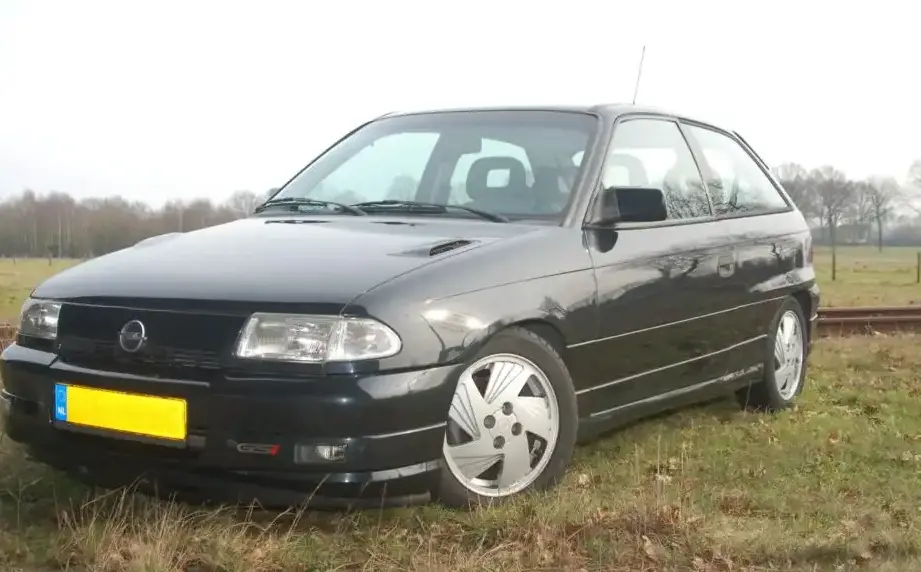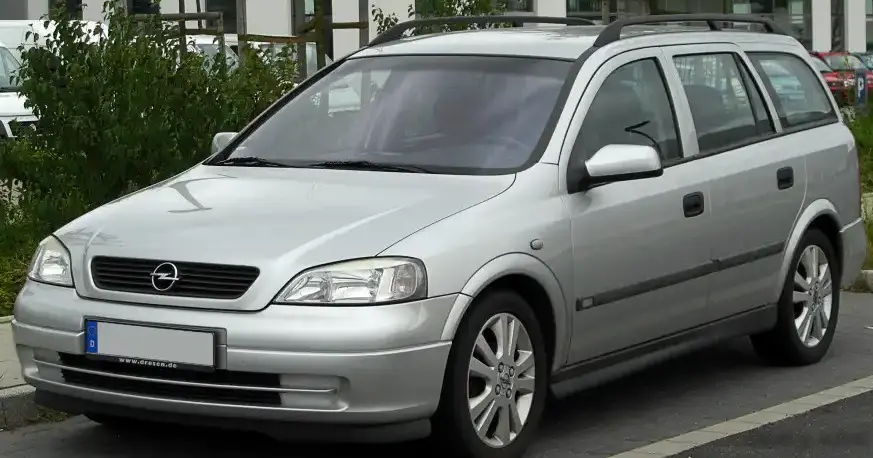
The Opel Astra G Caravan 1.4 Ecotec 16V (90 hp) was a popular station wagon variant produced between 1998 and 2002. Part of the G generation of the Astra, which spanned from 1998 to 2004, the Caravan (estate) body style offered increased practicality compared to the hatchback. This particular engine and transmission combination represented an entry-level offering within the Astra G range, aimed at buyers prioritizing fuel efficiency and affordability over outright performance. It was a common sight on European roads, serving as a family vehicle and light commercial option.
Technical Specifications
| Brand | Opel |
| Model | Astra |
| Generation | Astra G Caravan |
| Type (Engine) | 1.4 Ecotec 16V (90 Hp) |
| Start of production | 1998 |
| End of production | 2002 |
| Powertrain Architecture | Internal Combustion engine |
| Body type | Station wagon (estate) |
| Seats | 5 |
| Doors | 5 |
| Fuel consumption (urban) | 9.8 l/100 km (24 US mpg, 28.8 UK mpg, 10.2 km/l) |
| Fuel consumption (extra urban) | 6 l/100 km (39.2 US mpg, 47.1 UK mpg, 16.7 km/l) |
| Fuel consumption (combined) | 7.4 l/100 km (31.8 US mpg, 38.2 UK mpg, 13.5 km/l) |
| Fuel Type | Petrol (Gasoline) |
| Acceleration 0 – 100 km/h | 13 sec |
| Acceleration 0 – 62 mph | 13 sec |
| Acceleration 0 – 60 mph | 12.4 sec |
| Maximum speed | 175 km/h (108.74 mph) |
| Weight-to-power ratio | 12.1 kg/Hp, 82.6 Hp/tonne |
| Weight-to-torque ratio | 8.7 kg/Nm, 114.7 Nm/tonne |
| Power | 90 Hp @ 6000 rpm |
| Power per litre | 64.8 Hp/l |
| Torque | 125 Nm @ 4000 rpm (92.2 lb.-ft. @ 4000 rpm) |
| Engine layout | Front, Transverse |
| Engine Model/Code | X14XE |
| Engine displacement | 1389 cm3 (84.76 cu. in.) |
| Number of cylinders | 4 |
| Engine configuration | Inline |
| Cylinder Bore | 77.6 mm (3.06 in.) |
| Piston Stroke | 73.4 mm (2.89 in.) |
| Compression ratio | 10.5:1 |
| Number of valves per cylinder | 4 |
| Fuel injection system | Multi-port manifold injection |
| Engine aspiration | Naturally aspirated engine |
| Valvetrain | DOHC |
| Engine oil capacity | 3.25 l (3.43 US qt, 2.86 UK qt) |
| Coolant capacity | 6.3 l (6.66 US qt, 5.54 UK qt) |
| Kerb Weight | 1090 kg (2403.04 lbs.) |
| Max. weight | 1610 kg (3549.44 lbs.) |
| Max load | 520 kg (1146.4 lbs.) |
| Trunk (boot) space – minimum | 480 l (16.95 cu. ft.) |
| Trunk (boot) space – maximum | 1500 l (52.97 cu. ft.) |
| Fuel tank capacity | 52 l (13.74 US gal, 11.44 UK gal) |
| Max. roof load | 100 kg (220.46 lbs.) |
| Length | 4288 mm (168.82 in.) |
| Width | 1709 mm (67.28 in.) |
| Width including mirrors | 1989 mm (78.31 in.) |
| Height | 1510 mm (59.45 in.) |
| Wheelbase | 2611 mm (102.8 in.) |
| Front track | 1464 mm (57.64 in.) |
| Rear track | 1452 mm (57.17 in.) |
| Drag coefficient (Cd) | 0.31 |
| Minimum turning circle | 10.8 m (35.43 ft.) |
| Drivetrain Architecture | Front wheel drive |
| Number of gears | 5 |
| Gearbox type | Manual transmission |
| Front suspension | Independent, McPherson with coil spring and anti-roll bar |
| Rear suspension | Semi-independent, coil spring |
| Front brakes | Ventilated discs |
| Rear brakes | Drum |
| Assisting systems | ABS (Anti-lock braking system) |
| Steering type | Steering rack and pinion |
| Power steering | Hydraulic |
| Tires size | 185/65 R15 H |
| Wheel rims size | 6J x 15 ET49 |
INTRODUCTION
The Opel Astra G Caravan 1.4 Ecotec 16V (90 hp) was produced from 1998 to 2002 as part of the Astra G series. Built on the GM/Opel 1HX0 platform (also known as the A3 platform shared with the Zafira), the Caravan offered a practical and affordable option in the compact estate car segment. This variant, powered by the X14XE engine and paired with a five-speed manual transmission, was positioned as the entry point to the Astra G Caravan range, appealing to budget-conscious buyers and those prioritizing fuel economy. It was a common sight throughout Europe, particularly in countries where estate cars held a strong market share.
Powertrain & Engine Architecture
The heart of this Astra variant is the X14XE engine, a 1.4-liter inline-four cylinder petrol engine. This engine belongs to Opel’s Ecotec family, known for its focus on efficiency and reduced emissions. The X14XE features a dual overhead camshaft (DOHC) valvetrain with four valves per cylinder, contributing to improved breathing and power delivery. Fuel is delivered via multi-port fuel injection, managed by a Bosch Motronic engine control unit. The engine produces 90 horsepower at 6000 rpm and 125 Nm (92.2 lb-ft) of torque at 4000 rpm. The five-speed manual transmission provides a relatively long gearing, prioritizing fuel economy over rapid acceleration. The transmission is a standard front-wheel-drive configuration.
Driving Characteristics
The 1.4 Ecotec 16V with the manual transmission delivers a driving experience focused on practicality and economy. Acceleration is modest, taking around 13 seconds to reach 62 mph (100 km/h). The long gearing contributes to a relaxed cruising experience, but requires frequent downshifts when overtaking or climbing hills. Compared to the more powerful 1.6L or 1.8L versions of the Astra G, this variant feels noticeably slower. However, the lighter engine weight contributes to balanced handling. The steering is light and precise, making it easy to maneuver in urban environments. The suspension, while comfortable, isn’t particularly sporty, prioritizing ride quality over dynamic handling.
Equipment & Trim Levels
The 1.4 Ecotec 16V Caravan typically came with a basic level of equipment. Standard features generally included power steering, central locking, electric front windows, and an adjustable steering column. Interior upholstery was typically cloth, with a simple dashboard layout. Optional extras included air conditioning, alloy wheels, a radio/cassette player, and upgraded interior trim. Higher trim levels, such as the ‘Comfort’ or ‘Elegance’ offered additional features like rear electric windows, a sunroof, and more luxurious interior appointments. The base trim was designed to be affordable, with options available for those seeking more comfort and convenience.
Chassis & Braking
The Astra G Caravan utilized an independent McPherson strut suspension setup at the front, providing a comfortable ride and reasonable handling. The rear suspension was a semi-independent torsion beam arrangement, a cost-effective solution that offered adequate stability. Braking duties were handled by ventilated discs at the front and drum brakes at the rear. Anti-lock Braking System (ABS) was standard, enhancing safety by preventing wheel lockup during hard braking. The chassis was designed to provide a balance between comfort and handling, prioritizing stability and ride quality over sporty performance.
Market Reception & Comparison
The Astra G Caravan 1.4 Ecotec 16V was generally well-received as an affordable and practical family car. Critics praised its fuel efficiency and spacious interior, but noted its lack of outright performance. Compared to the 1.6L and 1.8L variants, the 1.4L offered significantly lower running costs but at the expense of acceleration and overall driving enjoyment. The 1.9 TDI diesel version provided superior fuel economy and torque, but came at a higher purchase price. The 1.4L was often seen as a sensible choice for those primarily using the vehicle for commuting and family transport.
Legacy
The X14XE engine, while not known for its high performance, proved to be relatively reliable. Common issues include oil leaks and occasional sensor failures, but these are generally inexpensive to repair. Today, the Astra G Caravan 1.4 Ecotec 16V can be found on the used car market at very affordable prices. It remains a popular choice for first-time car buyers or those seeking a cheap and practical estate car. Its simplicity and relatively low maintenance costs contribute to its continued appeal. While not a collector’s item, it represents a solid and dependable example of a late-1990s/early-2000s European family car.