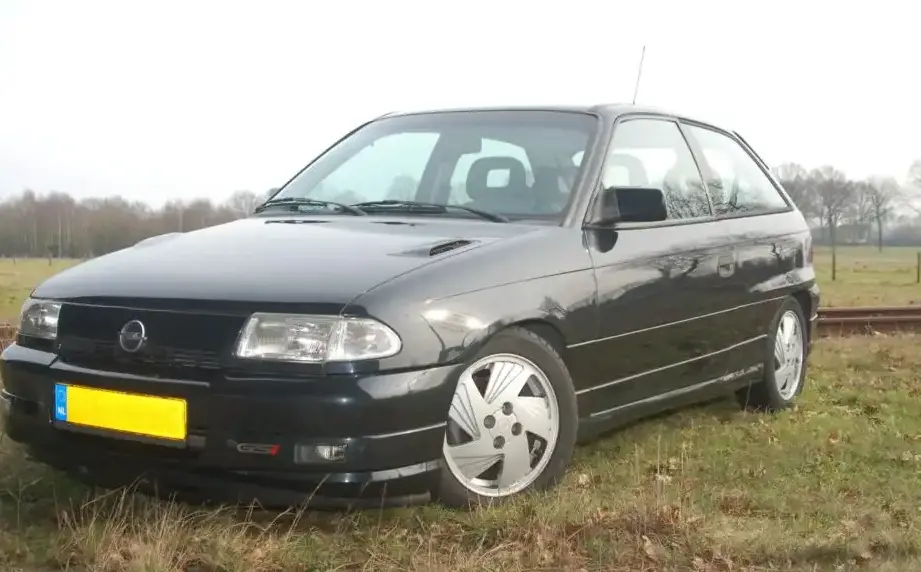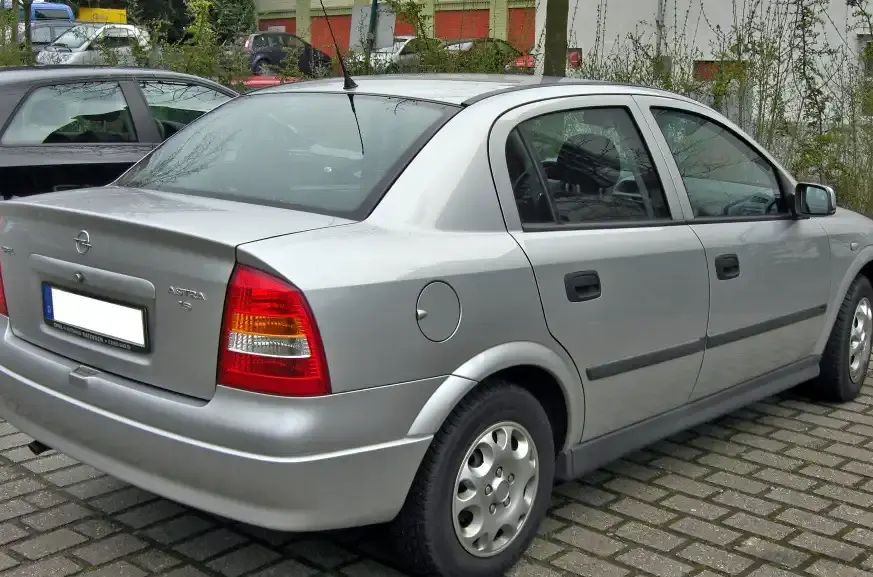
The Opel Astra G Classic 1.4 Ecotec 16V Automatic, produced between 1998 and 2001, represented an entry-level offering within the broader Astra G range. Positioned as a practical and affordable family sedan, it catered to buyers prioritizing economy and ease of use over outright performance. This variant was primarily sold in European markets, where the Astra G competed with rivals like the Ford Focus, Volkswagen Golf, and Peugeot 306. It utilized the GM/Opel T-platform (also known as the 1HX0) shared with other models like the Zafira and Vectra, offering a balance of space and efficiency. The “Classic” designation denoted a simplified, more budget-focused version of the Astra G, typically featuring fewer standard amenities than higher-trim models.
Technical Specifications
| Brand | Opel |
| Model | Astra |
| Generation | Astra G Classic |
| Type (Engine) | 1.4 Ecotec 16V (90 Hp) Automatic |
| Start of production | 1998 |
| End of production | 2001 |
| Powertrain Architecture | Internal Combustion engine |
| Body type | Sedan |
| Seats | 5 |
| Doors | 4 |
| Fuel consumption (urban) | 10.9 l/100 km (21.6 US mpg, 25.9 UK mpg, 9.2 km/l) |
| Fuel consumption (extra urban) | 6.2 l/100 km (37.9 US mpg, 45.6 UK mpg, 16.1 km/l) |
| Fuel consumption (combined) | 7.9 l/100 km (29.8 US mpg, 35.8 UK mpg, 12.7 km/l) |
| Fuel Type | Petrol (Gasoline) |
| Acceleration 0 – 100 km/h | 15 sec |
| Acceleration 0 – 62 mph | 15 sec |
| Acceleration 0 – 60 mph | 14.3 sec |
| Maximum speed | 168 km/h (104.39 mph) |
| Emission standard | Euro 2 |
| Weight-to-power ratio | 12.6 kg/Hp, 79.6 Hp/tonne |
| Weight-to-torque ratio | 9 kg/Nm, 110.6 Nm/tonne |
| Power | 90 Hp @ 6000 rpm |
| Power per litre | 64.8 Hp/l |
| Torque | 125 Nm @ 4000 rpm (92.2 lb.-ft. @ 4000 rpm) |
| Engine layout | Front, Transverse |
| Engine Model/Code | X14XE |
| Engine displacement | 1389 cm3 (84.76 cu. in.) |
| Number of cylinders | 4 |
| Engine configuration | Inline |
| Cylinder Bore | 77.6 mm (3.06 in.) |
| Piston Stroke | 73.4 mm (2.89 in.) |
| Compression ratio | 10.5:1 |
| Number of valves per cylinder | 4 |
| Fuel injection system | Multi-port manifold injection |
| Engine aspiration | Naturally aspirated engine |
| Valvetrain | DOHC |
| Engine oil capacity | 3.25 l (3.43 US qt, 2.86 UK qt) |
| Coolant capacity | 6.3 l (6.66 US qt, 5.54 UK qt) |
| Kerb Weight | 1130 kg (2491.22 lbs.) |
| Max. weight | 1650 kg (3637.63 lbs.) |
| Max load | 520 kg (1146.4 lbs.) |
| Trunk (boot) space – minimum | 460 l (16.24 cu. ft.) |
| Fuel tank capacity | 52 l (13.74 US gal, 11.44 UK gal) |
| Max. roof load | 100 kg (220.46 lbs.) |
| Permitted towbar download | 75 kg (165.35 lbs.) |
| Length | 4252 mm (167.4 in.) |
| Width | 1709 mm (67.28 in.) |
| Width including mirrors | 1967 mm (77.44 in.) |
| Height | 1425 mm (56.1 in.) |
| Wheelbase | 2606 mm (102.6 in.) |
| Front track | 1464 mm (57.64 in.) |
| Rear track | 1452 mm (57.17 in.) |
| Front overhang | 791 mm (31.14 in.) |
| Rear overhang | 855 mm (33.66 in.) |
| Ride height (ground clearance) | 130 mm (5.12 in.) |
| Drag coefficient (Cd) | 0.29 |
| Minimum turning circle | 10.8 m (35.43 ft.) |
| Drivetrain | Front wheel drive |
| Number of gears and type of gearbox | 4 gears, automatic transmission |
| Front suspension | Independent, type McPherson with coil spring and anti-roll bar |
| Rear suspension | Semi-independent, coil spring |
| Front brakes | Ventilated discs |
| Rear brakes | Drum |
| Assisting systems | ABS (Anti-lock braking system) |
| Steering type | Steering rack and pinion |
| Power steering | Hydraulic Steering |
| Tires size | 185/65 R15 |
| Wheel rims size | 6.5J x 15 |
Powertrain & Engine Architecture
The heart of the Astra G Classic 1.4 Automatic is the X14XE engine, a 1.4-liter inline-four cylinder petrol engine. This engine belongs to Opel’s Ecotec family, known for its focus on fuel efficiency and reduced emissions. The X14XE features a dual overhead camshaft (DOHC) valvetrain with four valves per cylinder, contributing to improved breathing and power delivery. Fuel is delivered via multi-point fuel injection, managed by a Bosch Motronic engine control unit (ECU). The engine’s 16 valves and relatively high 10.5:1 compression ratio helped it produce 90 horsepower at 6000 rpm and 125 Nm (92.2 lb-ft) of torque at 4000 rpm. Paired with this engine was a four-speed automatic transmission, offering convenient shifting but sacrificing some of the responsiveness found in manual versions. This transmission was a common GM unit, known for its reliability but not particularly advanced in terms of gear ratios or shift smoothness.
Driving Characteristics
The 1.4 Ecotec Automatic Astra G Classic offered a comfortable, if uninspiring, driving experience. Acceleration was modest, taking around 15 seconds to reach 62 mph (100 km/h). The automatic transmission, while convenient, resulted in noticeable power loss compared to the five-speed manual version. Gear changes were not particularly quick or refined, and the transmission tended to hold onto gears for longer to maximize fuel economy. The car was best suited for urban driving and relaxed highway cruising, where its fuel efficiency and comfortable ride were appreciated. Compared to the more powerful 1.6 or 1.8-liter versions, the 1.4 Automatic lacked the punch needed for spirited driving or overtaking maneuvers. The relatively long gear ratios further emphasized the engine’s focus on economy over performance.
Equipment & Trim Levels
The Astra G Classic 1.4 Automatic typically came with a basic level of equipment. Standard features generally included power steering, central locking, electric front windows, and an adjustable steering column. Interior upholstery was typically cloth, and the dashboard featured a simple, functional design. Optional extras included air conditioning, alloy wheels, and a radio/cassette player. The “Classic” trim level generally omitted some of the more luxurious features found in higher-spec Astra G models, such as upgraded interior trim, rear electric windows, and more advanced audio systems. Safety features were also relatively basic, typically including driver and passenger airbags and ABS brakes.
Chassis & Braking
The Astra G Classic featured a McPherson strut front suspension and a semi-independent coil spring rear suspension. This setup provided a comfortable ride, but handling was not particularly sporty. The front suspension incorporated an anti-roll bar to reduce body roll during cornering. Braking duties were handled by ventilated discs at the front and drum brakes at the rear. ABS (Anti-lock Braking System) was standard, enhancing braking performance and stability, particularly on slippery surfaces. The relatively lightweight nature of the 1.4-liter model helped to compensate for the less powerful braking system.
Market Reception & Comparison
The Astra G Classic 1.4 Automatic was generally well-received as an affordable and practical family car. Critics praised its fuel efficiency and comfortable ride, but noted its lack of performance. Compared to the 1.6-liter and 1.8-liter versions, the 1.4 Automatic offered significantly lower running costs but at the expense of driving enjoyment. The 1.9 TDI diesel version, while more expensive to purchase, offered superior fuel economy and torque. The automatic transmission was seen as a convenience feature, but many buyers opted for the manual gearbox to improve performance and fuel economy. Reliability was generally good, although the automatic transmission could be prone to issues if not properly maintained.
Legacy
The Opel Astra G Classic 1.4 Ecotec Automatic remains a relatively common sight on used car markets today. The X14XE engine is known for its durability and relatively low maintenance costs. However, age-related issues such as corrosion and wear and tear on suspension components are common. The automatic transmission, while generally reliable, may require servicing or rebuilding after high mileage. Despite its modest performance, the Astra G Classic 1.4 Automatic continues to appeal to buyers seeking an affordable, practical, and fuel-efficient family car. Its simplicity and relatively low running costs make it a viable option for those on a budget.