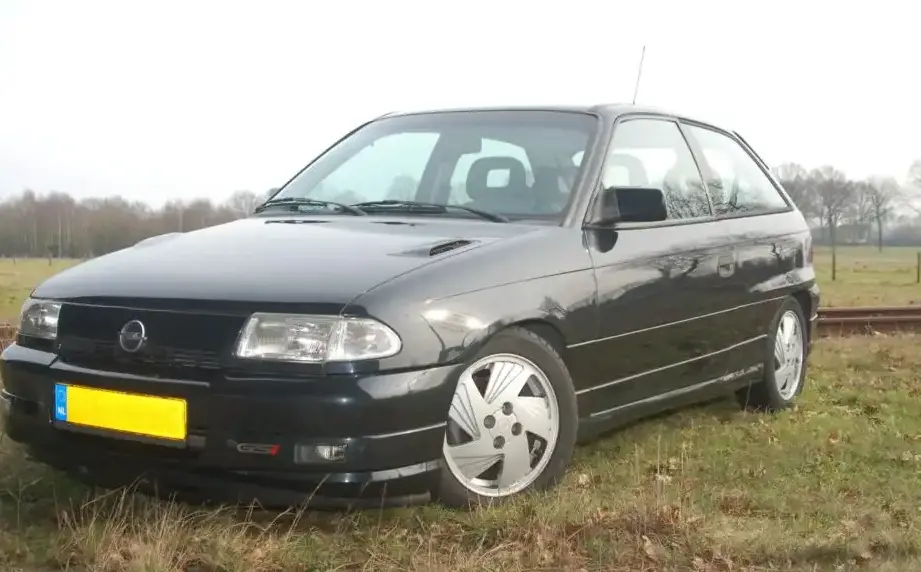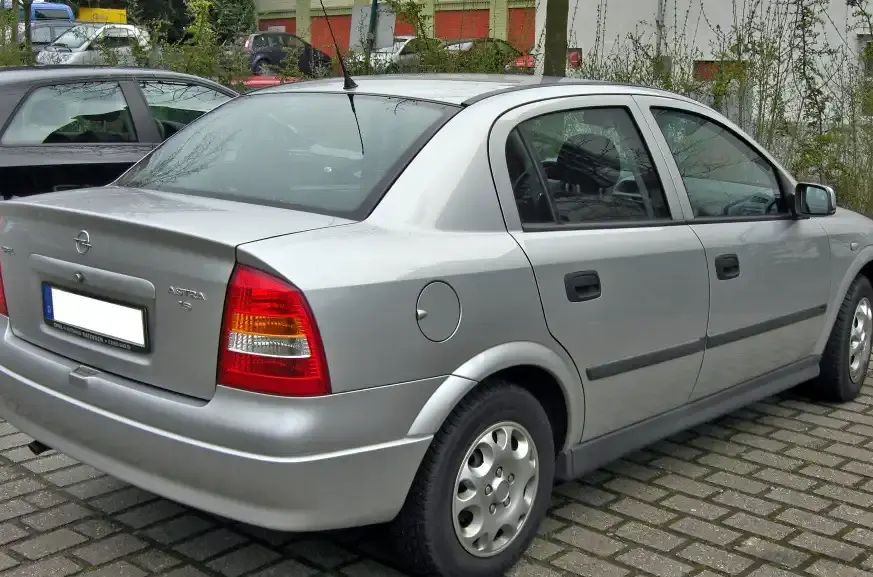
The Opel Astra G Classic 1.6 (75 hp) Automatic, produced between October 1998 and June 2000, represented an entry-level offering within the broader Astra G Classic range. Positioned as a practical and affordable sedan, it catered to buyers prioritizing economy and ease of use over outright performance. This variant was primarily sold in European markets, where the Astra G Classic served as a budget-friendly alternative to more modern and expensive competitors. It was a key part of Opel’s strategy to maintain market share in the compact sedan segment, offering a familiar and reliable package to cost-conscious consumers. The Astra G Classic itself was a continuation of the popular Astra G series, simplified to reduce production costs and offer a lower price point.
Technical Specifications
| Brand | Opel |
| Model | Astra |
| Generation | Astra G Classic |
| Type (Engine) | 1.6 (75 Hp) Automatic |
| Start of production | October, 1998 |
| End of production | June, 2000 |
| Powertrain Architecture | Internal Combustion engine |
| Body type | Sedan |
| Seats | 5 |
| Doors | 4 |
| Fuel consumption (urban) | 10.9 l/100 km (21.6 US mpg, 25.9 UK mpg, 9.2 km/l) |
| Fuel consumption (extra urban) | 6.2 l/100 km (37.9 US mpg, 45.6 UK mpg, 16.1 km/l) |
| Fuel consumption (combined) | 7.9 l/100 km (29.8 US mpg, 35.8 UK mpg, 12.7 km/l) |
| Fuel Type | Petrol (Gasoline) |
| Acceleration 0 – 100 km/h | 16.5 sec |
| Acceleration 0 – 62 mph | 16.5 sec |
| Acceleration 0 – 60 mph | 15.7 sec |
| Maximum speed | 163 km/h (101.28 mph) |
| Weight-to-power ratio | 15 kg/Hp, 66.7 Hp/tonne |
| Weight-to-torque ratio | 8.8 kg/Nm, 113.8 Nm/tonne |
| Power | 75 Hp @ 5200 rpm |
| Power per litre | 46.9 Hp/l |
| Torque | 128 Nm @ 2800 rpm (94.41 lb.-ft. @ 2800 rpm) |
| Engine layout | Front, Transverse |
| Engine Model/Code | X16SZR |
| Engine displacement | 1598 cm3 (97.52 cu. in.) |
| Number of cylinders | 4 |
| Engine configuration | Inline |
| Cylinder Bore | 79 mm (3.11 in.) |
| Piston Stroke | 81.5 mm (3.21 in.) |
| Compression ratio | 9.6:1 |
| Number of valves per cylinder | 4 |
| Fuel injection system | Multi-port manifold injection |
| Engine aspiration | Naturally aspirated engine |
| Valvetrain | SOHC |
| Engine oil capacity | 3.25 l (3.43 US qt | 2.86 UK qt) |
| Coolant | 5.8 l (6.13 US qt | 5.1 UK qt) |
| Kerb Weight | 1125 kg (2480.2 lbs.) |
| Max. weight | 1645 kg (3626.6 lbs.) |
| Max load | 520 kg (1146.4 lbs.) |
| Trunk (boot) space – minimum | 460 l (16.24 cu. ft.) |
| Fuel tank capacity | 52 l (13.74 US gal | 11.44 UK gal) |
| Max. roof load | 100 kg (220.46 lbs.) |
| Permitted towbar download | 75 kg (165.35 lbs.) |
| Length | 4252 mm (167.4 in.) |
| Width | 1709 mm (67.28 in.) |
| Width including mirrors | 1967 mm (77.44 in.) |
| Height | 1425 mm (56.1 in.) |
| Wheelbase | 2606 mm (102.6 in.) |
| Front track | 1464 mm (57.64 in.) |
| Rear (Back) track | 1452 mm (57.17 in.) |
| Front overhang | 791 mm (31.14 in.) |
| Rear overhang | 855 mm (33.66 in.) |
| Ride height (ground clearance) | 130 mm (5.12 in.) |
| Drag coefficient (Cd) | 0.29 |
| Minimum turning circle | 10.8 m (35.43 ft.) |
| Drivetrain Architecture | The Internal combustion engine (ICE) drives the front wheels of the vehicle. |
| Drive wheel | Front wheel drive |
| Number of gears and type of gearbox | 4 gears, automatic transmission |
| Front suspension | Independent, type McPherson with coil spring and anti-roll bar |
| Rear suspension | Semi-independent, coil spring |
| Front brakes | Ventilated discs |
| Rear brakes | Drum |
| Assisting systems | ABS (Anti-lock braking system) |
| Steering type | Steering rack and pinion |
| Power steering | Hydraulic Steering |
| Tires size | 185/65 R15 |
| Wheel rims size | 6J x 15 |
Powertrain & Engine Architecture
The Astra G Classic 1.6 Automatic was powered by the Opel X16SZR engine, a 1.6-liter inline-four cylinder gasoline engine. This engine was a relatively simple design, utilizing a single overhead camshaft (SOHC) valvetrain and multi-port fuel injection. The X16SZR produced 75 horsepower at 5200 rpm and 128 Nm (94.41 lb-ft) of torque at 2800 rpm. The engine’s architecture was designed for reliability and affordability, rather than high performance. It featured a compression ratio of 9.6:1. The automatic transmission was a four-speed unit, chosen to provide ease of driving, particularly in urban environments. This transmission was not known for its responsiveness or fuel efficiency compared to manual counterparts, but it aligned with the target audience’s preference for convenience.
Driving Characteristics
The driving experience in the 1.6L Automatic Astra G Classic was characterized by smooth, but unhurried acceleration. The 0-100 km/h (0-62 mph) time of 16.5 seconds reflects its modest power output. The four-speed automatic transmission, while providing comfortable shifts, lacked the close gear ratios found in more modern automatics or manual transmissions. This resulted in a noticeable delay in response when accelerating, and the engine often felt strained during overtaking maneuvers. The gear ratios were optimized for fuel economy rather than performance. Compared to the more powerful 1.8L or diesel variants, the 1.6 Automatic felt significantly slower and less engaging to drive. However, it offered a comfortable ride and predictable handling, making it suitable for everyday commuting.
Equipment & Trim Levels
The 1.6 Automatic trim level typically included basic features such as power steering, central locking, and front airbags. Interior upholstery was generally cloth, with a simple dashboard layout. Air conditioning was often an optional extra, as were features like electric windows and alloy wheels. The Astra G Classic prioritized functionality over luxury, so even higher trim levels within the range remained relatively spartan compared to competitors. The focus was on providing a reliable and affordable vehicle with essential features.
Chassis & Braking
The Astra G Classic 1.6 Automatic utilized a McPherson strut front suspension and a semi-independent coil spring rear suspension. This setup provided a comfortable ride, but wasn’t particularly sporty. The front brakes were ventilated discs, offering adequate stopping power, while the rear brakes were drums, a cost-saving measure common in this segment. ABS (Anti-lock Braking System) was standard, enhancing safety. The suspension was tuned for comfort and stability, rather than aggressive handling. Stabilizer bars were present, but relatively thin compared to those found on higher-performance Astra variants.
Market Reception & Comparison
The Astra G Classic 1.6 Automatic received mixed reviews. Critics acknowledged its affordability and practicality, but often criticized its lack of performance and the sluggishness of the automatic transmission. Fuel economy was considered reasonable for its class, averaging around 7.9 l/100 km (29.8 US mpg). Compared to the 1.8L versions, the 1.6 Automatic offered significantly lower performance but better fuel economy. The diesel variants, while more expensive initially, provided superior fuel efficiency and torque. The 1.6 Automatic appealed to buyers who prioritized low running costs and ease of driving over performance and refinement.
Legacy
The Opel Astra G Classic 1.6 Automatic, while not a particularly exciting vehicle, proved to be a reliable and durable option for many years. The X16SZR engine is known for its robustness, and with proper maintenance, can achieve high mileage. Today, these vehicles are relatively inexpensive to purchase on the used car market, making them attractive to budget-conscious buyers. However, potential buyers should be aware of the age-related issues common to older vehicles, such as corrosion and wear and tear on suspension components. The automatic transmission, while generally reliable, may exhibit signs of wear after extended use. Despite its age, the Astra G Classic 1.6 Automatic remains a testament to Opel’s commitment to providing affordable and practical transportation.