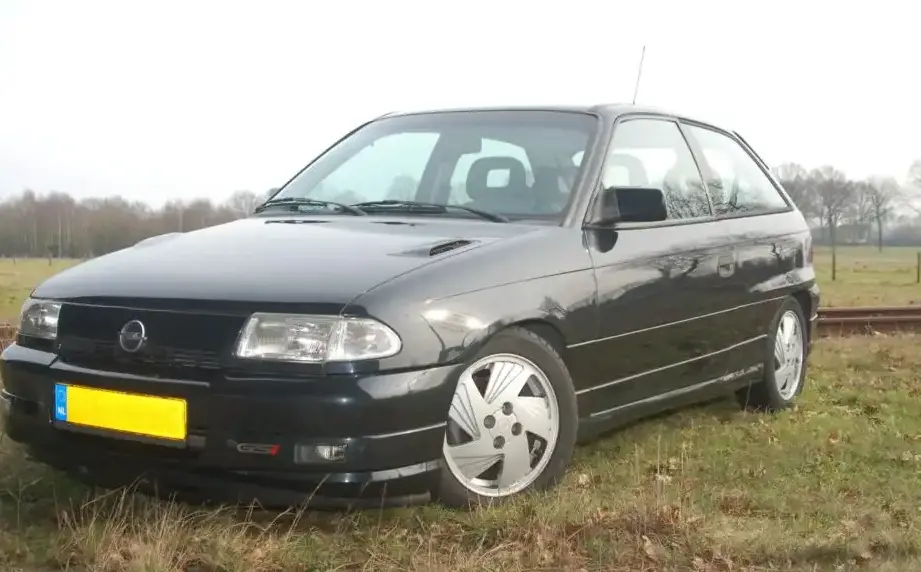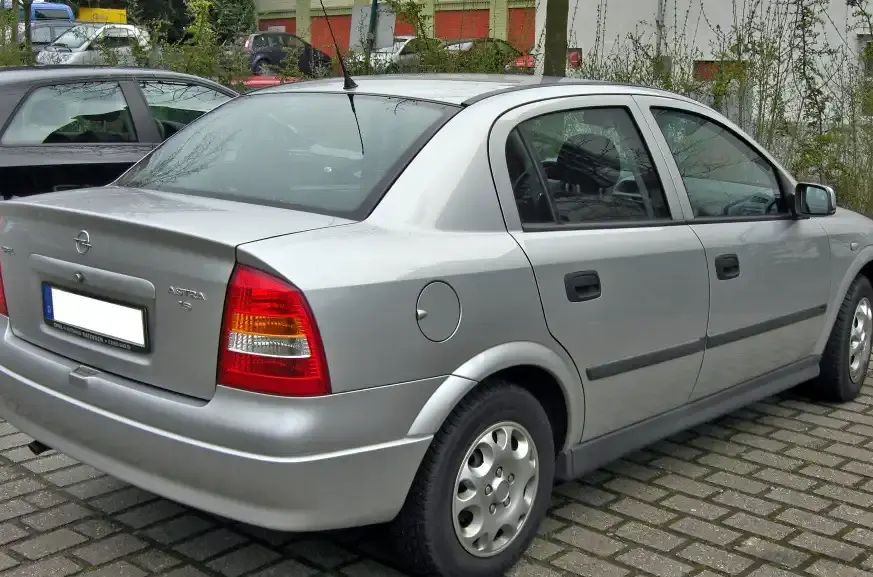
The Opel Astra G Classic 1.6 Ecotec 16V, produced from October 1998 to June 2000, represented a key variant within the broader Astra G Classic range. This model, a four-door sedan, was positioned as a mainstream offering, providing a balance between affordability, fuel efficiency, and practicality for European drivers. It occupied a middle ground in the lineup, slotting below the more powerful 1.8 and 2.0-liter engines, and above the base 1.4-liter models. The Astra G Classic, itself a revision of the original Astra G, aimed to offer a more cost-effective alternative while retaining the core design and engineering of the platform.
Technical Specifications
| Brand | Opel |
| Model | Astra |
| Generation | Astra G Classic |
| Type (Engine) | 1.6 Ecotec 16V (101 Hp) |
| Start of production | October, 1998 |
| End of production | June, 2000 |
| Powertrain Architecture | Internal Combustion engine |
| Body type | Sedan |
| Seats | 5 |
| Doors | 4 |
| Fuel consumption (urban) | 10 l/100 km (23.5 US mpg) |
| Fuel consumption (extra urban) | 5.9 l/100 km (39.9 US mpg) |
| Fuel consumption (combined) | 7.4 l/100 km (31.8 US mpg) |
| CO2 emissions | 178 g/km |
| Fuel Type | Petrol (Gasoline) |
| Acceleration 0 – 100 km/h | 11.5 sec |
| Acceleration 0 – 62 mph | 11.5 sec |
| Acceleration 0 – 60 mph | 10.9 sec |
| Maximum speed | 188 km/h (116.82 mph) |
| Emission standard | Euro 2 |
| Weight-to-power ratio | 11.2 kg/Hp |
| Weight-to-torque ratio | 7.6 kg/Nm |
| Power | 101 Hp @ 6200 rpm |
| Torque | 150 Nm @ 3200 rpm (110.63 lb.-ft. @ 3200 rpm) |
| Engine layout | Front, Transverse |
| Engine Model/Code | X16XEL |
| Engine displacement | 1598 cm3 (97.52 cu. in.) |
| Number of cylinders | 4 |
| Engine configuration | Inline |
| Cylinder Bore | 79 mm (3.11 in.) |
| Piston Stroke | 81.5 mm (3.21 in.) |
| Compression ratio | 10.5:1 |
| Number of valves per cylinder | 4 |
| Fuel injection system | Multi-port manifold injection |
| Engine aspiration | Naturally aspirated engine |
| Valvetrain | DOHC |
| Engine oil capacity | 3.25 l (3.43 US qt | 2.86 UK qt) |
| Coolant capacity | 6.3 l (6.66 US qt | 5.54 UK qt) |
| Kerb Weight | 1135 kg (2502.25 lbs.) |
| Max. weight | 1645 kg (3626.6 lbs.) |
| Max load | 510 kg (1124.36 lbs.) |
| Trunk (boot) space – minimum | 460 l (16.24 cu. ft.) |
| Fuel tank capacity | 52 l (13.74 US gal | 11.44 UK gal) |
| Max. roof load | 100 kg (220.46 lbs.) |
| Permitted towbar download | 75 kg (165.35 lbs.) |
| Length | 4252 mm (167.4 in.) |
| Width | 1709 mm (67.28 in.) |
| Width including mirrors | 1967 mm (77.44 in.) |
| Height | 1425 mm (56.1 in.) |
| Wheelbase | 2606 mm (102.6 in.) |
| Front track | 1464 mm (57.64 in.) |
| Rear track | 1452 mm (57.17 in.) |
| Front overhang | 791 mm (31.14 in.) |
| Rear overhang | 855 mm (33.66 in.) |
| Ride height (ground clearance) | 130 mm (5.12 in.) |
| Drag coefficient (Cd) | 0.29 |
| Minimum turning circle | 10.8 m (35.43 ft.) |
| Drivetrain Architecture | Front wheel drive |
| Number of gears | 5 |
| Gearbox type | Manual transmission |
| Front suspension | Independent, McPherson with coil spring and anti-roll bar |
| Rear suspension | Semi-independent, coil spring |
| Front brakes | Ventilated discs |
| Rear brakes | Drum |
| Assisting systems | ABS (Anti-lock braking system) |
| Steering type | Steering rack and pinion |
| Power steering | Hydraulic |
| Tires size | 185/65 R15 |
| Wheel rims size | 6J x 15 |
Powertrain & Engine Architecture
The heart of the Astra G Classic 1.6 Ecotec was the X16XEL engine, a 1.6-liter inline-four cylinder powerplant. This engine featured multi-port fuel injection and a double overhead camshaft (DOHC) valvetrain, contributing to its relatively efficient operation and respectable power output for its displacement. The ‘Ecotec’ designation signified Opel’s focus on fuel efficiency and reduced emissions. The X16XEL produced 101 horsepower at 6200 rpm and 150 Nm (110.63 lb-ft) of torque at 3200 rpm. The engine’s design prioritized smooth operation and everyday usability over outright performance. The five-speed manual transmission was the standard offering, providing adequate gear ratios for typical driving conditions. The transmission was known for its relatively light shift feel, but wasn’t particularly sporty.
Driving Characteristics
The 1.6-liter engine, paired with the five-speed manual transmission, delivered a driving experience geared towards practicality and economy. Acceleration from 0 to 100 km/h (0-62 mph) took approximately 11.5 seconds, which was adequate for everyday commuting but not particularly brisk. The engine felt most comfortable in the mid-range, providing sufficient power for overtaking maneuvers on open roads. Compared to the more powerful 1.8 and 2.0-liter versions, the 1.6 felt noticeably less responsive, especially at higher speeds. However, the lighter engine weight contributed to slightly better handling and fuel economy. The gear ratios were well-spaced, allowing for comfortable cruising at highway speeds.
Equipment & Trim Levels
The Astra G Classic 1.6 Ecotec 16V typically came equipped with a reasonable level of standard features. These included power steering, central locking, electric front windows, and an adjustable steering column. Interior upholstery was typically cloth, with a functional but basic dashboard layout. Optional extras included air conditioning, alloy wheels, and a radio/cassette player. Higher trim levels, though not specifically tied to the 1.6 engine, could add features like upgraded upholstery, rear electric windows, and a sunroof. The overall interior ambiance was focused on practicality and durability rather than luxury.
Chassis & Braking
The Astra G Classic utilized a McPherson strut front suspension and a semi-independent coil spring rear suspension. This setup provided a comfortable ride quality, suitable for everyday driving. The front brakes were ventilated discs, offering adequate stopping power, while the rear brakes were drums. ABS (Anti-lock Braking System) was standard, enhancing safety. The chassis was designed to balance ride comfort with reasonable handling characteristics. Stabilizer bars were included to reduce body roll during cornering, but the overall handling was not particularly sporty compared to more performance-oriented models.
Market Reception & Comparison
The Astra G Classic 1.6 Ecotec 16V was generally well-received as a sensible and affordable family car. Critics praised its fuel efficiency and comfortable ride, but noted its lack of outright performance. Compared to the 1.8 and 2.0-liter versions, the 1.6 offered a lower purchase price and better fuel economy, but at the expense of acceleration and overall driving excitement. The 1.4-liter models were even more economical but lacked the 1.6’s power. The 1.6 Ecotec represented a sweet spot for buyers prioritizing value and practicality.
Legacy
The X16XEL engine, while not known for being particularly groundbreaking, proved to be a relatively reliable and durable unit. Common issues were generally limited to age-related wear and tear, such as oil leaks and sensor failures. Today, Astra G Classics with the 1.6 Ecotec engine are often found as affordable used cars, appealing to budget-conscious buyers. Parts availability remains reasonably good, making maintenance relatively straightforward. While not a collector’s item, the 1.6 Ecotec variant represents a solid and dependable example of late-1990s European family motoring.