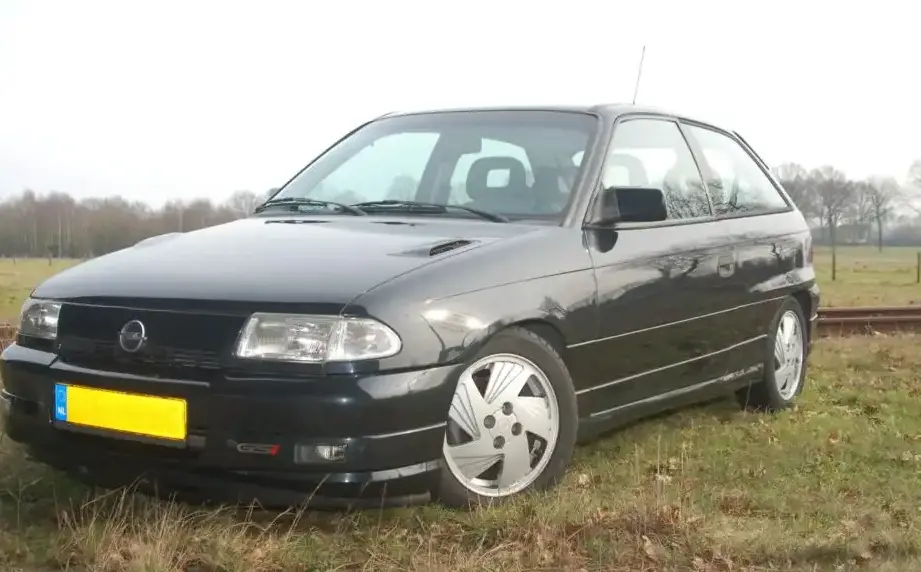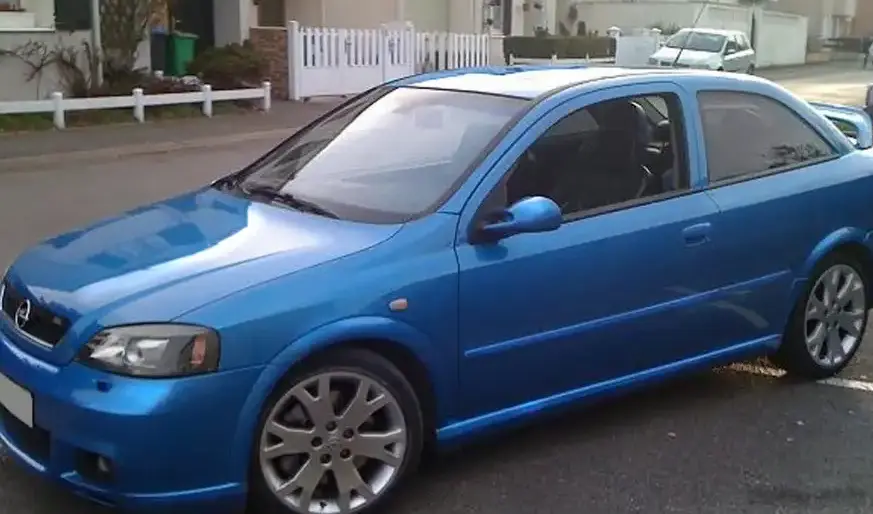
The Opel Astra G (facelift, produced 2002-2004) 1.7 CDTI 80 horsepower variant represented an entry-level diesel option within the broader Astra G range. Introduced in April 2003 and continuing through February 2004, this model aimed to provide fuel efficiency and reasonable performance for everyday commuting and family use. It occupied the lower end of the Astra G’s engine lineup, positioned below the more powerful 2.0L Diesel and petrol variants. The Astra G itself was a significant model for Opel, building upon the success of its predecessors and offering a modern, comfortable, and relatively affordable compact car for the European market.
Technical Specifications
| Brand | Opel |
| Model | Astra |
| Generation | Astra G (facelift 2002) |
| Type (Engine) | 1.7 CDTI (80 Hp) |
| Start of production | April, 2003 |
| End of production | February, 2004 |
| Powertrain Architecture | Internal Combustion engine |
| Body type | Hatchback |
| Seats | 5 |
| Doors | 3-5 |
| Fuel consumption (urban) | 6.1 l/100 km (38.6 US mpg, 46.3 UK mpg, 16.4 km/l) |
| Fuel consumption (extra urban) | 3.8 l/100 km (61.9 US mpg, 74.3 UK mpg, 26.3 km/l) |
| Fuel consumption (combined) | 4.6 l/100 km (51.1 US mpg, 61.4 UK mpg, 21.7 km/l) |
| Fuel Type | Diesel |
| Acceleration 0 – 100 km/h | 14 sec |
| Acceleration 0 – 62 mph | 14 sec |
| Acceleration 0 – 60 mph | 13.3 sec |
| Maximum speed | 173 km/h (107.5 mph) |
| Weight-to-power ratio | 14.8 kg/Hp, 67.5 Hp/tonne |
| Weight-to-torque ratio | 7 kg/Nm, 143.5 Nm/tonne |
| Power | 80 Hp @ 4400 rpm |
| Power per litre | 47.4 Hp/l |
| Torque | 170 Nm @ 1800 rpm (125.39 lb.-ft. @ 1800 rpm) |
| Engine layout | Front, Transverse |
| Engine Model/Code | Z17DTL |
| Engine displacement | 1686 cm3 (102.89 cu. in.) |
| Number of cylinders | 4 |
| Engine configuration | Inline |
| Cylinder Bore | 79 mm (3.11 in.) |
| Piston Stroke | 86 mm (3.39 in.) |
| Compression ratio | 18.4:1 |
| Number of valves per cylinder | 4 |
| Fuel injection system | Diesel Commonrail |
| Engine aspiration | Turbocharger, Intercooler |
| Valvetrain | DOHC |
| Engine oil capacity | 4.5 l (4.76 US qt | 3.96 UK qt) |
| Coolant | 7.1 l (7.5 US qt | 6.25 UK qt) |
| Kerb Weight | 1185 kg (2612.48 lbs.) |
| Max. weight | 1695 kg (3736.84 lbs.) |
| Max load | 510 kg (1124.36 lbs.) |
| Trunk (boot) space – minimum | 370 l (13.07 cu. ft.) |
| Trunk (boot) space – maximum | 1140 l (40.26 cu. ft.) |
| Fuel tank capacity | 52 l (13.74 US gal | 11.44 UK gal) |
| Length | 4110 mm (161.81 in.) |
| Width | 1709 mm (67.28 in.) |
| Width including mirrors | 1967 mm (77.44 in.) |
| Height | 1425 mm (56.1 in.) |
| Wheelbase | 2606 mm (102.6 in.) |
| Front track | 1484 mm (58.43 in.) |
| Rear (Back) track | 1460 mm (57.48 in.) |
| Front overhang | 791 mm (31.14 in.) |
| Rear overhang | 713 mm (28.07 in.) |
| Ride height (ground clearance) | 160 mm (6.3 in.) |
| Drag coefficient (Cd) | 0.32 |
| Drivetrain Architecture | The Internal combustion engine (ICE) drives the front wheels of the vehicle. |
| Drive wheel | Front wheel drive |
| Number of gears and type of gearbox | 5 gears, manual transmission |
| Front suspension | Wishbone |
| Rear suspension | Suspension with traction connecting levers |
| Front brakes | Disc |
| Rear brakes | Drum |
| Assisting systems | ABS (Anti-lock braking system) |
| Steering type | Steering rack and pinion |
| Power steering | Hydraulic Steering |
| Tires size | 195/60 R15 |
| Wheel rims size | 15 |
Powertrain & Engine Architecture
The heart of the Astra G 1.7 CDTI was the Z17DTL engine, a 1.7-liter inline four-cylinder diesel. This engine was part of Opel/Isuzu’s ‘family’ of diesel engines, known for their relatively simple construction and durability. The Z17DTL utilized a common rail direct injection system, delivering fuel directly into the cylinders at extremely high pressure for improved combustion efficiency and reduced emissions. A turbocharger with an intercooler was employed to boost power output, compensating for the relatively small displacement. The engine featured a double overhead camshaft (DOHC) valvetrain with four valves per cylinder, optimizing gas flow. The 5-speed manual transmission was the standard offering, chosen for its efficiency and cost-effectiveness. The engine’s design prioritized fuel economy and low-end torque, rather than outright horsepower.
Driving Characteristics
The 80 horsepower output of the 1.7 CDTI, coupled with the 170 Nm (125 lb-ft) of torque, resulted in a driving experience focused on practicality rather than performance. Acceleration from 0-60 mph took around 13.3 seconds, and top speed was approximately 107.5 mph. While not particularly quick, the engine provided sufficient power for everyday driving, including highway cruising and overtaking. The turbocharger did provide a noticeable boost in power at lower RPMs, making it relatively easy to keep up with traffic. Compared to the more powerful 2.0L Diesel or petrol versions of the Astra G, the 1.7 CDTI felt noticeably slower, especially during acceleration. However, the manual transmission allowed for good control over the engine’s power band, and the relatively light weight of the car helped to mitigate the lack of horsepower.
Equipment & Trim Levels
The 1.7 CDTI variant of the Astra G typically came with a fairly basic level of equipment, reflecting its position as an entry-level model. Standard features generally included power steering, ABS brakes, a driver’s airbag, and central locking. Interior upholstery was typically cloth, and the dashboard featured a simple, functional design. Optional extras included air conditioning, alloy wheels, a CD player, and electric windows. Trim levels varied slightly depending on the market, but the 1.7 CDTI was generally offered in a single, relatively standardized specification.
Chassis & Braking
The Astra G 1.7 CDTI utilized a conventional front-wheel-drive chassis with a MacPherson strut front suspension and a torsion beam rear suspension. The braking system consisted of disc brakes on the front wheels and drum brakes on the rear wheels. This configuration was typical for cars in this weight class and price range. The suspension provided a comfortable ride, although it wasn’t particularly sporty. The ABS system helped to improve braking performance and stability, especially in wet or slippery conditions.
Market Reception & Comparison
The Astra G 1.7 CDTI was generally well-received by critics as a fuel-efficient and affordable option. It was praised for its low running costs and practicality, but criticized for its lack of performance. Compared to the more powerful Astra G variants, the 1.7 CDTI offered significantly better fuel economy, but at the expense of acceleration and overall driving enjoyment. It competed with other small diesel hatchbacks, such as the Volkswagen Golf TDI and the Ford Focus TDCi, offering a similar blend of fuel efficiency and affordability.
Legacy
The Z17DTL engine, while not known for being particularly exciting, proved to be a reliable and durable unit. Many Astra G 1.7 CDTI models have remained on the road for many years, testament to the engine’s robust construction. In the used car market, these models are often sought after by buyers looking for an affordable and fuel-efficient vehicle. However, potential buyers should be aware of the age of the vehicles and the potential for wear and tear on components such as the turbocharger and fuel injection system. Overall, the Opel Astra G 1.7 CDTI 80 horsepower variant represents a practical and economical choice for those seeking a reliable and affordable compact car.