Technical Specifications
| Brand | Opel |
| Model | Astra |
| Generation | Astra G |
| Type | OPC 2.0 16V (160 Hp) |
| Start of production | August, 1999 |
| End of production | May, 2001 |
| Powertrain Architecture | Internal Combustion engine |
| Body type | Hatchback |
| Seats | 5 |
| Doors | 3 |
| Fuel consumption (urban) | 13.2 l/100 km (17.8 US mpg, 21.4 UK mpg, 7.6 km/l) |
| Fuel consumption (extra urban) | 6.8 l/100 km (34.6 US mpg, 41.5 UK mpg, 14.7 km/l) |
| Fuel consumption (combined) | 9.2 l/100 km (25.6 US mpg, 30.7 UK mpg, 10.9 km/l) |
| CO2 emissions | 222 g/km |
| Fuel Type | Petrol (Gasoline) |
| Acceleration 0 – 100 km/h | 8.2 sec |
| Acceleration 0 – 62 mph | 8.2 sec |
| Acceleration 0 – 60 mph | 7.8 sec |
| Maximum speed | 220 km/h (136.7 mph) |
| Weight-to-power ratio | 7.1 kg/Hp, 141 Hp/tonne |
| Weight-to-torque ratio | 6 kg/Nm, 165.6 Nm/tonne |
| Power | 160 Hp @ 6500 rpm |
| Power per litre | 80.1 Hp/l |
| Torque | 188 Nm @ 4300 rpm (138.66 lb.-ft. @ 4300 rpm) |
| Engine layout | Front, Transverse |
| Engine Model/Code | X20XER |
| Engine displacement | 1998 cm3 (121.93 cu. in.) |
| Number of cylinders | 4 |
| Engine configuration | Inline |
| Cylinder Bore | 86 mm (3.39 in.) |
| Piston Stroke | 86 mm (3.39 in.) |
| Compression ratio | 10.8:1 |
| Number of valves per cylinder | 4 |
| Fuel injection system | Multi-port manifold injection |
| Engine aspiration | Naturally aspirated engine |
| Valvetrain | DOHC |
| Engine oil capacity | 5.25 l (5.55 US qt | 4.62 UK qt) |
| Coolant | 6.7 l (7.08 US qt | 5.9 UK qt) |
| Kerb Weight | 1135 kg (2502.25 lbs.) |
| Max. weight | 1685 kg (3714.79 lbs.) |
| Max load | 550 kg (1212.54 lbs.) |
| Trunk (boot) space – minimum | 370 l (13.07 cu. ft.) |
| Trunk (boot) space – maximum | 1180 l (41.67 cu. ft.) |
| Fuel tank capacity | 52 l (13.74 US gal | 11.44 UK gal) |
| Max. roof load | 100 kg (220.46 lbs.) |
| Permitted towbar download | 75 kg (165.35 lbs.) |
| Length | 4110 mm (161.81 in.) |
| Width | 1709 mm (67.28 in.) |
| Width including mirrors | 1989 mm (78.31 in.) |
| Height | 1405 mm (55.31 in.) |
| Wheelbase | 2606 mm (102.6 in.) |
| Front track | 1488 mm (58.58 in.) |
| Rear (Back) track | 1476 mm (58.11 in.) |
| Front overhang | 791 mm (31.14 in.) |
| Rear overhang | 713 mm (28.07 in.) |
| Drag coefficient (Cd) | 0.28 |
| Minimum turning circle | 11.6 m (38.06 ft.) |
| Drivetrain Architecture | The Internal combustion engine (ICE) drives the front wheels of the vehicle. |
| Drive wheel | Front wheel drive |
| Number of gears and type of gearbox | 5 gears, manual transmission |
| Front suspension | Independent, type McPherson with coil spring and anti-roll bar |
| Rear suspension | Semi-independent, coil spring |
| Front brakes | Ventilated discs |
| Rear brakes | Disc |
| Assisting systems | ABS (Anti-lock braking system) |
| Steering type | Steering rack and pinion |
| Power steering | Electric Steering |
| Tires size | 215/40 R17 V |
| Wheel rims size | 7.5J x 17 ET45 |
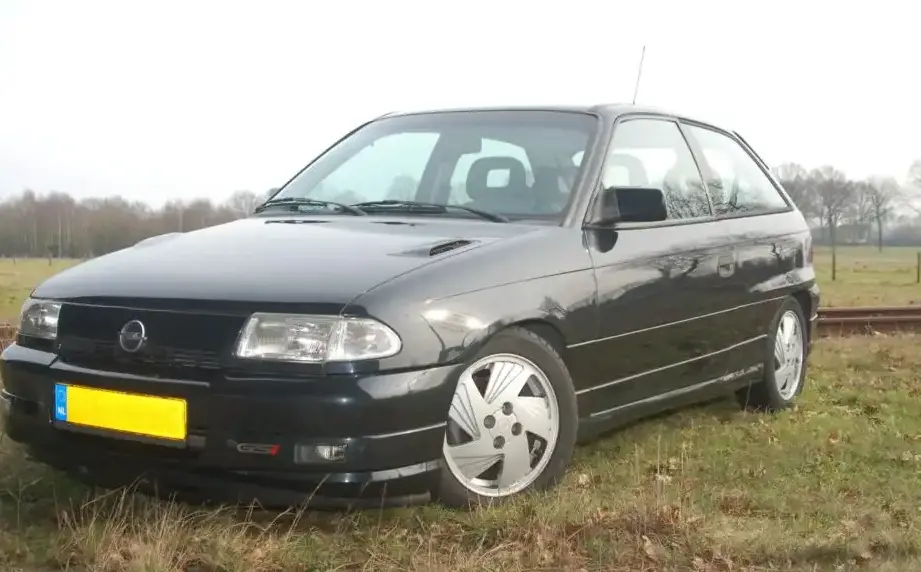
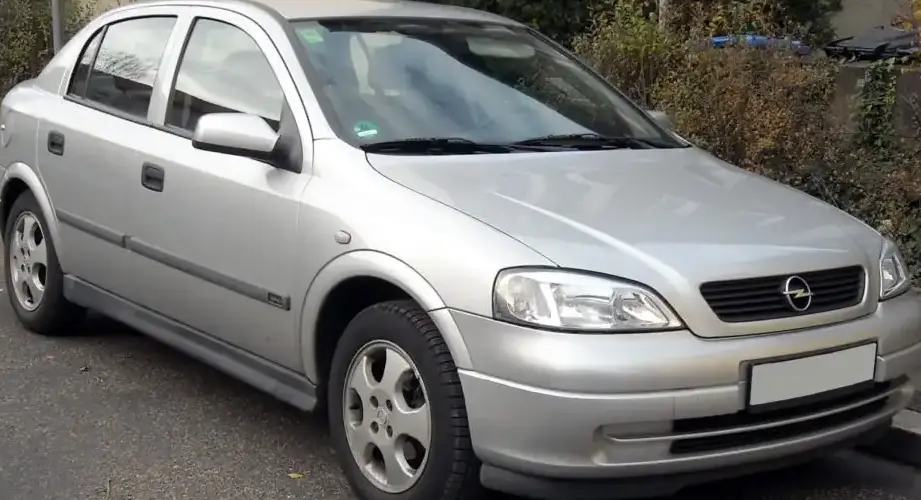
The Opel Astra G OPC 2.0 16V, produced between August 1999 and May 2001, was the high-performance variant of the Astra G (1998-2004) hatchback. Positioned as the flagship model within the Astra G range, the OPC (Opel Performance Center) offered a significantly more engaging driving experience than the standard trims. It was primarily marketed in Europe, serving as Opel’s answer to rivals like the Volkswagen Golf GTI and Ford Focus ST. The Astra G OPC aimed to deliver a blend of sporty handling, respectable power, and everyday practicality, appealing to enthusiasts seeking a hot hatch.
Powertrain & Engine Architecture
The heart of the Astra G OPC was the X20XER engine, a 2.0-liter, naturally aspirated inline-four cylinder powerplant. This engine was a derivative of the Family II Opel engine series, known for its durability and tuning potential. The X20XER featured a cast iron block and an aluminum cylinder head with dual overhead camshafts (DOHC) and four valves per cylinder. Fuel delivery was handled by a multi-port fuel injection system, providing precise fuel metering for optimal combustion. The compression ratio was set at 10.8:1, contributing to the engine’s responsive nature. The engine produced 160 horsepower at 6500 rpm and 188 Nm (138.66 lb-ft) of torque at 4300 rpm. The engine was mated to a five-speed manual transmission, delivering power to the front wheels. This transmission was chosen for its direct feel and ability to handle the engine’s output.
Driving Characteristics
The Astra G OPC offered a noticeably sharper driving experience compared to the standard Astra G models. The 160 hp engine, while not overwhelming by modern standards, provided brisk acceleration, achieving 0-60 mph in approximately 7.8 seconds. The five-speed manual transmission allowed for precise gear selection, and the relatively short gear ratios kept the engine within its power band. The OPC’s suspension was also significantly upgraded, featuring stiffer springs and dampers, along with a thicker anti-roll bar. This resulted in reduced body roll and improved handling. While the ride quality was firmer than the standard Astra, it remained acceptable for everyday use. The steering was direct and communicative, providing good feedback to the driver.
Equipment & Trim Levels
The Astra G OPC came reasonably well-equipped as standard. Key features included sports seats with distinctive upholstery, a leather-wrapped steering wheel, and alloy wheels. Air conditioning, power windows, and central locking were also standard. Optional extras included a sunroof, upgraded audio system, and metallic paint. The interior design was functional and driver-focused, with a clear instrument cluster and well-placed controls. The OPC’s interior trim was designed to convey a sporty and premium feel, differentiating it from the more basic Astra G trims.
Chassis & Braking
The Astra G OPC’s chassis was reinforced compared to the standard Astra G to handle the increased power and stresses of performance driving. The front suspension utilized McPherson struts with coil springs and an anti-roll bar, while the rear suspension employed a semi-independent torsion beam setup. The braking system featured ventilated discs on the front wheels and solid discs on the rear, providing adequate stopping power. Anti-lock Braking System (ABS) was standard, enhancing safety and control during hard braking. The OPC’s suspension tuning and braking system were designed to work in harmony, delivering a balanced and confident driving experience.
Market Reception & Comparison
The Astra G OPC was generally well-received by automotive critics, who praised its engaging handling, responsive engine, and overall value. It was often compared favorably to rivals such as the Volkswagen Golf GTI and Ford Focus ST. However, some critics noted that the engine lacked the outright punch of some competitors. Fuel economy was also a concern, with combined fuel consumption averaging around 9.2 l/100 km (25.6 US mpg). Compared to the lower-powered Astra G variants, the OPC offered a significant performance upgrade but came with a higher price tag and increased running costs. The 1.6L and 1.8L versions of the Astra G were aimed at buyers prioritizing fuel efficiency and affordability, while the OPC catered to enthusiasts seeking a more dynamic driving experience.
Legacy
The Astra G OPC remains a popular choice among enthusiasts today, particularly those seeking an affordable and engaging hot hatch. The X20XER engine is known for its reliability, although regular maintenance is essential. Common issues include oil leaks and occasional sensor failures. The OPC’s relatively simple mechanical design makes it relatively easy to maintain and repair. In the used car market, well-maintained examples of the Astra G OPC command a premium, reflecting its status as a desirable and capable performance car. It represents a significant chapter in Opel’s performance history, showcasing the brand’s ability to create a fun-to-drive and practical hot hatch.