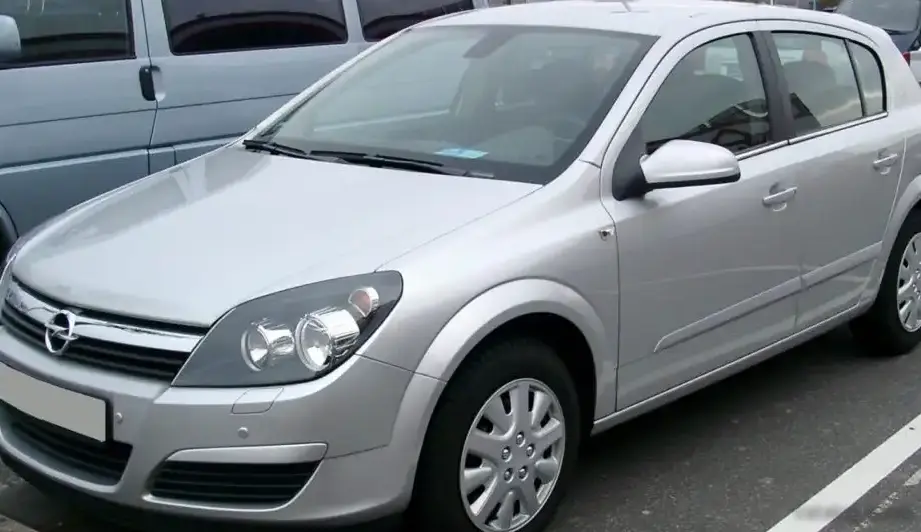
The Opel Astra H 1.7 CDTI, producing 80 horsepower, was a key variant within the broader Astra H range (2004-2009). Introduced as a more economical option, this model occupied the entry-level position in the Astra H lineup, particularly in European markets. It aimed to provide a balance between fuel efficiency and practicality for everyday commuting and family use. Production of this specific configuration spanned from 2004 to 2005, representing an early phase of the H generation. The Astra H itself was a significant model for Opel, building upon the success of its predecessors and incorporating updated styling, improved safety features, and a range of modern engine options.
Technical Specifications
| Brand | Opel |
| Model | Astra |
| Generation | Astra H |
| Type (Engine) | 1.7 CDTI (80 Hp) |
| Start of production | 2004 |
| End of production | 2005 |
| Powertrain Architecture | Internal Combustion engine |
| Body type | Hatchback |
| Seats | 5 |
| Doors | 5 |
| Fuel consumption (urban) | 6.3 l/100 km (37.3 US mpg, 44.8 UK mpg, 15.9 km/l) |
| Fuel consumption (extra urban) | 4.1 l/100 km (57.4 US mpg, 68.9 UK mpg, 24.4 km/l) |
| Fuel consumption (combined) | 4.9 l/100 km (48 US mpg, 57.6 UK mpg, 20.4 km/l) |
| Fuel Type | Diesel |
| Acceleration 0 – 100 km/h | 15 sec |
| Acceleration 0 – 62 mph | 15 sec |
| Acceleration 0 – 60 mph | 14.3 sec |
| Maximum speed | 168 km/h (104.39 mph) |
| Weight-to-power ratio | 15.8 kg/Hp, 63.2 Hp/tonne |
| Weight-to-torque ratio | 7.4 kg/Nm, 134.4 Nm/tonne |
| Power | 80 Hp @ 4400 rpm |
| Power per litre | 47.4 Hp/l |
| Torque | 170 Nm @ 1800 rpm (125.39 lb.-ft. @ 1800 rpm) |
| Engine layout | Front, Transverse |
| Engine Model/Code | Z17DTL |
| Engine displacement | 1686 cm3 (102.89 cu. in.) |
| Number of cylinders | 4 |
| Engine configuration | Inline |
| Cylinder Bore | 79 mm (3.11 in.) |
| Piston Stroke | 86 mm (3.39 in.) |
| Compression ratio | 18.4:1 |
| Number of valves per cylinder | 4 |
| Fuel injection system | Diesel Commonrail |
| Engine aspiration | Turbocharger, Intercooler |
| Valvetrain | DOHC |
| Engine oil capacity | 4.5 l (4.76 US qt | 3.96 UK qt) |
| Coolant | 6.8 l (7.19 US qt | 5.98 UK qt) |
| Kerb Weight | 1265 kg (2788.85 lbs.) |
| Max. weight | 1840 kg (4056.51 lbs.) |
| Max load | 575 kg (1267.66 lbs.) |
| Trunk (boot) space – minimum | 380 l (13.42 cu. ft.) |
| Trunk (boot) space – maximum | 1330 l (46.97 cu. ft.) |
| Fuel tank capacity | 52 l (13.74 US gal | 11.44 UK gal) |
| Length | 4249 mm (167.28 in.) |
| Width | 1753 mm (69.02 in.) |
| Width including mirrors | 2033 mm (80.04 in.) |
| Height | 1467 mm (57.76 in.) |
| Wheelbase | 2614 mm (102.91 in.) |
| Front track | 1488 mm (58.58 in.) |
| Rear (Back) track | 1488 mm (58.58 in.) |
| Front overhang | 871 mm (34.29 in.) |
| Rear overhang | 764 mm (30.08 in.) |
| Ride height (ground clearance) | 160 mm (6.3 in.) |
| Drag coefficient (Cd) | 0.32 |
| Drivetrain Architecture | ICE, Front wheel drive |
| Drive wheel | Front wheel drive |
| Number of gears and type of gearbox | 5 gears, manual transmission |
| Front suspension | Spring Strut |
| Rear suspension | Spring Strut |
| Front brakes | Ventilated discs |
| Rear brakes | Disc |
| Assisting systems | ABS (Anti-lock braking system) |
| Steering type | Steering rack and pinion |
| Tires size | 195/65 R15 |
| Wheel rims size | 6.5J x 15 |
Powertrain & Engine Architecture
The heart of the Astra H 1.7 CDTI was the Z17DTL engine, a 1.7-liter inline-four cylinder diesel. This engine belonged to Opel’s family of common-rail direct injection diesels. The Z17DTL featured a turbocharger with an intercooler, which helped to boost power and torque while maintaining reasonable fuel efficiency. The engine utilized a double overhead camshaft (DOHC) valvetrain with four valves per cylinder, optimizing gas flow for improved performance. The common-rail diesel injection system, supplied by Bosch, delivered fuel at extremely high pressure, resulting in finer atomization and more complete combustion. This contributed to reduced emissions and improved fuel economy. The 5-speed manual transmission was the standard offering for this variant, chosen for its simplicity and cost-effectiveness. The gear ratios were tuned to prioritize fuel efficiency and smooth operation at highway speeds, rather than outright acceleration.
Driving Characteristics
The 80 horsepower output of the 1.7 CDTI engine translated to modest, but adequate, performance. Acceleration from 0 to 60 mph took around 14.3 seconds, and top speed was limited to 104.39 mph. In real-world driving, the engine felt most comfortable in the mid-range, providing sufficient torque for everyday overtaking maneuvers. However, it lacked the punch of the higher-output versions, such as the 1.9 CDTI. The 5-speed manual transmission offered a reasonably smooth shift action, but the gear ratios were spaced to favor economy over sporty driving. Compared to the more powerful Astra H variants, the 1.7 CDTI felt less refined at higher speeds, with more noticeable engine noise and vibration. The focus was clearly on providing a practical and economical driving experience.
Equipment & Trim Levels
The 1.7 CDTI typically came equipped with a basic level of standard features. These generally included power steering, central locking, electric front windows, and an adjustable steering column. Safety features such as ABS (Anti-lock Braking System) and driver and passenger airbags were also standard. Interior upholstery was typically cloth, and the dashboard featured a functional, if somewhat basic, design. Optional extras included air conditioning, alloy wheels, a CD player, and upgraded interior trim. The trim level often dictated the availability of these options, with higher trims offering more features as standard.
Chassis & Braking
The Astra H 1.7 CDTI utilized a MacPherson strut suspension setup at the front and a torsion beam suspension at the rear. This configuration provided a good balance between ride comfort and handling. The front brakes were ventilated discs, offering good stopping power, while the rear brakes were solid discs. The steering was a rack and pinion system, providing precise and responsive steering feel. The relatively lightweight nature of the 1.7 CDTI engine contributed to a balanced chassis, making the car relatively easy to handle.
Market Reception & Comparison
The Astra H 1.7 CDTI was generally well-received as an economical and practical option. Critics praised its fuel efficiency and low running costs, but noted its lack of outright performance. Compared to the more powerful Astra H variants, such as the 1.9 CDTI or the petrol-powered models, the 1.7 CDTI offered a more affordable entry point into the Astra H range. However, it lacked the refinement and performance of its more expensive siblings. In terms of reliability, the Z17DTL engine proved to be generally robust, although common issues included turbocharger wear and potential problems with the diesel particulate filter (DPF).
Legacy
The Opel Astra H 1.7 CDTI remains a relatively common sight on used car markets today. Its reputation for fuel efficiency and affordability continues to make it an attractive option for budget-conscious buyers. While the engine may require some maintenance as it ages, particularly regarding the turbocharger and DPF, it is generally considered to be a reliable unit. The Astra H 1.7 CDTI represents a practical and economical choice for those seeking a reliable and affordable hatchback.