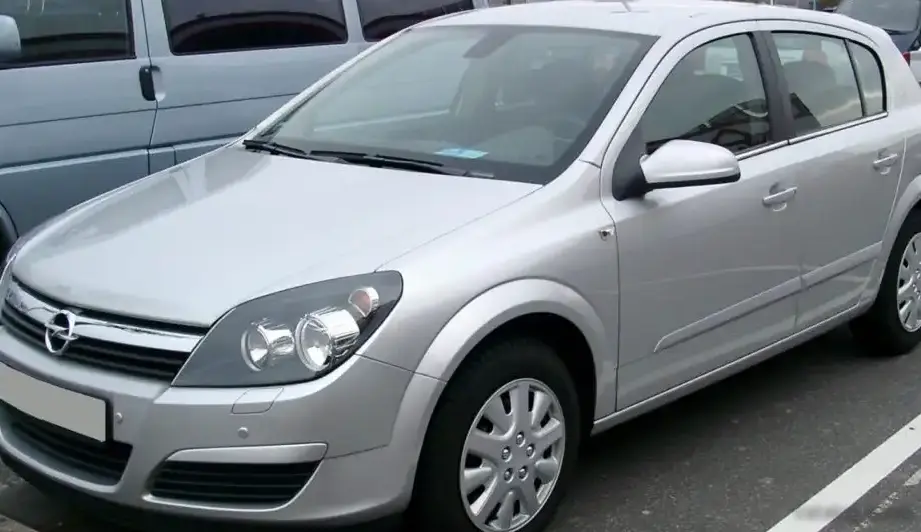
The Opel Astra H 1.8i, producing 140 horsepower, was a variant of the Astra H generation (2004-2009), specifically available from 2005 to 2006. Positioned as a mid-range offering within the Astra H lineup, it aimed to provide a balance between performance and fuel efficiency for European buyers. This model played a significant role in Opel’s strategy to offer a diverse range of engines and trim levels to cater to a broad customer base in the competitive C-segment hatchback market. It was a key competitor to vehicles like the Ford Focus, Volkswagen Golf, and Peugeot 307.
Technical Specifications
| Brand | Opel |
| Model | Astra |
| Generation | Astra H |
| Type (Engine) | 1.8i (140 Hp) |
| Start of production | 2005 |
| End of production | 2006 |
| Powertrain Architecture | Internal Combustion engine |
| Body type | Hatchback |
| Seats | 5 |
| Doors | 5 |
| Fuel consumption (urban) | 10.5 l/100 km (22.4 US mpg, 26.9 UK mpg, 9.5 km/l) |
| Fuel consumption (extra urban) | 6.2 l/100 km (37.9 US mpg, 45.6 UK mpg, 16.1 km/l) |
| Fuel consumption (combined) | 7.8 l/100 km (30.2 US mpg, 36.2 UK mpg, 12.8 km/l) |
| Fuel Type | Petrol (Gasoline) |
| Acceleration 0 – 100 km/h | 10.8 sec |
| Acceleration 0 – 62 mph | 10.8 sec |
| Acceleration 0 – 60 mph | 10.3 sec |
| Maximum speed | 198 km/h (123.03 mph) |
| Weight-to-power ratio | 9.1 kg/Hp, 109.5 Hp/tonne |
| Weight-to-torque ratio | 7.3 kg/Nm, 136.9 Nm/tonne |
| Power | 140 Hp @ 6300 rpm |
| Power per litre | 78 Hp/l |
| Torque | 175 Nm @ 3800 rpm (129.07 lb.-ft. @ 3800 rpm) |
| Engine layout | Front, Transverse |
| Engine Model/Code | Z18XER |
| Engine displacement | 1796 cm3 (109.6 cu. in.) |
| Number of cylinders | 4 |
| Engine configuration | Inline |
| Cylinder Bore | 80.5 mm (3.17 in.) |
| Piston Stroke | 88.2 mm (3.47 in.) |
| Compression ratio | 10.5:1 |
| Number of valves per cylinder | 4 |
| Fuel injection system | Multi-port manifold injection |
| Engine aspiration | Naturally aspirated engine |
| Valvetrain | DOHC |
| Engine oil capacity | 4.25 l (4.49 US qt | 3.74 UK qt) |
| Coolant capacity | 6.1 l (6.45 US qt | 5.37 UK qt) |
| Kerb Weight | 1278 kg (2817.51 lbs.) |
| Max. weight | 1760 kg (3880.14 lbs.) |
| Max load | 482 kg (1062.63 lbs.) |
| Trunk (boot) space – minimum | 380 l (13.42 cu. ft.) |
| Trunk (boot) space – maximum | 1330 l (46.97 cu. ft.) |
| Fuel tank capacity | 52 l (13.74 US gal | 11.44 UK gal) |
| Length | 4249 mm (167.28 in.) |
| Width | 1753 mm (69.02 in.) |
| Width including mirrors | 2033 mm (80.04 in.) |
| Height | 1467 mm (57.76 in.) |
| Wheelbase | 2614 mm (102.91 in.) |
| Front track | 1488 mm (58.58 in.) |
| Rear track | 1488 mm (58.58 in.) |
| Front overhang | 871 mm (34.29 in.) |
| Rear overhang | 764 mm (30.08 in.) |
| Ride height (ground clearance) | 160 mm (6.3 in.) |
| Drag coefficient (Cd) | 0.32 |
| Drivetrain Architecture | ICE to Front Wheels |
| Drive wheel | Front wheel drive |
| Number of gears and type of gearbox | 5 gears, manual transmission |
| Front suspension | Spring Strut |
| Rear suspension | Spring Strut |
| Front brakes | Ventilated discs |
| Rear brakes | Disc |
| Assisting systems | ABS (Anti-lock braking system) |
| Steering type | Steering rack and pinion |
| Tires size | 195/65 R15 |
| Wheel rims size | 6.5J x 15 |
Powertrain & Engine Architecture
The Astra H 1.8i was powered by the Z18XER engine, a 1.8-liter (1796 cc) inline-four cylinder gasoline engine. This engine belonged to Opel’s ‘Ecotec’ family, known for its focus on efficiency and refinement. The Z18XER featured multi-port fuel injection and a double overhead camshaft (DOHC) valvetrain with four valves per cylinder. This configuration allowed for good breathing and contributed to the engine’s respectable power output. The engine’s 10.5:1 compression ratio was a standard figure for naturally aspirated gasoline engines of the time. The 5-speed manual transmission was the standard pairing, designed to provide a balance between fuel economy and drivability. The transmission’s gear ratios were tuned to maximize the engine’s torque output in everyday driving situations.
Driving Characteristics
The 1.8i variant offered a comfortable and predictable driving experience. With 140 horsepower and 175 Nm (129 lb-ft) of torque, acceleration from 0 to 60 mph took around 10.3 seconds, and it reached a top speed of 198 km/h (123 mph). While not a performance-oriented model, the 1.8i provided sufficient power for everyday commuting and highway cruising. Compared to the more powerful 2.2 Direct Injection engines, the 1.8i felt less responsive, particularly during overtaking maneuvers. However, it offered better fuel economy and a smoother, more relaxed driving experience. The 5-speed manual transmission was well-matched to the engine, providing precise shifts and a reasonable spread of gears. The gear ratios were optimized for fuel efficiency and everyday usability, rather than outright performance.
Equipment & Trim Levels
The Astra H 1.8i typically came equipped with a reasonable level of standard features. These included power windows, central locking, air conditioning, and an audio system. Higher trim levels offered additional features such as alloy wheels, fog lights, a multi-function steering wheel, and upgraded interior trim. Interior upholstery was typically cloth, with options for upgraded materials available on higher-spec models. Safety features included ABS brakes, front airbags, and seatbelt pretensioners. Optional extras included a sunroof, parking sensors, and a more advanced audio system.
Chassis & Braking
The Astra H utilized a MacPherson strut front suspension and a torsion beam rear suspension. This setup provided a good balance between ride comfort and handling. The front brakes were ventilated discs, while the rear brakes were solid discs. ABS (Anti-lock Braking System) was standard, enhancing braking performance and safety. The chassis was designed to provide a stable and predictable driving experience, with a focus on comfort and refinement. The suspension tuning was geared towards everyday usability, rather than sporty handling.
Market Reception & Comparison
The Astra H 1.8i was generally well-received by automotive critics as a practical and efficient family hatchback. It was praised for its comfortable ride, spacious interior, and reasonable fuel economy. However, some critics noted that the engine lacked the punch of its rivals and that the interior materials were not as premium as those found in some competing models. Compared to the 1.6-liter base model, the 1.8i offered a noticeable improvement in performance. Compared to the more powerful 2.2-liter variants, it provided better fuel economy and a lower purchase price. The Astra H 1.8i offered a compelling package for buyers seeking a well-rounded and reliable family car.
Legacy
The Z18XER engine, while not known for being exceptionally durable, proved to be generally reliable with proper maintenance. Common issues included occasional oil leaks and sensor failures. The Astra H 1.8i remains a relatively affordable option in the used car market today. Its simple mechanical design and readily available parts make it a relatively easy car to maintain. While it may not offer the performance or features of more modern vehicles, it remains a practical and dependable choice for those seeking a budget-friendly family hatchback.