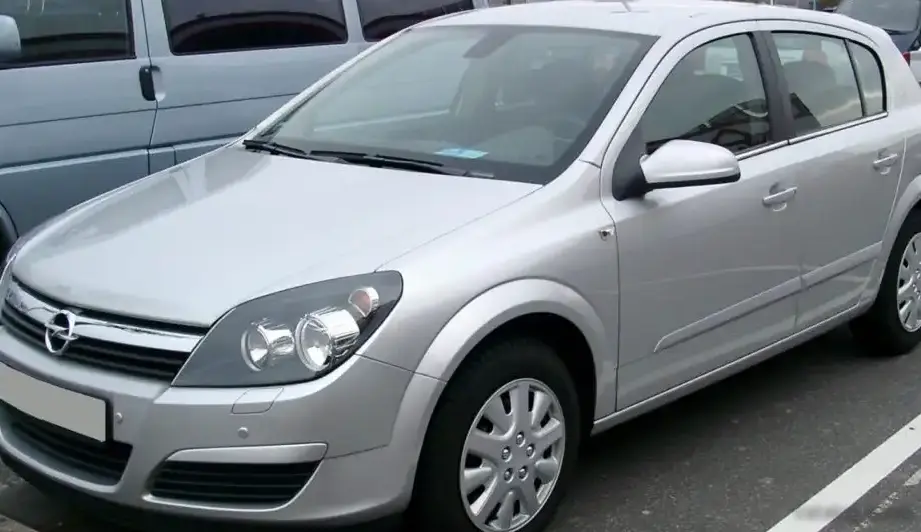
The Opel Astra H 2.0i 16V Turbo, produced from 2004 to 2006, represented a performance-oriented variant within the broader Astra H (2004-2009) range. Positioned as a step up from the naturally aspirated engines and the diesel options, the 2.0i Turbo aimed to deliver a more engaging driving experience. It was a key offering in markets where Opel had a strong presence, particularly in Europe, competing with rivals like the Ford Focus and Volkswagen Golf. This model utilized the GM/Opel’s H platform, also known internally as the 1HX0, which underpinned a range of compact vehicles.
Technical Specifications
| Brand | Opel |
| Model | Astra |
| Generation | Astra H |
| Type (Engine) | 2.0i 16V Turbo (200 Hp) |
| Start of production | 2004 |
| End of production | 2006 |
| Powertrain Architecture | Internal Combustion engine |
| Body type | Hatchback |
| Seats | 5 |
| Doors | 5 |
| Fuel consumption (urban) | 13.1 l/100 km (18 US mpg, 21.6 UK mpg) |
| Fuel consumption (extra urban) | 7.1 l/100 km (33.1 US mpg, 39.8 UK mpg) |
| Fuel consumption (combined) | 9.3 l/100 km (25.3 US mpg, 30.4 UK mpg) |
| Fuel Type | Petrol (Gasoline) |
| Acceleration 0 – 100 km/h | 8.2 sec |
| Acceleration 0 – 62 mph | 8.2 sec |
| Acceleration 0 – 60 mph | 7.8 sec |
| Maximum speed | 230 km/h (142.92 mph) |
| Weight-to-power ratio | 6.9 kg/Hp, 144.4 Hp/tonne |
| Weight-to-torque ratio | 5.3 kg/Nm, 189.2 Nm/tonne |
| Power | 200 Hp @ 5400 rpm |
| Power per litre | 100.1 Hp/l |
| Torque | 262 Nm @ 4200 rpm (193.24 lb.-ft. @ 4200 rpm) |
| Engine layout | Front, Transverse |
| Engine Model/Code | Z20LER |
| Engine displacement | 1998 cm3 (121.93 cu. in.) |
| Number of cylinders | 4 |
| Engine configuration | Inline |
| Cylinder Bore | 86 mm (3.39 in.) |
| Piston Stroke | 86 mm (3.39 in.) |
| Compression ratio | 8.8:1 |
| Number of valves per cylinder | 4 |
| Fuel injection system | Multi-port manifold injection |
| Engine aspiration | Turbocharger, Intercooler |
| Valvetrain | DOHC |
| Engine oil capacity | 4.3 l (4.54 US qt | 3.78 UK qt) |
| Coolant | 7.7 l (8.14 US qt | 6.78 UK qt) |
| Kerb Weight | 1385 kg (3053.4 lbs.) |
| Max. weight | 1860 kg (4100.6 lbs.) |
| Max load | 475 kg (1047.2 lbs.) |
| Trunk (boot) space – minimum | 380 l (13.42 cu. ft.) |
| Trunk (boot) space – maximum | 1330 l (46.97 cu. ft.) |
| Fuel tank capacity | 52 l (13.74 US gal | 11.44 UK gal) |
| Length | 4249 mm (167.28 in.) |
| Width | 1753 mm (69.02 in.) |
| Width including mirrors | 2033 mm (80.04 in.) |
| Height | 1467 mm (57.76 in.) |
| Wheelbase | 2614 mm (102.91 in.) |
| Front track | 1488 mm (58.58 in.) |
| Rear (Back) track | 1488 mm (58.58 in.) |
| Front overhang | 871 mm (34.29 in.) |
| Rear overhang | 764 mm (30.08 in.) |
| Ride height (ground clearance) | 160 mm (6.3 in.) |
| Drag coefficient (Cd) | 0.32 |
| Drivetrain Architecture | The Internal combustion engine (ICE) drives the front wheels of the vehicle. |
| Drive wheel | Front wheel drive |
| Number of gears and type of gearbox | 6 gears, manual transmission |
| Front suspension | Spring Strut |
| Rear suspension | Spring Strut |
| Front brakes | Ventilated discs |
| Rear brakes | Disc |
| Assisting systems | ABS (Anti-lock braking system) |
| Steering type | Steering rack and pinion |
| Tires size | 215/45 R17 |
| Wheel rims size | 7J x17 |
Powertrain & Engine Architecture
The heart of the Astra H 2.0i 16V Turbo was the Z20LER engine, a 1.998-liter, inline-four cylinder gasoline engine. This engine featured a cast iron block and an aluminum cylinder head, incorporating a dual overhead camshaft (DOHC) valvetrain with four valves per cylinder. The Z20LER utilized multi-port fuel injection and was equipped with a Garrett GT22 turbocharger with an intercooler to boost power output. The turbocharger provided significant gains over the naturally aspirated 2.0-liter engines available in the Astra H range. The engine’s compression ratio was 8.8:1. The standard transmission was a Getrag M32 six-speed manual gearbox, known for its robust construction and precise shift feel. While an automatic transmission was offered in some Astra H models, it was not typically paired with the 200 hp 2.0i Turbo engine.
Driving Characteristics
The 2.0i 16V Turbo offered a noticeable performance upgrade over lower-spec Astra H models. The 200 horsepower and 262 Nm (193 lb-ft) of torque provided brisk acceleration, with a 0-60 mph time of around 7.8 seconds and a top speed of 143 mph. The turbocharger did introduce a degree of turbo lag, but once spooled up, the engine delivered a strong and linear powerband. The six-speed manual transmission allowed drivers to keep the engine in its optimal power range. Compared to the 1.8-liter versions, the 2.0i Turbo felt significantly more responsive and capable, particularly during overtaking maneuvers. The handling was generally considered good, with a well-tuned suspension providing a balance between comfort and control.
Equipment & Trim Levels
The 2.0i 16V Turbo was typically offered in higher trim levels, such as Sport or GSi (in some markets). Standard equipment often included air conditioning, power windows, power mirrors, a CD stereo, and alloy wheels. Optional extras could include leather upholstery, a sunroof, and upgraded audio systems. The interior generally featured a sporty design with supportive seats and a well-laid-out dashboard. The specific trim level dictated the exterior styling details, such as the addition of a rear spoiler or side skirts.
Chassis & Braking
The Astra H 2.0i 16V Turbo utilized a MacPherson strut front suspension and a multi-link rear suspension. The braking system consisted of ventilated disc brakes at the front and solid disc brakes at the rear. Anti-lock Braking System (ABS) was standard. The suspension was tuned to provide a balance between comfort and handling, with slightly firmer damping compared to lower-spec models. The steering was a rack-and-pinion system, providing precise and responsive steering feel.
Market Reception & Comparison
The Astra H 2.0i 16V Turbo was generally well-received by automotive critics, who praised its performance and handling. However, some reviewers noted the turbo lag and the relatively high fuel consumption. Compared to the naturally aspirated 1.8-liter models, the 2.0i Turbo offered a significant performance boost but at the cost of increased fuel consumption and potentially higher maintenance costs. Against rivals like the Ford Focus ST and Volkswagen Golf GTI, the Astra H 2.0i Turbo offered a competitive package, although it often lacked the brand prestige of the Volkswagen.
Legacy
The Z20LER engine, while generally reliable, is known to be susceptible to oil consumption issues as it ages. Regular oil checks and maintenance are crucial for longevity. The Astra H 2.0i 16V Turbo remains a popular choice among enthusiasts looking for an affordable and engaging hot hatch. Parts availability is generally good, and the car’s relatively simple mechanical design makes it relatively easy to maintain. Today, well-maintained examples command a reasonable price in the used car market, appealing to those seeking a classic European hatchback with a spirited driving experience.