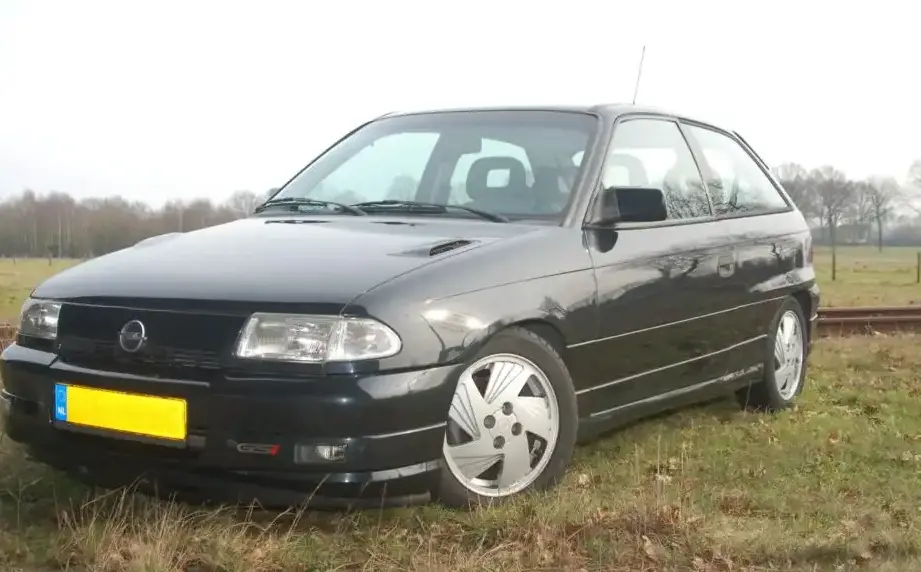
The Opel Astra H Caravan 1.3 CDTI, producing 90 horsepower, was a mainstay of the Astra H series, specifically the station wagon (estate) body style, from its introduction in July 2005 through 2006. Positioned as an entry-level offering within the broader Astra H range, it aimed to provide fuel-efficient and practical transportation for families and individuals prioritizing economy over outright performance. This variant was primarily sold in European markets, where compact station wagons held significant popularity. It utilized the GM/Opel’s 1HX0 platform, shared with other models like the Zafira B and Vectra C, offering a balance of space, practicality, and affordability.
Technical Specifications
| Brand | Opel |
| Model | Astra |
| Generation | Astra H Caravan |
| Type (Engine) | 1.3 CDTI (90 Hp) |
| Start of production | July, 2005 |
| End of production | 2006 |
| Powertrain Architecture | Internal Combustion engine |
| Body type | Station wagon (estate) |
| Seats | 5 |
| Doors | 5 |
| Fuel consumption (urban) | 6.2 l/100 km (37.9 US mpg, 45.6 UK mpg, 16.1 km/l) |
| Fuel consumption (extra urban) | 4 l/100 km (58.8 US mpg, 70.6 UK mpg, 25 km/l) |
| Fuel consumption (combined) | 4.8 l/100 km (49 US mpg, 58.9 UK mpg, 20.8 km/l) |
| CO2 emissions | 130 g/km |
| Fuel Type | Diesel |
| Acceleration 0 – 100 km/h | 14.1 sec |
| Acceleration 0 – 62 mph | 14.1 sec |
| Acceleration 0 – 60 mph | 13.4 sec |
| Maximum speed | 172 km/h (106.88 mph) |
| Emission standard | Euro 4 |
| Weight-to-power ratio | 14.2 kg/Hp, 70.3 Hp/tonne |
| Weight-to-torque ratio | 6.4 kg/Nm, 156.3 Nm/tonne |
| Power | 90 Hp @ 4000 rpm |
| Power per litre | 72.1 Hp/l |
| Torque | 200 Nm @ 1750 rpm (147.51 lb.-ft. @ 1750 rpm) |
| Engine layout | Front, Transverse |
| Engine Model/Code | Z13DTH |
| Engine displacement | 1248 cm3 (76.16 cu. in.) |
| Number of cylinders | 4 |
| Engine configuration | Inline |
| Cylinder Bore | 69.6 mm (2.74 in.) |
| Piston Stroke | 82 mm (3.23 in.) |
| Compression ratio | 18:1 |
| Number of valves per cylinder | 4 |
| Fuel injection system | Diesel Commonrail |
| Engine aspiration | Turbocharger, Intercooler |
| Valvetrain | DOHC |
| Engine oil capacity | 3.1 l (3.28 US qt | 2.73 UK qt) |
| Coolant | 6.8 l (7.19 US qt | 5.98 UK qt) |
| Kerb Weight | 1280 kg (2821.92 lbs.) |
| Max. weight | 1905 kg (4199.81 lbs.) |
| Max load | 625 kg (1377.89 lbs.) |
| Trunk (boot) space – minimum | 500 l (17.66 cu. ft.) |
| Trunk (boot) space – maximum | 1590 l (56.15 cu. ft.) |
| Fuel tank capacity | 52 l (13.74 US gal | 11.44 UK gal) |
| Length | 4515 mm (177.76 in.) |
| Width | 1794 mm (70.63 in.) |
| Height | 1500 mm (59.06 in.) |
| Wheelbase | 2703 mm (106.42 in.) |
| Front track | 1488 mm (58.58 in.) |
| Rear (Back) track | 1488 mm (58.58 in.) |
| Front overhang | 871 mm (34.29 in.) |
| Rear overhang | 941 mm (37.05 in.) |
| Ride height (ground clearance) | 160 mm (6.3 in.) |
| Drag coefficient (Cd) | 0.31 |
| Drivetrain Architecture | The Internal combustion engine (ICE) drives the front wheels of the vehicle. |
| Drive wheel | Front wheel drive |
| Number of gears and type of gearbox | 6 gears, manual transmission |
| Front suspension | Independent coil spring |
| Rear suspension | Semi-independent, coil spring |
| Front brakes | Ventilated discs |
| Rear brakes | Drum |
| Assisting systems | ABS (Anti-lock braking system) |
| Tires size | 205/55 R16 |
| Wheel rims size | 16 |
Powertrain & Engine Architecture
The heart of the Astra H Caravan 1.3 CDTI was the Z13DTH engine, a 1.3-liter inline-four cylinder diesel. This engine was part of Opel/Fiat’s joint diesel engine program, known for its compact size and relatively efficient operation. It featured a common rail direct injection system, delivering fuel at extremely high pressure for optimized combustion. A turbocharger with an intercooler was employed to boost power output, overcoming the inherent limitations of a small-displacement engine. The engine utilized a double overhead camshaft (DOHC) valvetrain with four valves per cylinder, enhancing breathing and contributing to improved performance. The 90 horsepower output was achieved at 4000 rpm, while peak torque of 200 Nm (147.51 lb-ft) was available from just 1750 rpm, prioritizing low-end grunt for everyday drivability. The engine was paired with a five-speed manual transmission, which was the most common configuration. While a four-speed automatic transmission was offered, it was less frequently selected due to its impact on fuel economy and performance.
Driving Characteristics
The 1.3 CDTI 90 hp engine, when coupled with the manual transmission, provided adequate, though not exhilarating, performance. Acceleration from 0-60 mph took around 13.4 seconds, and top speed was limited to 172 km/h (106.88 mph). The engine’s strength lay in its torque delivery, making it reasonably capable for overtaking maneuvers and maintaining comfortable cruising speeds on highways. However, compared to the more powerful 1.8-liter gasoline or 1.9-liter CDTI diesel variants, the 1.3 CDTI felt noticeably slower. The automatic transmission further diminished performance, resulting in sluggish acceleration and a less engaging driving experience. Gear ratios were optimized for fuel efficiency rather than outright speed. The focus was on providing a smooth and economical ride, making it well-suited for urban commuting and long-distance journeys where fuel costs were a primary concern.
Equipment & Trim Levels
The 1.3 CDTI variant typically came with a base level of equipment, reflecting its position as the entry point to the Astra H Caravan range. Standard features generally included power steering, central locking, electric front windows, and an adjustable steering column. Air conditioning was often an optional extra. Interior upholstery was typically cloth, and the dashboard featured a functional, if somewhat basic, design. Higher trim levels, such as ‘Enjoy’ or ‘Cosmo’, offered additional features like alloy wheels, upgraded audio systems, climate control, and more premium interior materials. Optional extras for the 1.3 CDTI could include parking sensors, a CD player, and various safety enhancements.
Chassis & Braking
The Astra H Caravan 1.3 CDTI utilized an independent coil spring suspension at the front, providing a comfortable ride and decent handling characteristics. The rear suspension was a semi-independent coil spring setup, which was a cost-effective solution for the estate body style. Braking was handled by ventilated discs at the front and drum brakes at the rear. Anti-lock Braking System (ABS) was standard, enhancing safety during emergency braking situations. The relatively lightweight nature of the 1.3 CDTI engine contributed to a balanced chassis, although the rear drum brakes limited overall braking performance compared to models equipped with rear discs.
Market Reception & Comparison
The Astra H Caravan 1.3 CDTI was generally well-received by critics as a practical and economical option. Its fuel efficiency was a major selling point, particularly in Europe where diesel fuel was often cheaper than gasoline. However, its performance was often criticized as being underwhelming, especially when compared to the more powerful engine options. The 1.8-liter gasoline engine offered more horsepower and a more responsive driving experience, while the 1.9-liter CDTI provided significantly more torque and better acceleration. The 1.3 CDTI appealed to buyers prioritizing fuel economy and practicality over performance, such as families and company car drivers. Reliability was generally good, although the common rail diesel injection system required regular maintenance to prevent issues.
Legacy
The Z13DTH engine, while not known for being a powerhouse, proved to be a relatively reliable unit when properly maintained. The Astra H Caravan 1.3 CDTI remains a common sight on European roads today, often found in the hands of budget-conscious buyers. On the used car market, these models are typically priced affordably, making them an attractive option for first-time car owners or those seeking a practical and economical estate car. However, potential buyers should be aware of the potential maintenance costs associated with the diesel particulate filter (DPF) and common rail injection system, particularly on higher-mileage examples.