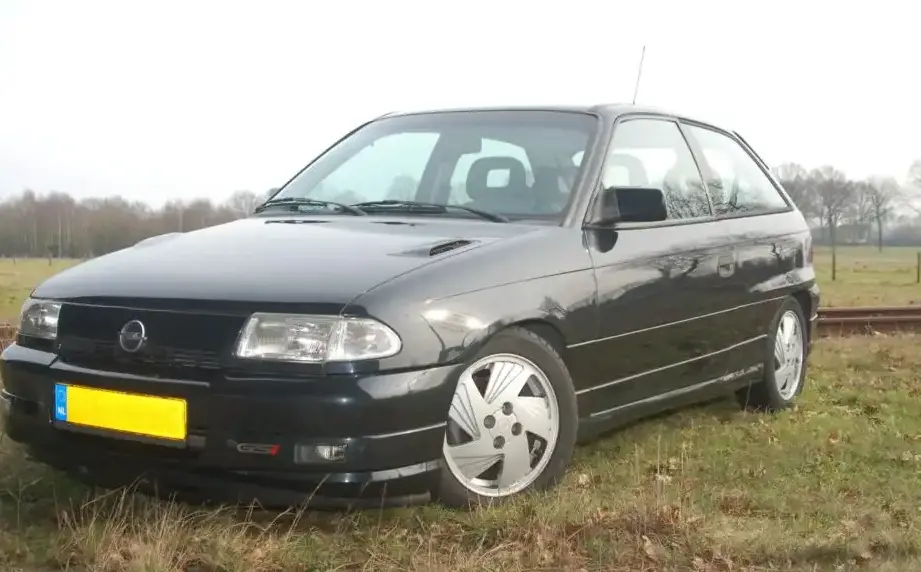
The Opel Astra H Caravan 1.7 CDTI, producing 100 horsepower, was a mainstay of the Astra H series, specifically the wagon (estate) body style, from its introduction in October 2004 through 2006. Positioned as an entry-level diesel option within the broader Astra H range, it aimed to provide fuel efficiency and practicality for families and those requiring substantial cargo space. This variant was a key component of Opel’s strategy to offer a diverse lineup catering to various customer needs in the European market. It was built on the GM Delta platform, also known as the 1HX0 platform, shared with other vehicles like the Zafira B and Saab 9-3.
Technical Specifications
| Brand | Opel |
| Model | Astra |
| Generation | Astra H Caravan |
| Type (Engine) | 1.7 CDTI (100 Hp) |
| Start of production | October, 2004 |
| End of production | 2006 |
| Powertrain Architecture | Internal Combustion engine |
| Body type | Station wagon (estate) |
| Seats | 5 |
| Doors | 5 |
| Fuel consumption (urban) | 6.4 l/100 km (36.8 US mpg, 44.1 UK mpg, 15.6 km/l) |
| Fuel consumption (extra urban) | 4.2 l/100 km (56 US mpg, 67.3 UK mpg, 23.8 km/l) |
| Fuel consumption (combined) | 5 l/100 km (47 US mpg, 56.5 UK mpg, 20 km/l) |
| CO2 emissions | 165 g/km |
| Fuel Type | Diesel |
| Acceleration 0 – 100 km/h | 12.5 sec |
| Acceleration 0 – 62 mph | 12.5 sec |
| Acceleration 0 – 60 mph | 11.9 sec |
| Maximum speed | 180 km/h (111.85 mph) |
| Weight-to-power ratio | 12.9 kg/Hp, 77.3 Hp/tonne |
| Weight-to-torque ratio | 5.4 kg/Nm, 185.6 Nm/tonne |
| Power | 100 Hp @ 4400 rpm |
| Power per litre | 59.3 Hp/l |
| Torque | 240 Nm @ 2300 rpm (177.01 lb.-ft. @ 2300 rpm) |
| Engine layout | Front, Transverse |
| Engine Model/Code | Z17DTH |
| Engine displacement | 1686 cm3 (102.89 cu. in.) |
| Number of cylinders | 4 |
| Engine configuration | Inline |
| Cylinder Bore | 79 mm (3.11 in.) |
| Piston Stroke | 86 mm (3.39 in.) |
| Compression ratio | 18.4:1 |
| Number of valves per cylinder | 4 |
| Fuel injection system | Diesel Commonrail |
| Engine aspiration | Turbocharger, Intercooler |
| Valvetrain | DOHC |
| Engine oil capacity | 5 l (5.28 US qt | 4.4 UK qt) |
| Coolant | 6.8 l (7.19 US qt | 5.98 UK qt) |
| Kerb Weight | 1293 kg (2850.58 lbs.) |
| Max. weight | 1918 kg (4228.47 lbs.) |
| Max load | 625 kg (1377.89 lbs.) |
| Trunk (boot) space – minimum | 540 l (19.07 cu. ft.) |
| Trunk (boot) space – maximum | 1590 l (56.15 cu. ft.) |
| Fuel tank capacity | 52 l (13.74 US gal | 11.44 UK gal) |
| Length | 4515 mm (177.76 in.) |
| Width | 1794 mm (70.63 in.) |
| Height | 1500 mm (59.06 in.) |
| Wheelbase | 2703 mm (106.42 in.) |
| Front track | 1488 mm (58.58 in.) |
| Rear (Back) track | 1488 mm (58.58 in.) |
| Front overhang | 871 mm (34.29 in.) |
| Rear overhang | 941 mm (37.05 in.) |
| Ride height (ground clearance) | 160 mm (6.3 in.) |
| Drag coefficient (Cd) | 0.31 |
| Drivetrain Architecture | ICE to Front Wheels |
| Drive wheel | Front wheel drive |
| Number of gears | 5 |
| Gearbox type | Manual transmission |
| Front suspension | Spring Strut |
| Rear suspension | Spring Strut |
| Front brakes | Ventilated discs |
| Rear brakes | Disc |
| Assisting systems | ABS (Anti-lock braking system) |
| Steering type | Steering rack and pinion |
| Tires size | 195/65 R15 |
| Wheel rims size | 6.5J X 15 |
Powertrain & Engine Architecture
The heart of the Astra H Caravan 1.7 CDTI was the Z17DTH engine, a 1.7-liter inline-four cylinder diesel. This engine belonged to Opel/Fiat’s family of common-rail direct injection diesels. The Z17DTH featured a turbocharger with an intercooler to boost power and efficiency. The engine utilized a double overhead camshaft (DOHC) valvetrain with four valves per cylinder, optimizing gas flow for improved performance. The common-rail diesel injection system, supplied by Bosch, delivered fuel at extremely high pressure, resulting in finer atomization and more complete combustion. This engine produced 100 horsepower at 4400 rpm and 240 Nm (177 lb-ft) of torque at 2300 rpm. The five-speed manual transmission was the standard offering, chosen for its balance of cost-effectiveness and fuel economy. The transmission’s gear ratios were tuned to maximize the engine’s torque output, providing adequate acceleration for everyday driving.
Driving Characteristics
The 1.7 CDTI engine, paired with the five-speed manual transmission, delivered a driving experience focused on fuel efficiency rather than outright performance. Acceleration from 0-100 km/h (0-62 mph) took approximately 12.5 seconds, which was noticeably slower than the higher-powered Astra H variants like the 1.9 CDTI or the petrol-powered 1.8. However, the engine’s strong low-end torque made it suitable for everyday commuting and highway cruising. The gear ratios were spaced to keep the engine within its optimal torque band, providing reasonable responsiveness in most driving situations. While not sporty, the 1.7 CDTI offered a comfortable and predictable driving experience. Compared to the more powerful engines, the 1.7 CDTI was quieter and more refined, particularly at lower speeds.
Equipment & Trim Levels
The Astra H Caravan 1.7 CDTI typically came with a base level of equipment, reflecting its position as an entry-level model. Standard features generally included power steering, central locking, electric front windows, and an adjustable steering column. Interior upholstery was typically cloth, and the dashboard featured a functional, if somewhat basic, design. Optional extras included air conditioning, alloy wheels, a CD player, and rear electric windows. Higher trim levels, such as the ‘Enjoy’ or ‘Cosmo’ offered more luxurious features like climate control, upgraded upholstery, and additional safety equipment. The Caravan body style itself was a key feature, offering a generous 540 liters of boot space (expanding to 1590 liters with the rear seats folded down), making it a practical choice for families and those needing to transport large items.
Chassis & Braking
The Astra H Caravan 1.7 CDTI utilized a MacPherson strut suspension setup at the front and a torsion beam suspension at the rear. This configuration provided a good balance between ride comfort and handling. The front brakes were ventilated discs, offering adequate stopping power, while the rear brakes were solid discs. Anti-lock Braking System (ABS) was standard, enhancing safety by preventing wheel lockup during hard braking. The chassis was designed to provide a stable and predictable driving experience, although it wasn’t particularly sporty. The suspension was tuned to prioritize comfort over handling, resulting in a relatively soft ride quality. Stabilizer bars were fitted to both the front and rear axles to reduce body roll during cornering.
Market Reception & Comparison
The Astra H Caravan 1.7 CDTI was generally well-received by critics as a practical and fuel-efficient option. It was praised for its spacious interior, large boot capacity, and low running costs. However, it was often criticized for its relatively slow acceleration and lack of refinement compared to more expensive Astra H variants. Compared to the 1.9 CDTI, the 1.7 CDTI offered significantly lower performance but also lower fuel consumption and a lower purchase price. The petrol-powered 1.8 offered more power but at the expense of fuel economy. The 1.7 CDTI appealed to buyers who prioritized practicality and economy over performance.
Legacy
The Z17DTH engine, while not known for being particularly groundbreaking, proved to be a relatively reliable unit when properly maintained. Common issues included turbocharger failure and injector problems, but these were not widespread. Today, used Astra H Caravan 1.7 CDTI models are relatively affordable and represent a good value for those seeking a practical and economical estate car. The engine’s fuel efficiency and relatively low maintenance costs continue to make it an attractive option for budget-conscious buyers. However, potential buyers should be aware of the potential for turbocharger and injector issues and ensure that the vehicle has been regularly serviced.