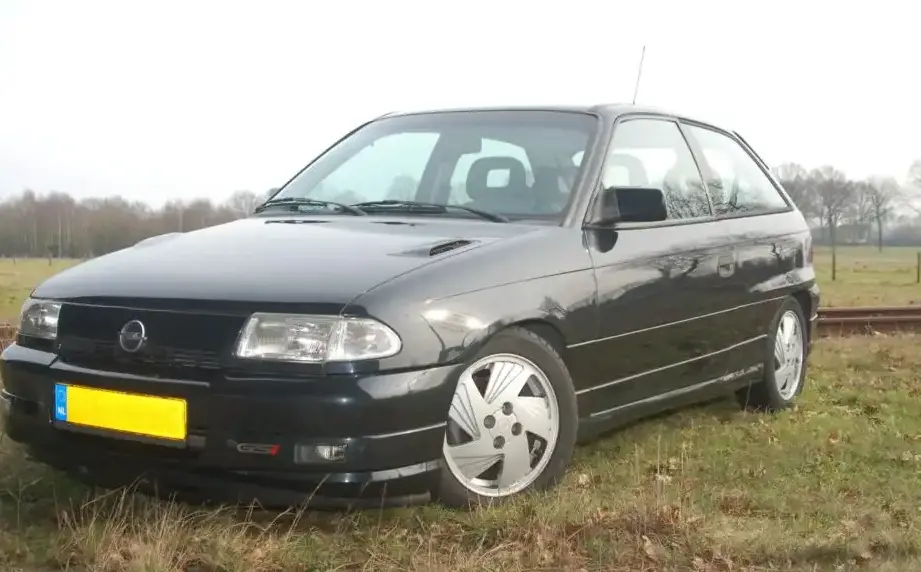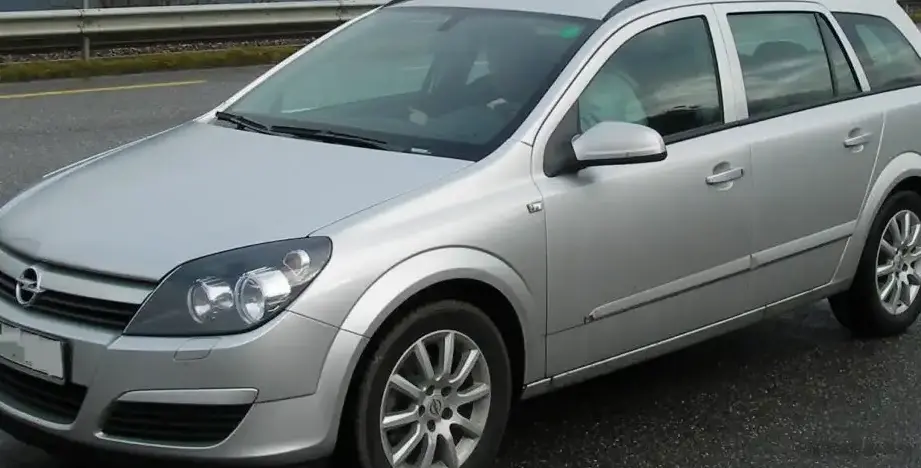
The Opel Astra H Caravan 1.9 CDTI, produced from 2004 to 2006, represents a significant offering in the European compact station wagon (estate) market. This variant, equipped with the 1.9-liter turbocharged diesel engine producing 150 horsepower, occupied a mid-range position within the Astra H Caravan lineup, appealing to buyers seeking a balance of fuel efficiency, practicality, and reasonable performance. It was part of the H generation of the Astra, internally designated as the 1HX0, which saw substantial improvements in interior quality and ride comfort compared to its predecessor.
Technical Specifications
| Brand | Opel |
| Model | Astra |
| Generation | Astra H Caravan |
| Type (Engine) | 1.9 CDTI (150 Hp) |
| Start of production | October, 2004 |
| End of production | 2006 |
| Powertrain Architecture | Internal Combustion engine |
| Body type | Station wagon (estate) |
| Seats | 5 |
| Doors | 5 |
| Fuel consumption (urban) | 7.5 l/100 km (31.4 US mpg, 37.7 UK mpg, 13.3 km/l) |
| Fuel consumption (extra urban) | 5 l/100 km (47 US mpg, 56.5 UK mpg, 20 km/l) |
| Fuel consumption (combined) | 5.9 l/100 km (39.9 US mpg, 47.9 UK mpg, 16.9 km/l) |
| CO2 emissions | 159 g/km |
| Fuel Type | Diesel |
| Acceleration 0 – 100 km/h | 9.2 sec |
| Acceleration 0 – 62 mph | 9.2 sec |
| Acceleration 0 – 60 mph | 8.7 sec |
| Maximum speed | 207 km/h (128.62 mph) |
| Emission standard | Euro 4 |
| Weight-to-power ratio | 9 kg/Hp, 111.1 Hp/tonne |
| Weight-to-torque ratio | 4.2 kg/Nm, 237 Nm/tonne |
| Power | 150 Hp @ 3800 rpm |
| Power per litre | 78.5 Hp/l |
| Torque | 320 Nm @ 2000 rpm (236.02 lb.-ft. @ 2000 rpm) |
| Engine layout | Front, Transverse |
| Engine Model/Code | Z19DTH |
| Engine displacement | 1910 cm3 (116.56 cu. in.) |
| Number of cylinders | 4 |
| Engine configuration | Inline |
| Cylinder Bore | 82 mm (3.23 in.) |
| Piston Stroke | 90.4 mm (3.56 in.) |
| Compression ratio | 17.5:1 |
| Number of valves per cylinder | 4 |
| Fuel injection system | Diesel Commonrail |
| Engine aspiration | Turbocharger, Intercooler |
| Valvetrain | DOHC |
| Engine oil capacity | 4.3 l (4.54 US qt | 3.78 UK qt) |
| Coolant | 7 l (7.4 US qt | 6.16 UK qt) |
| Kerb Weight | 1350 kg (2976.24 lbs.) |
| Max. weight | 1975 kg (4354.13 lbs.) |
| Max load | 625 kg (1377.89 lbs.) |
| Trunk (boot) space – minimum | 540 l (19.07 cu. ft.) |
| Trunk (boot) space – maximum | 1590 l (56.15 cu. ft.) |
| Fuel tank capacity | 52 l (13.74 US gal | 11.44 UK gal) |
| Max. roof load | 75 kg (165.35 lbs.) |
| Permitted trailer load with brakes (12%) | 1400 kg (3086.47 lbs.) |
| Permitted trailer load without brakes | 720 kg (1587.33 lbs.) |
| Permitted towbar download | 75 kg (165.35 lbs.) |
| Length | 4515 mm (177.76 in.) |
| Width | 1794 mm (70.63 in.) |
| Height | 1500 mm (59.06 in.) |
| Wheelbase | 2703 mm (106.42 in.) |
| Front track | 1488 mm (58.58 in.) |
| Rear (Back) track | 1488 mm (58.58 in.) |
| Front overhang | 871 mm (34.29 in.) |
| Rear overhang | 941 mm (37.05 in.) |
| Ride height (ground clearance) | 160 mm (6.3 in.) |
| Drag coefficient (Cd) | 0.31 |
| Minimum turning circle (turning diameter) | 11.5 m (37.73 ft.) |
| Drivetrain Architecture | The Internal combustion engine (ICE) drives the front wheels of the vehicle. |
| Drive wheel | Front wheel drive |
| Number of gears and type of gearbox | 6 gears, manual transmission |
| Front suspension | Independent, type McPherson with coil spring and anti-roll bar |
| Rear suspension | Semi-independent suspension, longitudinal arms with transverse torsion shafts |
| Front brakes | Ventilated discs |
| Rear brakes | Disc |
| Assisting systems | ABS (Anti-lock braking system) |
| Steering type | Steering rack and pinion |
| Power steering | Hydraulic Steering |
| Tires size | 205/55 R16 |
| Wheel rims size | 6.5J X 16 |
INTRODUCTION
The Opel Astra H Caravan 1.9 CDTI (150 Hp) was introduced in October 2004 as part of the broader Astra H series, representing Opel’s entry into the competitive compact estate car segment. Built on the GM Delta platform (1HX0), the Caravan body style offered increased practicality compared to the hatchback version, with a significantly larger cargo area. The 1.9 CDTI engine, a mainstay of Opel and Vauxhall diesel lineups, provided a balance between fuel economy and performance, making this variant a popular choice for families and those requiring a versatile vehicle. This particular engine and transmission combination positioned itself as a solid mid-range option, offering more power than the base 1.7 CDTI but at a lower price point than the more powerful 2.0 CDTI models.
Powertrain & Engine Architecture
The heart of the Astra H Caravan 1.9 CDTI is the Z19DTH engine, a 1.9-liter inline-four cylinder diesel engine. This engine utilizes a common rail direct injection system, delivering fuel at extremely high pressure for improved combustion efficiency and reduced emissions. The Z19DTH is equipped with a turbocharger and intercooler, boosting power output to 150 horsepower at 3800 rpm and 320 Nm (236 lb-ft) of torque at 2000 rpm. The engine features a double overhead camshaft (DOHC) valvetrain with four valves per cylinder. The 6-speed manual transmission was the standard offering, providing a good spread of gears for both fuel efficiency and acceleration. The engine’s design prioritized refinement and reduced noise, vibration, and harshness (NVH) compared to earlier Opel diesel engines.
Driving Characteristics
The 1.9 CDTI engine in the Astra H Caravan provided a respectable driving experience. While not a performance-oriented vehicle, the 150 hp and 320 Nm of torque offered sufficient power for everyday driving and overtaking maneuvers. Acceleration from 0-100 km/h (0-62 mph) took approximately 9.2 seconds. The six-speed manual transmission allowed drivers to keep the engine in its optimal power band, maximizing efficiency and responsiveness. Compared to the lower-powered 1.7 CDTI, the 1.9 CDTI felt noticeably more relaxed on the highway and offered quicker acceleration. However, it lacked the outright punch of the 2.0 CDTI variants. The Caravan’s suspension provided a comfortable ride, absorbing bumps and imperfections in the road well, although it wasn’t particularly sporty in handling.
Equipment & Trim Levels
The Astra H Caravan 1.9 CDTI typically came with a reasonable level of standard equipment. This included central locking, electric front windows, power steering, an adjustable steering column, and an audio system. Higher trim levels, such as ‘Enjoy’ and ‘Cosmo’, added features like alloy wheels, air conditioning, cruise control, rear electric windows, and upgraded interior trim. Interior upholstery was typically cloth, with options for leather available on higher-spec models. Optional extras included a sunroof, parking sensors, and a CD changer. The dashboard layout was functional and well-designed, with clear instrumentation and easy-to-use controls.
Chassis & Braking
The Astra H Caravan featured a McPherson strut front suspension and a semi-independent torsion beam rear suspension. This setup provided a good balance between ride comfort and handling. The front brakes were ventilated discs, while the rear brakes were solid discs. Anti-lock Braking System (ABS) was standard. The steering was a hydraulic power-assisted rack and pinion system, offering precise and responsive control. The Caravan’s chassis was designed to provide a stable and secure driving experience, even when fully loaded with passengers and luggage. Stabilizer bars were fitted to both the front and rear axles to reduce body roll during cornering.
Market Reception & Comparison
The Opel Astra H Caravan 1.9 CDTI was generally well-received by automotive critics. It was praised for its spacious interior, comfortable ride, and fuel efficiency. The 1.9 CDTI engine was considered a good compromise between performance and economy. Compared to the 1.7 CDTI, the 1.9 CDTI offered a noticeable improvement in performance, making it a more suitable choice for drivers who frequently carried passengers or luggage. However, some critics noted that the interior plastics could feel a little low-rent in places. Fuel economy figures were competitive, averaging around 5.9 l/100 km (39.9 US mpg) in combined driving. Reliability was generally good, although some owners reported issues with the diesel particulate filter (DPF).
Legacy
The Opel Astra H Caravan 1.9 CDTI remains a popular choice in the used car market today, particularly for those seeking a practical and affordable estate car. The Z19DTH engine is known for its durability, although regular maintenance is essential to prevent issues with the turbocharger and DPF. Parts availability is generally good, and repair costs are relatively reasonable. While newer cars offer more advanced technology and features, the Astra H Caravan 1.9 CDTI continues to provide a reliable and versatile transportation solution for many drivers. Its blend of practicality, fuel efficiency, and reasonable performance ensures its continued relevance in the used car landscape.