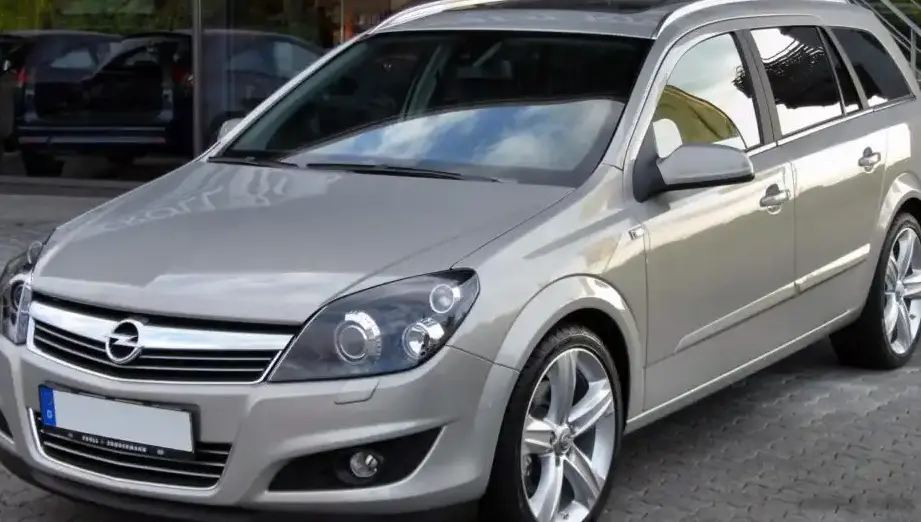
The Opel Astra H Caravan (facelift, produced 2007-2010) represented a significant update to the popular Astra H series, offering a practical and relatively sporty option in the European compact station wagon segment. Among the various engine and transmission combinations available, the 2.0 Turbo ECOTEC variant, producing 200 horsepower, occupied a position as a higher-performance offering, appealing to drivers seeking more than just basic transportation. This model year saw a refresh of the Astra H, with styling tweaks and improvements to interior materials and technology. The Caravan body style, Opel’s designation for a station wagon, emphasized practicality and cargo space, making it a popular choice for families and those requiring versatile vehicle.
Technical Specifications
| Brand | Opel |
| Model | Astra |
| Generation | Astra H Caravan (facelift 2007) |
| Type (Engine) | 2.0 Turbo ECOTEC (200 Hp) |
| Start of production | 2007 |
| End of production | 2010 |
| Powertrain Architecture | Internal Combustion engine |
| Body type | Station wagon (estate) |
| Seats | 5 |
| Doors | 5 |
| Fuel consumption (economy) – urban (NEDC) | 13.2 l/100 km (17.8 US mpg, 21.4 UK mpg, 7.6 km/l) |
| Fuel consumption (economy) – extra urban (NEDC) | 7.2 l/100 km (32.7 US mpg, 39.2 UK mpg, 13.9 km/l) |
| Fuel consumption (economy) – combined (NEDC) | 9.4 l/100 km (25 US mpg, 30.1 UK mpg, 10.6 km/l) |
| CO2 emissions (NEDC) | 226 g/km |
| Fuel Type | Petrol (Gasoline) |
| Acceleration 0 – 100 km/h | 8.4 sec |
| Acceleration 0 – 62 mph | 8.4 sec |
| Acceleration 0 – 60 mph | 8 sec (Calculated) |
| Maximum speed | 230 km/h (142.92 mph) |
| Emission standard | Euro 4 |
| Weight-to-power ratio | 6.8 kg/Hp, 148.1 Hp/tonne |
| Weight-to-torque ratio | 5.2 kg/Nm, 194.1 Nm/tonne |
| Power | 200 Hp @ 5400 rpm |
| Power per litre | 100.1 Hp/l |
| Torque | 262 Nm @ 4200 rpm (193.24 lb.-ft. @ 4200 rpm) |
| Engine layout | Front, Transverse |
| Engine Model/Code | Z20LER |
| Engine displacement | 1998 cm3 (121.93 cu. in.) |
| Number of cylinders | 4 |
| Engine configuration | Inline |
| Cylinder Bore | 86 mm (3.39 in.) |
| Piston Stroke | 86 mm (3.39 in.) |
| Compression ratio | 8.8:1 |
| Number of valves per cylinder | 4 |
| Fuel injection system | Multi-port manifold injection |
| Engine aspiration | Turbocharger, Intercooler |
| Valvetrain | DOHC |
| Engine oil capacity | 4.25 l (4.49 US qt, 3.74 UK qt) |
| Coolant | 7.7 l (8.14 US qt, 6.78 UK qt) |
| Kerb Weight | 1350 kg (2976.24 lbs.) |
| Max. weight | 1950 kg (4299.01 lbs.) |
| Max load | 600 kg (1322.77 lbs.) |
| Trunk (boot) space – minimum | 500 l (17.66 cu. ft.) |
| Trunk (boot) space – maximum | 1590 l (56.15 cu. ft.) |
| Fuel tank capacity | 52 l (13.74 US gal, 11.44 UK gal) |
| Max. roof load | 100 kg (220.46 lbs.) |
| Permitted trailer load with brakes (12%) | 1400 kg (3086.47 lbs.) |
| Permitted trailer load without brakes | 710 kg (1565.28 lbs.) |
| Length | 4515 mm (177.76 in.) |
| Width | 1753 mm (69.02 in.) |
| Width with mirrors folded | 1804 mm (71.02 in.) |
| Width including mirrors | 2033 mm (80.04 in.) |
| Height | 1500 mm (59.06 in.) |
| Wheelbase | 2703 mm (106.42 in.) |
| Front track | 1488 mm (58.58 in.) |
| Rear (Back) track | 1488 mm (58.58 in.) |
| Front overhang | 871 mm (34.29 in.) |
| Rear overhang | 941 mm (37.05 in.) |
| Minimum turning circle | 11.5 m (37.73 ft.) |
| Drivetrain Architecture | Front wheel drive, Internal Combustion engine |
| Drive wheel | Front wheel drive |
| Number of gears and type of gearbox | 6 gears, manual transmission |
| Front suspension | Independent, type McPherson with coil spring and anti-roll bar |
| Rear suspension | Torsion |
| Front brakes | Ventilated discs |
| Rear brakes | Disc |
| Assisting systems | ABS (Anti-lock braking system) |
| Steering type | Steering rack and pinion |
| Power steering | Electric Steering |
| Tires size | 205/55 R16; 225/45 R17; 225/40 R18 |
| Wheel rims size | 6.5J x 16; 7J x 17; 7.5J x 18 |
Powertrain & Engine Architecture
The heart of this Astra variant was the Z20LER, a 1.998-liter, inline-four cylinder turbocharged gasoline engine. This engine belonged to Opel’s Ecotec family, known for its focus on efficiency and refinement. The Z20LER featured multi-port fuel injection and a double overhead camshaft (DOHC) valvetrain, optimizing airflow for improved performance. The turbocharger, coupled with an intercooler, significantly boosted power output. The engine’s 8.8:1 compression ratio was a compromise between performance and the ability to run on readily available fuel grades. The 6-speed manual transmission was the standard offering, providing precise gear changes and allowing the driver to fully exploit the engine’s power band.
Driving Characteristics
The 200 hp output of the 2.0 Turbo ECOTEC transformed the Astra H Caravan into a surprisingly capable performer. Acceleration from 0 to 62 mph (0-100 km/h) took approximately 8.4 seconds, making it one of the quicker station wagons in its class. The turbocharger provided a noticeable surge of power in the mid-range, offering strong acceleration for overtaking and merging. While not a sports car, the Astra H Caravan 2.0 Turbo offered a balanced driving experience, combining practicality with a degree of driving enjoyment. The 6-speed manual transmission allowed for precise control, while the suspension provided a comfortable ride without sacrificing handling. Compared to lower-powered Astra variants, the 2.0 Turbo felt significantly more responsive and capable, though it did come with a slight penalty in fuel economy.
Equipment & Trim Levels
The 2.0 Turbo ECOTEC variant typically came with a higher level of standard equipment than the base models. This included features such as air conditioning, power windows, central locking, and an upgraded audio system. Higher trim levels offered options like leather upholstery, alloy wheels, a sunroof, and parking sensors. Interior appointments were generally well-executed, with a focus on functionality and durability. The Caravan body style itself offered a generous amount of cargo space, making it ideal for families or those needing to transport larger items.
Chassis & Braking
The Astra H Caravan featured an independent McPherson strut suspension at the front and a torsion beam suspension at the rear. This setup provided a good balance between ride comfort and handling. The front brakes were ventilated discs, offering strong stopping power, while the rear brakes were solid discs. Anti-lock Braking System (ABS) was standard, enhancing safety and control during emergency braking situations. The steering was rack and pinion with electric power assistance, providing precise and responsive steering feel.
Market Reception & Comparison
The Astra H Caravan 2.0 Turbo ECOTEC was generally well-received by automotive critics. It was praised for its strong performance, comfortable ride, and practical interior. However, some reviewers noted that the fuel economy was not as competitive as some of its rivals. Compared to other engines in the Astra H lineup, such as the 1.6-liter petrol or the 1.9-liter diesel, the 2.0 Turbo offered significantly more power but at the cost of increased fuel consumption and a higher purchase price. The diesel variants were favored by those prioritizing fuel efficiency, while the 2.0 Turbo appealed to drivers seeking a more engaging driving experience.
Legacy
The Z20LER engine, while generally reliable, is known to require regular maintenance, particularly regarding the turbocharger and cooling system. Proper oil changes and coolant flushes are crucial to prevent premature wear. Today, the Astra H Caravan 2.0 Turbo ECOTEC represents an affordable and practical option in the used car market. Its combination of performance, practicality, and relatively low running costs makes it a popular choice for those seeking a versatile family vehicle. While not a collector’s item, well-maintained examples are increasingly sought after by enthusiasts who appreciate its blend of performance and everyday usability.