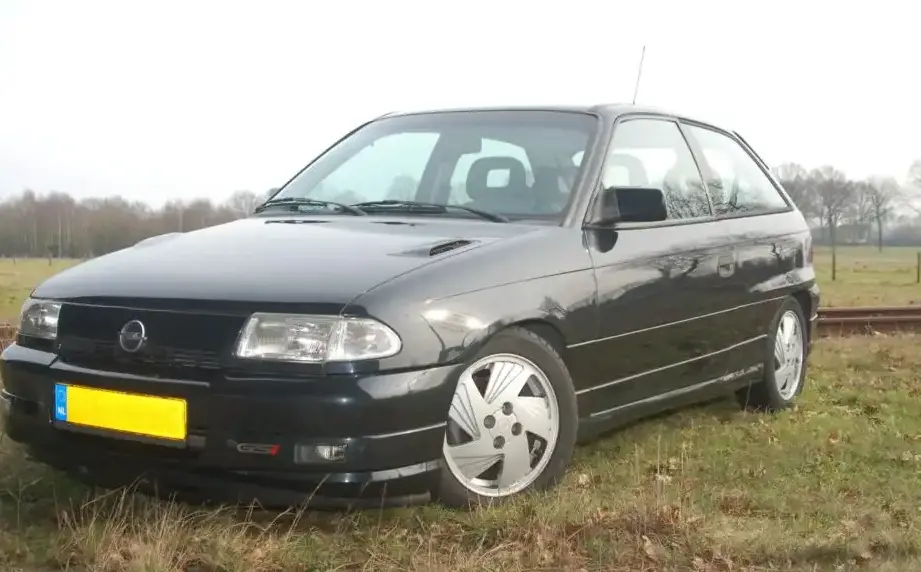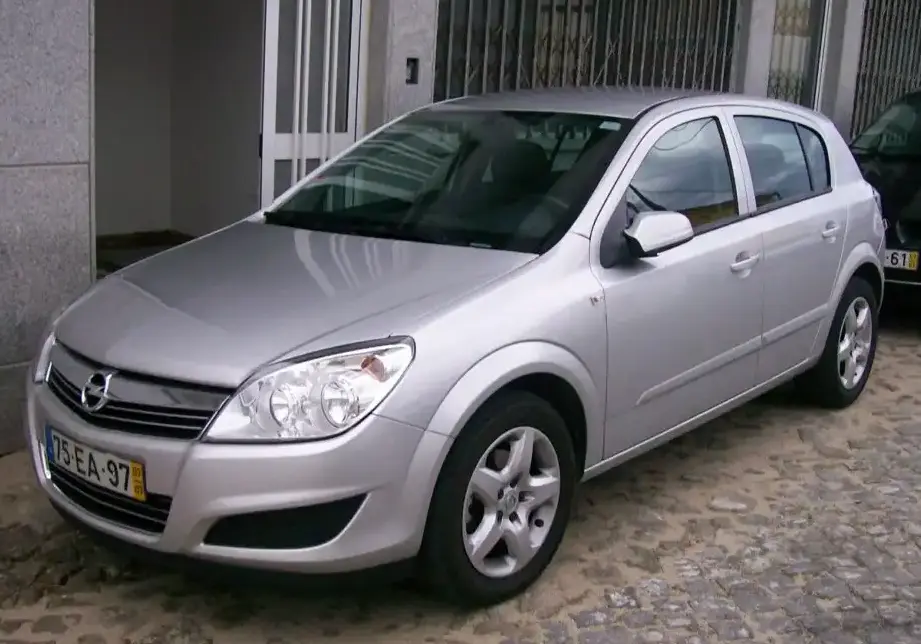
The Opel Astra H (facelift, produced 2007-2009) 1.6 Turbo ECOTEC variant, generating 180 horsepower, represented a significant step up in performance within the Astra H range. Introduced as part of the facelifted H generation (internally designated as the A04 generation), this model aimed to bridge the gap between the more economical base engines and the higher-performance OPC (Vauxhall VXR in the UK) version. Positioned as a mid-range offering, it catered to drivers seeking a blend of efficiency and spirited driving. The Astra H itself was a crucial model for Opel, representing a move towards more refined and modern vehicles, and played a key role in the brand’s sales success in Europe.
Technical Specifications
| Brand | Opel |
| Model | Astra |
| Generation | Astra H (facelift 2007) |
| Type (Engine) | 1.6 Turbo ECOTEC (180 Hp) |
| Start of production | 2007 |
| End of production | 2009 |
| Powertrain Architecture | Internal Combustion engine |
| Body type | Hatchback |
| Seats | 5 |
| Doors | 5 |
| Fuel consumption (urban) | 10.3 l/100 km (22.8 US mpg, 27.4 UK mpg, 9.7 km/l) |
| Fuel consumption (extra urban) | 6.2 l/100 km (37.9 US mpg, 45.6 UK mpg, 16.1 km/l) |
| Fuel consumption (combined) | 7.7 l/100 km (30.5 US mpg, 36.7 UK mpg, 13 km/l) |
| CO2 emissions | 185 g/km |
| Fuel Type | Petrol (Gasoline) |
| Acceleration 0 – 100 km/h | 8.3 sec |
| Acceleration 0 – 62 mph | 8.3 sec |
| Acceleration 0 – 60 mph | 7.9 sec |
| Maximum speed | 221 km/h (137.32 mph) |
| Emission standard | Euro 4 |
| Weight-to-power ratio | 7.1 kg/Hp, 140.6 Hp/tonne |
| Weight-to-torque ratio | 5.6 kg/Nm, 179.7 Nm/tonne |
| Power | 180 Hp @ 5500 rpm |
| Power per litre | 112.6 Hp/l |
| Torque | 230 Nm @ 1980-5500 rpm (169.64 lb.-ft. @ 1980-5500 rpm) |
| Engine layout | Front, Transverse |
| Engine Model/Code | Z16LET |
| Engine displacement | 1598 cm3 (97.52 cu. in.) |
| Number of cylinders | 4 |
| Engine configuration | Inline |
| Cylinder Bore | 79 mm (3.11 in.) |
| Piston Stroke | 81.5 mm (3.21 in.) |
| Compression ratio | 8.8:1 |
| Number of valves per cylinder | 4 |
| Fuel injection system | Multi-port manifold injection |
| Engine aspiration | Turbocharger, Intercooler |
| Valvetrain | DOHC |
| Engine oil capacity | 4.5 l (4.76 US qt | 3.96 UK qt) |
| Coolant capacity | 5.9 l (6.23 US qt | 5.19 UK qt) |
| Kerb Weight | 1280 kg (2821.92 lbs.) |
| Max. weight | 1830 kg (4034.46 lbs.) |
| Max load | 550 kg (1212.54 lbs.) |
| Trunk (boot) space – minimum | 380 l (13.42 cu. ft.) |
| Trunk (boot) space – maximum | 1295 l (45.73 cu. ft.) |
| Fuel tank capacity | 52 l (13.74 US gal | 11.44 UK gal) |
| Max. roof load | 75 kg (165.35 lbs.) |
| Permitted trailer load with brakes (12%) | 1500 kg (3306.93 lbs.) |
| Permitted trailer load without brakes | 675 kg (1488.12 lbs.) |
| Length | 4249 mm (167.28 in.) |
| Width | 1753 mm (69.02 in.) |
| Width with mirrors folded | 1804 mm (71.02 in.) |
| Width including mirrors | 2033 mm (80.04 in.) |
| Height | 1460 mm (57.48 in.) |
| Wheelbase | 2614 mm (102.91 in.) |
| Front track | 1488 mm (58.58 in.) |
| Rear track | 1488 mm (58.58 in.) |
| Front overhang | 871 mm (34.29 in.) |
| Rear overhang | 764 mm (30.08 in.) |
| Minimum turning circle | 11.2 m (36.75 ft.) |
| Drivetrain | Front wheel drive |
| Number of gears | 6 |
| Gearbox type | Manual transmission |
| Front suspension | Independent, McPherson with coil spring and anti-roll bar |
| Rear suspension | Torsion |
| Front brakes | Ventilated discs |
| Rear brakes | Disc |
| Assisting systems | ABS (Anti-lock braking system) |
| Steering type | Steering rack and pinion |
| Power steering | Electric |
| Tires size | 205/55 R16; 225/45 R17; 225/40 R18 |
| Wheel rims size | 6.5J x 16; 7J x 17; 7.5J x 18 |
Powertrain & Engine Architecture
The heart of this Astra variant is the Z16LET engine, a 1.6-liter turbocharged inline-four cylinder gasoline engine. This engine is part of Opel’s Ecotec family, known for its focus on efficiency and refinement. The Z16LET utilizes a single scroll turbocharger with an intercooler to boost power output. Fuel delivery is managed by a multi-port fuel injection system. The engine features a double overhead camshaft (DOHC) valvetrain with four valves per cylinder, optimizing airflow for improved performance. The compression ratio is set at 8.8:1. The engine’s design prioritized a broad torque curve, making it responsive in everyday driving situations. The 6-speed manual transmission was the standard offering, providing precise gear changes and contributing to the car’s overall driving experience.
Driving Characteristics
The 180 hp Astra H offered a noticeable performance upgrade over the base engine options. Acceleration from 0 to 60 mph was achieved in approximately 7.9 seconds, and it had a top speed of 137 mph. The turbocharger provides a surge of power in the mid-range, making overtaking maneuvers relatively effortless. While not as sharp or focused as the OPC version, the 1.6 Turbo offered a good balance between performance and fuel economy. The manual transmission’s gear ratios were well-matched to the engine’s powerband, allowing for spirited driving without excessive gear changes. Compared to the 1.4-liter naturally aspirated engines, the 1.6 Turbo felt significantly more powerful and responsive.
Equipment & Trim Levels
The 1.6 Turbo ECOTEC trim typically included features such as air conditioning, power windows, central locking, and an integrated audio system. Higher trim levels offered options like alloy wheels, fog lights, a multi-function steering wheel, and upgraded interior upholstery. Safety features included ABS brakes, front and side airbags, and seatbelt pretensioners. The interior design was functional and modern, with a focus on ergonomics. Optional extras included a sunroof, parking sensors, and a navigation system.
Chassis & Braking
The Astra H utilized an independent McPherson strut suspension setup at the front, providing good handling and ride comfort. The rear suspension employed a torsion beam setup, which was a cost-effective solution that still offered acceptable handling characteristics. The braking system consisted of ventilated discs at the front and solid discs at the rear. ABS (Anti-lock Braking System) was standard, enhancing braking performance and stability. The steering was rack and pinion with electric power assistance, providing precise and responsive steering feel.
Market Reception & Comparison
The 1.6 Turbo ECOTEC variant was generally well-received by automotive critics. It was praised for its strong performance, good fuel economy, and refined driving experience. Compared to the lower-powered Astra models, the 1.6 Turbo offered a significant improvement in performance without sacrificing too much fuel efficiency. It was seen as a viable alternative to competitors like the Ford Focus and Volkswagen Golf. However, some critics noted that the engine could feel slightly strained at higher RPMs. Fuel economy figures were competitive for its class, averaging around 30.5 US mpg in combined driving.
Legacy
The Z16LET engine, while generally reliable, is known to have some potential issues with the turbocharger and the wastegate actuator over the long term. Regular maintenance, including oil changes and turbocharger inspections, is crucial for ensuring longevity. Today, the Astra H 1.6 Turbo ECOTEC represents an affordable and relatively reliable used car option. Its blend of performance, fuel economy, and practicality makes it a popular choice for drivers seeking a well-rounded compact hatchback. Parts availability is generally good, and the car’s relatively simple mechanical design makes it relatively easy to maintain and repair.