
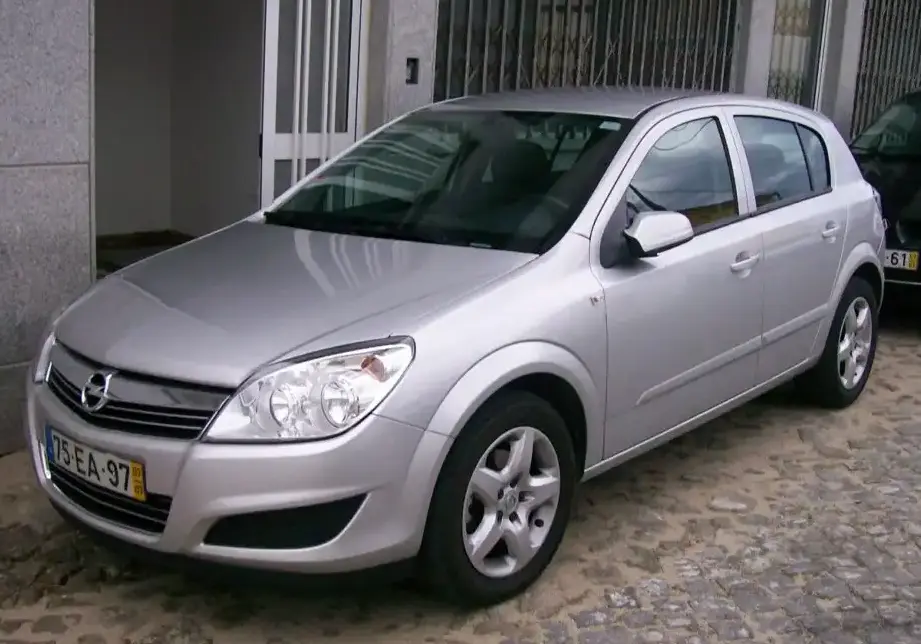
The Opel Astra H (facelift, produced 2007-2009) 1.9 CDTI ECOTEC variant, generating 150 horsepower, represented a significant offering within the Astra H range. Positioned as a mid-range option, it bridged the gap between the more economical base models and the performance-oriented trims. This version aimed to provide a balance of fuel efficiency, respectable power, and comfortable driving dynamics for the European market. The Astra H itself was a crucial model for Opel, building upon the success of its predecessor and incorporating advancements in safety, technology, and design. It competed directly with popular hatchbacks like the Volkswagen Golf, Ford Focus, and Peugeot 308.
Technical Specifications
| Brand | Opel |
| Model | Astra |
| Generation | Astra H (facelift 2007) |
| Type (Engine) | 1.9 CDTI ECOTEC (150 Hp) |
| Start of production | 2007 |
| End of production | 2009 |
| Powertrain Architecture | Internal Combustion engine |
| Body type | Hatchback |
| Seats | 5 |
| Doors | 5 |
| Fuel consumption (urban) | 7.4 l/100 km (31.8 US mpg) |
| Fuel consumption (extra urban) | 4.9 l/100 km (48 US mpg) |
| Fuel consumption (combined) | 5.8 l/100 km (40.6 US mpg) |
| CO2 emissions | 157 g/km |
| Fuel Type | Diesel |
| Acceleration 0 – 100 km/h | 8.9 sec |
| Acceleration 0 – 62 mph | 8.9 sec |
| Acceleration 0 – 60 mph | 8.5 sec |
| Maximum speed | 208 km/h (129.25 mph) |
| Emission standard | Euro 4 |
| Weight-to-power ratio | 8.8 kg/Hp |
| Weight-to-torque ratio | 4.1 kg/Nm |
| Power | 150 Hp @ 4000 rpm |
| Torque | 320 Nm @ 2000-2750 rpm (236.02 lb.-ft.) |
| Engine layout | Front, Transverse |
| Engine Model/Code | Z19DTH |
| Engine displacement | 1910 cm3 (116.56 cu. in.) |
| Number of cylinders | 4 |
| Engine configuration | Inline |
| Cylinder Bore | 82 mm (3.23 in.) |
| Piston Stroke | 90.4 mm (3.56 in.) |
| Compression ratio | 17.5:1 |
| Number of valves per cylinder | 4 |
| Fuel injection system | Diesel Commonrail |
| Engine aspiration | Turbocharger, Intercooler |
| Valvetrain | DOHC |
| Engine oil capacity | 4.3 l (4.54 US qt | 3.78 UK qt) |
| Coolant capacity | 7 l (7.4 US qt | 6.16 UK qt) |
| Kerb Weight | 1318 kg (2905.69 lbs.) |
| Max. weight | 1900 kg (4188.78 lbs.) |
| Max load | 582 kg (1283.09 lbs.) |
| Trunk (boot) space – minimum | 380 l (13.42 cu. ft.) |
| Trunk (boot) space – maximum | 1295 l (45.73 cu. ft.) |
| Fuel tank capacity | 52 l (13.74 US gal | 11.44 UK gal) |
| Max. roof load | 75 kg (165.35 lbs.) |
| Permitted trailer load (braked) | 1500 kg (3306.93 lbs.) |
| Permitted trailer load (unbraked) | 690 kg (1521.19 lbs.) |
| Length | 4249 mm (167.28 in.) |
| Width | 1753 mm (69.02 in.) |
| Width with mirrors folded | 1804 mm (71.02 in.) |
| Width including mirrors | 2033 mm (80.04 in.) |
| Height | 1460 mm (57.48 in.) |
| Wheelbase | 2614 mm (102.91 in.) |
| Front track | 1488 mm (58.58 in.) |
| Rear track | 1488 mm (58.58 in.) |
| Drag coefficient (Cd) | 0.32 |
| Minimum turning circle | 11.2 m (36.75 ft.) |
| Drivetrain | Front wheel drive |
| Number of gears | 6 |
| Gearbox type | Manual |
| Front suspension | Independent, McPherson with coil spring and anti-roll bar |
| Rear suspension | Torsion |
| Front brakes | Ventilated discs |
| Rear brakes | Disc |
| Assisting systems | ABS (Anti-lock braking system) |
| Steering type | Steering rack and pinion |
| Power steering | Electric |
| Tires size | 205/55 R16; 225/45 R17; 225/40 R18 |
| Wheel rims size | 6.5J x 16; 7J x 17; 7.5J x 18 |
INTRODUCTION
The Opel Astra H facelift, launched in 2007, represented a mid-cycle refresh of the highly successful Astra H generation. This update brought revised styling, improved interior materials, and enhancements to the engine lineup. The 1.9 CDTI ECOTEC 150 hp variant was a key component of this revised range, offering a diesel-powered option aimed at drivers prioritizing fuel economy and torque. Built on the GM Delta platform (internally known as 1HX0/A3), the Astra H aimed to provide a more refined and sophisticated driving experience compared to its predecessor. The facelifted model continued to be a strong seller in Europe, competing in the crowded compact hatchback segment.
Powertrain & Engine Architecture
The heart of this Astra variant is the Z19DTH engine, a 1.9-liter inline-four cylinder diesel. This engine is a member of Opel/Fiat’s family of common rail direct injection diesels. The Z19DTH utilizes a turbocharger with an intercooler to boost power output to 150 horsepower. The engine employs a sophisticated common rail direct injection system, delivering fuel at extremely high pressures for optimized combustion and reduced emissions. The valvetrain features a double overhead camshaft (DOHC) design with four valves per cylinder, enhancing breathing and contributing to the engine’s power delivery. The 1.9 CDTI was typically paired with a six-speed manual transmission, although an automatic option was also available, albeit less common. The automatic transmission was a traditional torque converter type, offering smooth shifts but at the expense of some fuel efficiency compared to the manual.
Driving Characteristics
The 1.9 CDTI 150 hp Astra H offered a compelling blend of performance and economy. While not a sports car, the engine delivered ample torque – 320 Nm (236 lb-ft) – from as low as 2000 rpm, providing strong acceleration in everyday driving situations. The six-speed manual transmission allowed drivers to keep the engine in its optimal power band, while the automatic version prioritized convenience. Compared to the lower-powered 1.7 CDTI variants, the 1.9 CDTI offered noticeably more punch, particularly when overtaking or climbing hills. However, it didn’t match the outright performance of the petrol-powered 2.0 Turbo models. The suspension setup provided a comfortable ride, absorbing bumps and imperfections in the road well. Steering was precise and responsive, contributing to a confident driving experience.
Equipment & Trim Levels
The 1.9 CDTI 150 hp variant was typically offered in mid-range trim levels, such as ‘Enjoy’ or ‘Cosmo’. Standard equipment generally included air conditioning, power windows, central locking, an audio system with CD player, and ABS brakes. Higher trim levels added features like alloy wheels, climate control, a trip computer, and upgraded interior trim. Optional extras included a sunroof, parking sensors, and a navigation system. Interior upholstery was typically cloth, with leather options available as an upgrade. The dashboard layout was functional and well-designed, with clear instrumentation and intuitive controls.
Chassis & Braking
The Astra H utilized a McPherson strut front suspension setup with a torsion beam rear axle. This configuration provided a good balance of ride comfort and handling. The front brakes were ventilated discs, offering strong stopping power, while the rear brakes were typically solid discs. ABS (Anti-lock Braking System) was standard, enhancing safety and stability during emergency braking. Stabilizer bars were fitted to both the front and rear axles to reduce body roll during cornering. The chassis was designed to provide a stable and predictable driving experience, even when fully loaded.
Market Reception & Comparison
The Opel Astra H 1.9 CDTI 150 hp received generally positive reviews from automotive critics. It was praised for its fuel efficiency, strong torque, and comfortable ride. However, some critics noted that the engine could be somewhat noisy compared to some of its rivals. Compared to the 1.7 CDTI variants, the 1.9 CDTI offered a significant performance upgrade, making it a more appealing option for drivers who frequently travel long distances or carry passengers. The petrol-powered 2.0 Turbo models offered more outright performance, but at the expense of fuel economy. In terms of reliability, the Z19DTH engine proved to be generally robust, although issues with the diesel particulate filter (DPF) could occur, particularly on vehicles used primarily for short journeys.
Legacy
The Opel Astra H 1.9 CDTI 150 hp remains a popular choice in the used car market today. Its combination of fuel efficiency, practicality, and affordability makes it an attractive option for budget-conscious buyers. The Z19DTH engine, while not without its potential issues (such as DPF problems), is generally considered to be a reliable unit when properly maintained. Parts availability is good, and maintenance costs are relatively low. The Astra H, in general, established Opel as a strong contender in the European compact hatchback segment, and the 1.9 CDTI variant played a significant role in its success.

