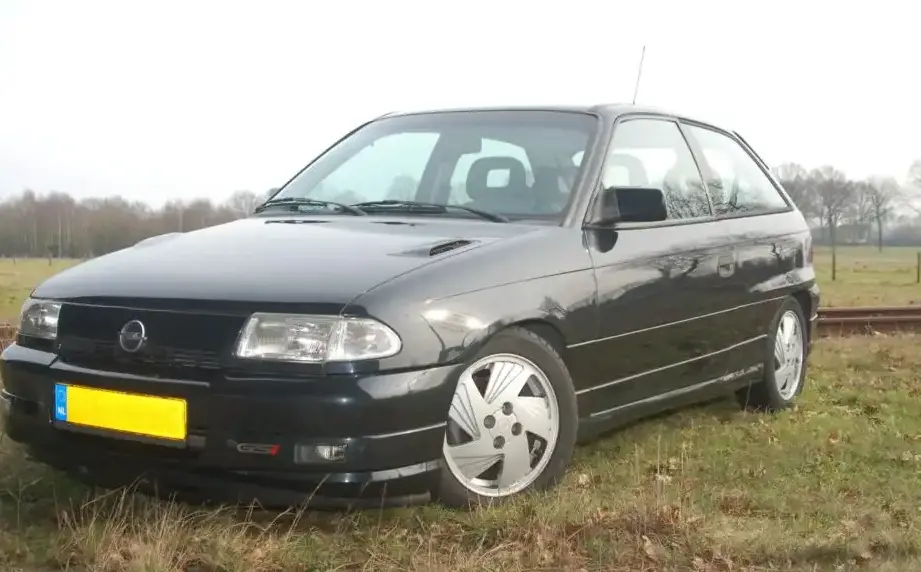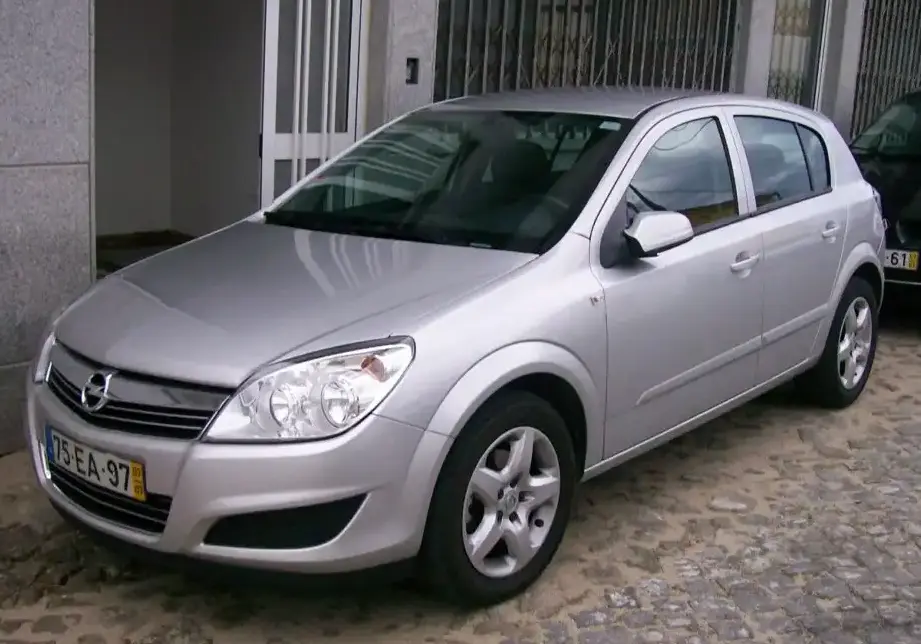
The Opel Astra H (facelift, produced 2007-2009) 2.0 Turbo ECOTEC represents a performance-oriented variant within the broader Astra H range. Introduced as part of the facelifted H generation (produced from 2004-2009), this model aimed to provide a more engaging driving experience compared to the base engine options. Positioned as a near-top-of-the-line trim, it offered a significant power upgrade and sporty characteristics, appealing to drivers seeking a balance between practicality and performance in a compact hatchback. The Astra H, in general, was Opel’s competitor in the C-segment, battling rivals like the Ford Focus, Volkswagen Golf, and Peugeot 308, primarily targeting the European market.
Technical Specifications
| Brand | Opel |
| Model | Astra |
| Generation | Astra H (facelift 2007) |
| Type (Engine) | 2.0 Turbo ECOTEC (200 Hp) |
| Start of production | 2007 |
| End of production | 2009 |
| Powertrain Architecture | Internal Combustion engine |
| Body type | Hatchback |
| Seats | 5 |
| Doors | 5 |
| Fuel consumption (urban) | 13.1 l/100 km (18 US mpg, 21.6 UK mpg) |
| Fuel consumption (extra urban) | 7.1 l/100 km (33.1 US mpg, 39.8 UK mpg) |
| Fuel consumption (combined) | 9.3 l/100 km (25.3 US mpg, 30.4 UK mpg) |
| CO2 emissions | 223 g/km |
| Fuel Type | Petrol (Gasoline) |
| Acceleration 0 – 100 km/h | 8.2 sec |
| Acceleration 0 – 62 mph | 8.2 sec |
| Acceleration 0 – 60 mph | 7.8 sec |
| Maximum speed | 230 km/h (142.92 mph) |
| Emission standard | Euro 4 |
| Weight-to-power ratio | 6.6 kg/Hp, 152.7 Hp/tonne |
| Weight-to-torque ratio | 5 kg/Nm, 200 Nm/tonne |
| Power | 200 Hp @ 5400 rpm |
| Power per litre | 100.1 Hp/l |
| Torque | 262 Nm @ 4200 rpm (193.24 lb.-ft. @ 4200 rpm) |
| Engine layout | Front, Transverse |
| Engine Model/Code | Z20LER |
| Engine displacement | 1998 cm3 (121.93 cu. in.) |
| Number of cylinders | 4 |
| Engine configuration | Inline |
| Cylinder Bore | 86 mm (3.39 in.) |
| Piston Stroke | 86 mm (3.39 in.) |
| Compression ratio | 8.8:1 |
| Number of valves per cylinder | 4 |
| Fuel injection system | Multi-port manifold injection |
| Engine aspiration | Turbocharger, Intercooler |
| Valvetrain | DOHC |
| Engine oil capacity | 4.25 l (4.49 US qt | 3.74 UK qt) |
| Coolant capacity | 7.7 l (8.14 US qt | 6.78 UK qt) |
| Kerb Weight | 1310 kg (2888.06 lbs.) |
| Max. weight | 1860 kg (4100.6 lbs.) |
| Max load | 550 kg (1212.54 lbs.) |
| Trunk (boot) space – minimum | 380 l (13.42 cu. ft.) |
| Trunk (boot) space – maximum | 1295 l (45.73 cu. ft.) |
| Fuel tank capacity | 52 l (13.74 US gal | 11.44 UK gal) |
| Max. roof load | 75 kg (165.35 lbs.) |
| Permitted trailer load (braked) | 1500 kg (3306.93 lbs.) |
| Permitted trailer load (unbraked) | 690 kg (1521.19 lbs.) |
| Length | 4249 mm (167.28 in.) |
| Width | 1753 mm (69.02 in.) |
| Width with mirrors folded | 1804 mm (71.02 in.) |
| Width including mirrors | 2033 mm (80.04 in.) |
| Height | 1460 mm (57.48 in.) |
| Wheelbase | 2614 mm (102.91 in.) |
| Front track | 1488 mm (58.58 in.) |
| Rear track | 1488 mm (58.58 in.) |
| Front overhang | 871 mm (34.29 in.) |
| Rear overhang | 764 mm (30.08 in.) |
| Drag coefficient (Cd) | 0.32 |
| Minimum turning circle | 11.2 m (36.75 ft.) |
| Drivetrain | Front wheel drive |
| Number of gears | 6 |
| Gearbox type | Manual transmission |
| Front suspension | Independent, McPherson with coil spring and anti-roll bar |
| Rear suspension | Torsion |
| Front brakes | Ventilated discs |
| Rear brakes | Disc |
| Assisting systems | ABS (Anti-lock braking system) |
| Steering type | Steering rack and pinion |
| Power steering | Electric |
| Tires size | 205/55 R16; 225/45 R17; 225/40 R18 |
| Wheel rims size | 6.5J x 16; 7J x 17; 7.5J x 18 |
Powertrain & Engine Architecture
The heart of the Astra H 2.0 Turbo ECOTEC is the Z20LER engine, a 1998cc inline-four cylinder powerplant. This engine utilizes a cast iron block with an aluminum cylinder head, a common configuration for balancing durability and weight. The “ECOTEC” designation signifies Opel’s focus on fuel efficiency and reduced emissions, achieved through technologies like multi-port fuel injection and a turbocharger with an intercooler. The turbocharger provides a significant boost in power output compared to naturally aspirated engines of similar displacement. The engine features a double overhead camshaft (DOHC) valvetrain with four valves per cylinder, optimizing airflow for improved performance. The compression ratio is set at 8.8:1. The six-speed manual transmission was standard, providing precise gear changes and allowing the driver to fully exploit the engine’s powerband.
Driving Characteristics
The 200 hp and 262 Nm (193 lb-ft) of torque delivered by the Z20LER engine provided a noticeable performance upgrade over the lower-spec Astra H models. Acceleration from 0 to 100 km/h (0-62 mph) took approximately 8.2 seconds, making it a relatively quick hatchback for its time. The turbocharger did exhibit some lag at lower engine speeds, but once boosted, the engine delivered strong and linear power throughout the rev range. The six-speed manual transmission was well-matched to the engine’s characteristics, offering close gear ratios for spirited driving. Compared to the base 1.4L or 1.6L engines, the 2.0 Turbo offered a much more engaging and rewarding driving experience, though it came at the cost of slightly increased fuel consumption.
Equipment & Trim Levels
The 2.0 Turbo ECOTEC variant typically came with a higher level of standard equipment than the entry-level Astra H trims. This included features like air conditioning, power windows, central locking, and an upgraded audio system. Sport seats with enhanced bolstering were often standard, providing better support during cornering. Alloy wheels were also a standard feature, typically ranging from 16 to 18 inches in diameter depending on the specific package. Optional extras included a sunroof, leather upholstery, and a more advanced navigation system. The interior trim generally featured a sporty aesthetic, with dark colors and metallic accents.
Chassis & Braking
The Astra H 2.0 Turbo ECOTEC utilized an independent McPherson strut suspension setup at the front, providing good handling and ride comfort. The rear suspension employed a torsion beam setup, which was a cost-effective solution that offered a reasonable balance between handling and space efficiency. The braking system consisted of ventilated discs at the front and solid discs at the rear, providing adequate stopping power for the vehicle’s performance capabilities. Anti-lock braking system (ABS) was standard, enhancing safety and control during emergency braking situations.
Market Reception & Comparison
The Astra H 2.0 Turbo ECOTEC was generally well-received by automotive critics, who praised its strong performance and engaging driving dynamics. However, some reviewers noted that the turbo lag could be noticeable at lower engine speeds. Compared to rivals like the Ford Focus ST and Volkswagen Golf GTI, the Astra H 2.0 Turbo offered a competitive level of performance and equipment at a slightly lower price point. Fuel economy was reasonable for a performance-oriented hatchback, but it was not as efficient as the lower-spec Astra H models. Reliability was generally good, although some owners reported minor issues with the turbocharger and fuel injection system.
Legacy
The Opel Astra H 2.0 Turbo ECOTEC remains a popular choice among enthusiasts seeking an affordable and capable performance hatchback. The Z20LER engine is known for its durability and potential for modification. While not as iconic as some of its rivals, the Astra H 2.0 Turbo offers a compelling combination of performance, practicality, and value. In the used car market, well-maintained examples of this model can still command a reasonable price, particularly those with a full service history and low mileage. The engine’s relatively simple design makes it easier to maintain and repair compared to some of the more complex modern powertrains.