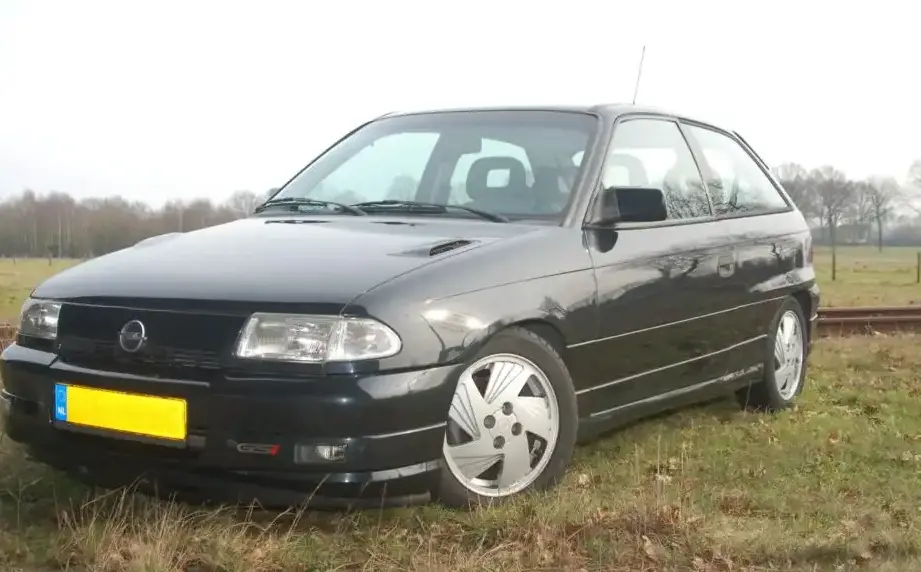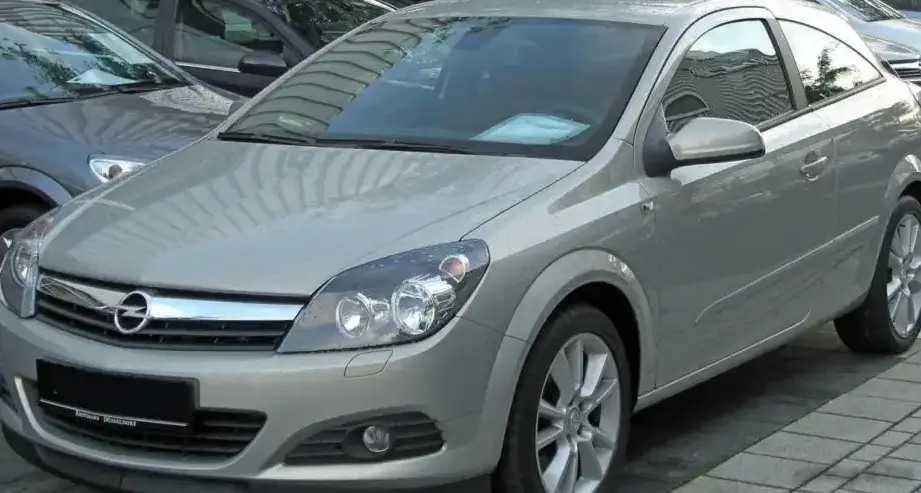
The Opel Astra H GTC 1.7 CDTI, producing 100 horsepower, was a variant of the Astra H GTC (Grand Touring Coupe) model produced between March 2005 and 2006. Positioned as an entry-level diesel offering within the GTC range, it aimed to provide a balance of fuel efficiency and practicality in a sporty three-door hatchback body style. This model was primarily sold in Europe, where the Astra held a significant market share as a popular compact family car. It utilized the 1HX0/A3 platform shared with other General Motors and partner vehicles, including the Fiat Bravo and Suzuki SX4.
Technical Specifications
| Brand | Opel |
| Model | Astra |
| Generation | Astra H GTC |
| Type (Engine) | 1.7 CDTI (100 Hp) |
| Start of production | March, 2005 |
| End of production | 2006 |
| Powertrain Architecture | Internal Combustion engine |
| Body type | Hatchback |
| Seats | 5 |
| Doors | 3 |
| Fuel consumption (urban) | 6.4 l/100 km (36.8 US mpg, 44.1 UK mpg, 15.6 km/l) |
| Fuel consumption (extra urban) | 4.2 l/100 km (56 US mpg, 67.3 UK mpg, 23.8 km/l) |
| Fuel consumption (combined) | 5 l/100 km (47 US mpg, 56.5 UK mpg, 20 km/l) |
| CO2 emissions | 135 g/km |
| Fuel Type | Diesel |
| Acceleration 0 – 100 km/h | 12.2 sec |
| Acceleration 0 – 62 mph | 12.2 sec |
| Acceleration 0 – 60 mph | 11.6 sec |
| Maximum speed | 180 km/h (111.85 mph) |
| Emission standard | Euro 4 |
| Weight-to-power ratio | 12.2 kg/Hp, 82.3 Hp/tonne |
| Weight-to-torque ratio | 5.1 kg/Nm, 197.5 Nm/tonne |
| Power | 100 Hp @ 4400 rpm |
| Power per litre | 59.3 Hp/l |
| Torque | 240 Nm @ 2300 rpm (177.01 lb.-ft. @ 2300 rpm) |
| Engine layout | Front, Transverse |
| Engine Model/Code | Z17DTH |
| Engine displacement | 1686 cm3 (102.89 cu. in.) |
| Number of cylinders | 4 |
| Engine configuration | Inline |
| Cylinder Bore | 79 mm (3.11 in.) |
| Piston Stroke | 86 mm (3.39 in.) |
| Compression ratio | 18.4:1 |
| Number of valves per cylinder | 4 |
| Fuel injection system | Diesel Commonrail |
| Engine aspiration | Turbocharger, Intercooler |
| Valvetrain | DOHC |
| Engine oil capacity | 5 l (5.28 US qt | 4.4 UK qt) |
| Coolant | 6.8 l (7.19 US qt | 5.98 UK qt) |
| Kerb Weight | 1215 kg (2678.62 lbs.) |
| Max. weight | 1790 kg (3946.27 lbs.) |
| Max load | 575 kg (1267.66 lbs.) |
| Trunk (boot) space – minimum | 380 l (13.42 cu. ft.) |
| Fuel tank capacity | 52 l (13.74 US gal | 11.44 UK gal) |
| Length | 4290 mm (168.9 in.) |
| Width | 1753 mm (69.02 in.) |
| Width including mirrors | 2033 mm (80.04 in.) |
| Height | 1415 mm (55.71 in.) |
| Wheelbase | 2614 mm (102.91 in.) |
| Front track | 1488 mm (58.58 in.) |
| Rear (Back) track | 1488 mm (58.58 in.) |
| Front overhang | 910 mm (35.83 in.) |
| Rear overhang | 766 mm (30.16 in.) |
| Ride height (ground clearance) | 140 mm (5.51 in.) |
| Drag coefficient (Cd) | 0.32 |
| Drivetrain Architecture | The Internal combustion engine (ICE) drives the front wheels of the vehicle. |
| Drive wheel | Front wheel drive |
| Number of gears and type of gearbox | 6 gears, manual transmission |
| Front suspension | Spring Strut |
| Rear suspension | Spring Strut |
| Front brakes | Ventilated discs |
| Rear brakes | Disc |
| Assisting systems | ABS (Anti-lock braking system) |
| Steering type | Steering rack and pinion |
| Tires size | 205/55 R16 |
| Wheel rims size | 6.5J x 16 |
Powertrain & Engine Architecture
The Astra H GTC 1.7 CDTI was powered by the Z17DTH engine, a 1.7-liter inline-four cylinder diesel engine. This engine was part of Opel/Vauxhall’s ‘family’ of diesel engines, known for their relatively compact size and efficiency. The Z17DTH featured a common rail direct injection system, delivering fuel at extremely high pressure for improved combustion and reduced emissions. A turbocharger with an intercooler was employed to boost power output. The engine utilized a Double Overhead Camshaft (DOHC) valvetrain with four valves per cylinder, optimizing gas flow. The engine’s 18.4:1 compression ratio was typical for a diesel engine, contributing to its thermal efficiency. The 100 horsepower and 240 Nm (177 lb-ft) of torque were respectable figures for a 1.7-liter diesel, but positioned it towards the lower end of the performance spectrum within the Astra H GTC range.
Driving Characteristics
The 1.7 CDTI automatic version of the Astra H GTC offered a comfortable, if not particularly sporty, driving experience. Acceleration from 0-60 mph took around 11.6 seconds, and top speed was limited to 111.85 mph. The engine’s torque was available from relatively low RPMs (2300 rpm), providing adequate pulling power for everyday driving situations. However, compared to the more powerful 1.9 CDTI or petrol variants, the 1.7 CDTI felt noticeably slower, especially when fully loaded or tackling uphill climbs. The automatic transmission, while convenient, wasn’t known for its particularly quick shifts, and could sometimes feel hesitant during overtaking maneuvers. The gear ratios were tuned for fuel economy rather than outright performance.
Equipment & Trim Levels
The 1.7 CDTI typically represented the entry-level diesel trim in the Astra H GTC lineup. Standard equipment generally included air conditioning, power steering, electric front windows, and a basic audio system. Safety features such as ABS and front airbags were also standard. Interior upholstery was typically cloth, and the dashboard featured a functional, if somewhat basic, design. Optional extras included alloy wheels, upgraded audio systems, rear electric windows, and parking sensors. Higher trim levels, such as the Sport or Design, added features like sport seats, climate control, and more sophisticated infotainment systems.
Chassis & Braking
The Astra H GTC 1.7 CDTI utilized a MacPherson strut suspension setup at the front and a torsion beam suspension at the rear. This configuration provided a reasonable balance between ride comfort and handling. The front brakes were ventilated discs, offering good stopping power, while the rear brakes were solid discs. The steering was a rack and pinion system, providing precise and responsive control. The car’s relatively lightweight construction (1215 kg / 2678.62 lbs) helped to mitigate the effects of the engine’s modest power output.
Market Reception & Comparison
The Astra H GTC 1.7 CDTI was generally well-received by critics as a practical and fuel-efficient option. However, it was often criticized for its lack of outright performance compared to other engines in the range. The 1.9 CDTI offered significantly more power and torque, while the petrol engines provided a more engaging driving experience. In terms of fuel economy, the 1.7 CDTI excelled, achieving around 47 US mpg on the combined cycle. Reliability was generally good, although some owners reported issues with the diesel particulate filter (DPF) and the common rail injection system.
Legacy
The Opel Astra H GTC 1.7 CDTI remains a relatively common sight on European roads today. The Z17DTH engine, while not known for being particularly exciting, proved to be reasonably durable and reliable when properly maintained. Used examples are typically affordable, making them an attractive option for budget-conscious buyers. However, potential buyers should be aware of the potential for DPF issues and the cost of maintaining the common rail injection system. The Astra H GTC 1.7 CDTI represents a practical and economical choice for those seeking a compact hatchback with decent fuel efficiency.