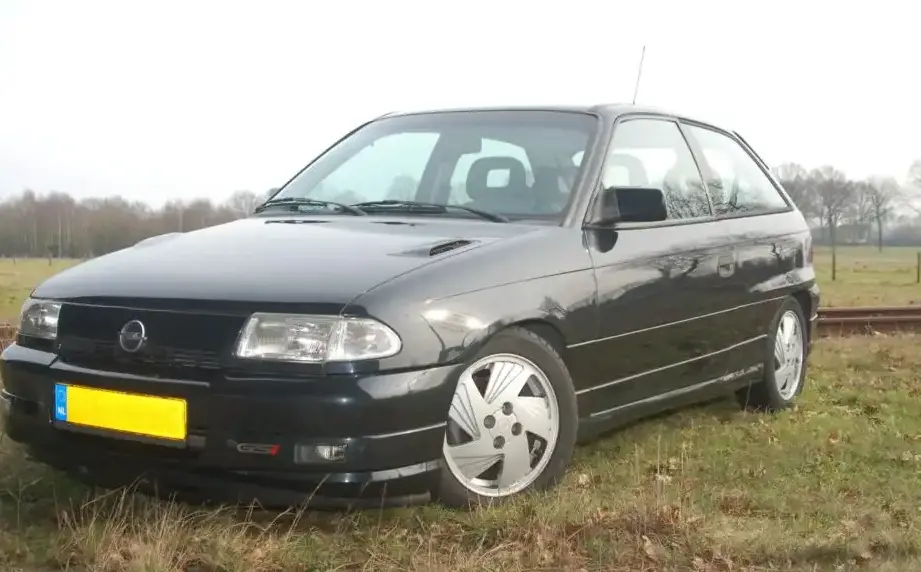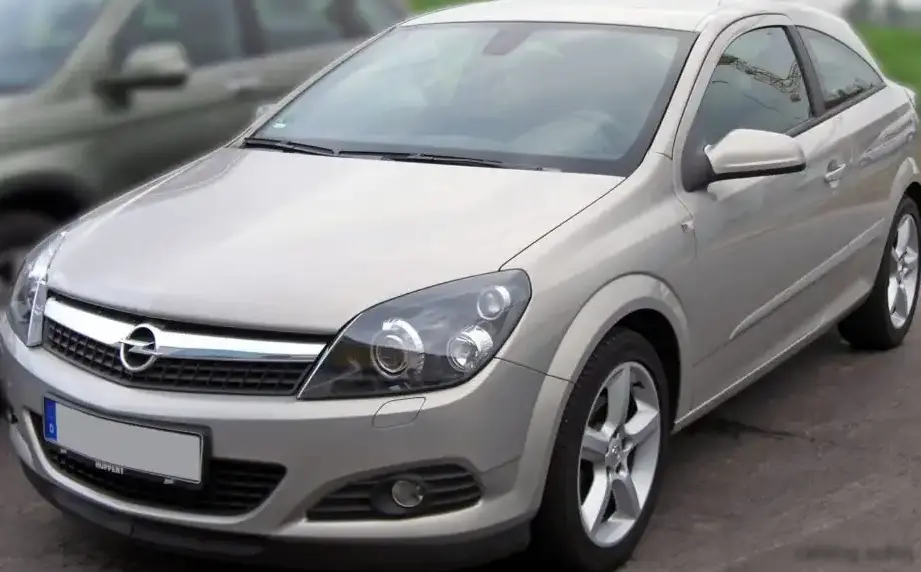
The Opel Astra H GTC (facelift, introduced in 2007) 1.6 ECOTEC, producing 115 horsepower, represented a key offering within the Astra H range. Positioned as a stylish and relatively affordable entry point into the GTC (Gran Turismo Coupe) body style, it was produced from 2007 through June 2010. This variant aimed to balance practicality with a sportier aesthetic, appealing to buyers seeking a compact, three-door hatchback with reasonable performance and fuel efficiency. It sat below the more powerful Astra GTC variants, such as those equipped with the 2.0 Turbo engine, and offered a more economical alternative to the diesel options.
Technical Specifications
| Brand | Opel |
| Model | Astra |
| Generation | Astra H GTC (facelift 2007) |
| Type (Engine) | 1.6 ECOTEC (115 Hp) |
| Start of production | 2007 |
| End of production | June, 2010 |
| Powertrain Architecture | Internal Combustion engine |
| Body type | Hatchback |
| Seats | 5 |
| Doors | 3 |
| Fuel consumption (urban) | 8.8 l/100 km (26.7 US mpg, 32.1 UK mpg, 11.4 km/l) |
| Fuel consumption (extra urban) | 5.3 l/100 km (44.4 US mpg, 53.3 UK mpg, 18.9 km/l) |
| Fuel consumption (combined) | 6.6 l/100 km (35.6 US mpg, 42.8 UK mpg, 15.2 km/l) |
| CO2 emissions | 158 g/km |
| Fuel Type | Petrol (Gasoline) |
| Acceleration 0 – 100 km/h | 11.6 sec |
| Acceleration 0 – 62 mph | 11.6 sec |
| Acceleration 0 – 60 mph | 11 sec |
| Maximum speed | 193 km/h (119.92 mph) |
| Emission standard | Euro 4 |
| Weight-to-power ratio | 10.4 kg/Hp, 96.2 Hp/tonne |
| Weight-to-torque ratio | 7.7 kg/Nm, 129.7 Nm/tonne |
| Power | 115 Hp @ 6000 rpm |
| Power per litre | 72 Hp/l |
| Torque | 155 Nm @ 4000 rpm (114.32 lb.-ft. @ 4000 rpm) |
| Engine layout | Front, Transverse |
| Engine Model/Code | Z16XER |
| Engine displacement | 1598 cm3 (97.52 cu. in.) |
| Number of cylinders | 4 |
| Engine configuration | Inline |
| Cylinder Bore | 79 mm (3.11 in.) |
| Piston Stroke | 81.5 mm (3.21 in.) |
| Compression ratio | 10.8:1 |
| Number of valves per cylinder | 4 |
| Fuel injection system | Multi-port manifold injection |
| Engine aspiration | Naturally aspirated engine |
| Valvetrain | DOHC |
| Engine oil capacity | 4.5 l (4.76 US qt | 3.96 UK qt) |
| Coolant capacity | 6.9 l (7.29 US qt | 6.07 UK qt) |
| Kerb Weight | 1195 kg (2634.52 lbs.) |
| Max. weight | 1745 kg (3847.07 lbs.) |
| Max load | 550 kg (1212.54 lbs.) |
| Trunk (boot) space – minimum | 340 l (12.01 cu. ft.) |
| Trunk (boot) space – maximum | 1070 l (37.79 cu. ft.) |
| Fuel tank capacity | 52 l (13.74 US gal | 11.44 UK gal) |
| Max. roof load | 75 kg (165.35 lbs.) |
| Permitted trailer load with brakes (12%) | 1200 kg (2645.55 lbs.) |
| Permitted trailer load without brakes | 635 kg (1399.94 lbs.) |
| Length | 4290 mm (168.9 in.) |
| Width | 1753 mm (69.02 in.) |
| Width with mirrors folded | 1804 mm (71.02 in.) |
| Width including mirrors | 2033 mm (80.04 in.) |
| Height | 1415 mm (55.71 in.) |
| Wheelbase | 2614 mm (102.91 in.) |
| Front track | 1488 mm (58.58 in.) |
| Rear track | 1488 mm (58.58 in.) |
| Front overhang | 910 mm (35.83 in.) |
| Rear overhang | 766 mm (30.16 in.) |
| Ride height (ground clearance) | 140 mm (5.51 in.) |
| Drag coefficient (Cd) | 0.32 |
| Minimum turning circle | 11.2 m (36.75 ft.) |
| Drivetrain Architecture | ICE, Front wheel drive |
| Number of gears and type of gearbox | 5 gears, manual transmission |
| Front suspension | Independent, McPherson with coil spring and anti-roll bar |
| Rear suspension | Torsion |
| Front brakes | Ventilated discs |
| Rear brakes | Disc |
| Assisting systems | ABS (Anti-lock braking system) |
| Steering type | Steering rack and pinion |
| Power steering | Electric |
| Tires size | 205/55 R16; 225/45 R17; 225/40 R18 |
| Wheel rims size | 6.5J x 16; 7J x 17; 7.5J x 18 |
INTRODUCTION
The Opel Astra H GTC 1.6 ECOTEC (115 hp) was a three-door hatchback produced as part of the Astra H series, which ran from 2004 to 2009 (with the facelifted models appearing in 2007). The GTC variant, signifying Gran Turismo Coupe, offered a more sporty and visually distinct alternative to the five-door hatchback and estate versions. The 2007 facelift brought revised styling, including new headlights and bumpers, along with minor interior updates. This 1.6-liter engine option was designed to provide a balance between affordability, fuel economy, and acceptable performance for everyday driving. It was a popular choice in European markets, particularly for younger drivers or those seeking a stylish and practical vehicle.
Powertrain & Engine Architecture
The Astra H GTC 1.6 ECOTEC utilized the Z16XER engine code, a 1.6-liter inline-four cylinder gasoline engine. This engine featured multi-port fuel injection and a double overhead camshaft (DOHC) valvetrain with four valves per cylinder. The engine was naturally aspirated, meaning it did not employ a turbocharger or supercharger. The Z16XER was known for its relatively simple design and reasonable reliability. The 1.6L engine produced 115 horsepower at 6000 rpm and 155 Nm (114 lb-ft) of torque at 4000 rpm. The engine’s design prioritized fuel efficiency over outright performance. The engine was transversely mounted at the front of the vehicle, driving the front wheels. The standard transmission was a five-speed manual gearbox, although a four-speed automatic transmission was also available, albeit less common. The automatic transmission was designed for smooth operation but at the expense of some performance and fuel economy.
Driving Characteristics
The 1.6-liter engine, paired with the five-speed manual transmission, provided adequate performance for typical urban and highway driving. Acceleration from 0 to 60 mph took around 11 seconds, and the top speed was approximately 119.92 mph. The automatic transmission version experienced slightly slower acceleration due to the transmission’s inherent efficiency losses. The gear ratios were tuned for fuel economy, meaning the engine often needed to be revved to access its peak power. Compared to the more powerful 2.0 Turbo variants, the 1.6 ECOTEC felt noticeably less responsive, particularly during overtaking maneuvers. However, the lighter engine weight contributed to better handling balance compared to the heavier, more powerful models. The steering was generally light and precise, making the car easy to maneuver in city traffic.
Equipment & Trim Levels
The Astra H GTC 1.6 ECOTEC typically came with a reasonable level of standard equipment. This included power windows, central locking, air conditioning, and an audio system with CD player. Higher trim levels, such as the Sport or Design, added features like alloy wheels, upgraded upholstery, and a multi-function steering wheel. Optional extras included a sunroof, parking sensors, and a more advanced audio system. Interior upholstery was typically cloth, with the option of leather upgrades on higher trims. The dashboard layout was functional and straightforward, with a focus on ergonomics. Safety features included ABS brakes, front airbags, and side airbags.
Chassis & Braking
The Astra H GTC featured an independent McPherson strut suspension at the front and a torsion beam suspension at the rear. This setup provided a good balance between ride comfort and handling. The front brakes were ventilated discs, while the rear brakes were solid discs. ABS (Anti-lock Braking System) was standard. The chassis was designed to be relatively lightweight, contributing to the car’s agility. Stabilizer bars were fitted to both the front and rear axles to reduce body roll during cornering. The steering was rack and pinion with electric power assistance.
Market Reception & Comparison
The Astra H GTC 1.6 ECOTEC was generally well-received by automotive critics as a practical and stylish hatchback. It was praised for its fuel efficiency and comfortable ride. However, some critics noted that the engine lacked outright power, particularly when compared to the more potent 2.0 Turbo models. Compared to the 1.8-liter versions available in some markets, the 1.6 ECOTEC offered slightly better fuel economy and a more refined driving experience. The diesel variants provided superior fuel economy but at the cost of increased noise and vibration. The 1.6 ECOTEC was often seen as a good compromise for buyers who prioritized affordability and fuel efficiency over performance.
Legacy
The Opel Astra H GTC 1.6 ECOTEC has proven to be a relatively reliable vehicle in the used car market. The Z16XER engine is known for its durability, although regular maintenance is essential. Common issues include occasional oil leaks and problems with the ignition coils. The automatic transmission, while smooth, can be prone to wear and tear if not properly maintained. Today, these Astras represent an affordable entry point into the compact hatchback segment. They are often sought after by first-time car buyers or those looking for a practical and economical vehicle for commuting or city driving. Parts availability remains good, and the relatively simple mechanical design makes them relatively easy to repair.