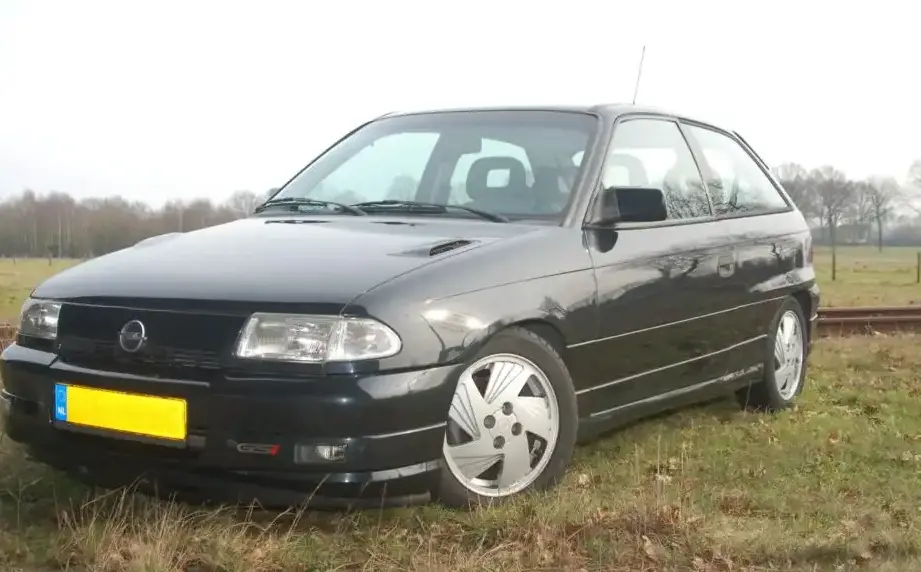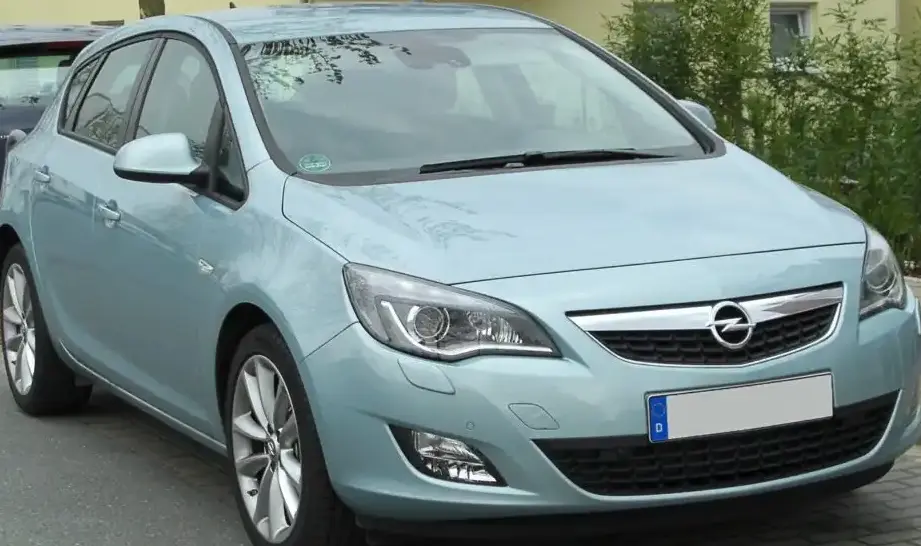
The Opel Astra J 1.3 CDTI (95 hp) ecoFLEX, produced between 2009 and 2012, represented an entry-level diesel option within the broader Astra J range (2009-2015). Positioned as a fuel-efficient variant, it aimed to appeal to buyers prioritizing economy over outright performance. This model was primarily sold in Europe, where diesel engines held a significant market share, and was part of the Astra J’s A platform generation. The “ecoFLEX” designation signified Opel’s efforts to optimize fuel consumption and reduce emissions through various engineering tweaks. It served as a key model in Opel’s strategy to offer a diverse range of powertrains catering to different customer needs.
Technical Specifications
| Brand | Opel |
| Model | Astra |
| Generation | Astra J |
| Type (Engine) | 1.3 CDTI (95 Hp) ecoFLEX |
| Start of production | 2009 |
| End of production | 2012 |
| Powertrain Architecture | Internal Combustion engine |
| Body type | Hatchback |
| Seats | 5 |
| Doors | 5 |
| Fuel consumption (urban) | 5.2 l/100 km (45.2 US mpg, 54.3 UK mpg, 19.2 km/l) |
| Fuel consumption (extra urban) | 3.5 l/100 km (67.2 US mpg, 80.7 UK mpg, 28.6 km/l) |
| Fuel consumption (combined) | 4.1 l/100 km (57.4 US mpg, 68.9 UK mpg, 24.4 km/l) |
| CO2 emissions | 109 g/km |
| Fuel Type | Diesel |
| Acceleration 0 – 100 km/h | 14.7 sec |
| Acceleration 0 – 62 mph | 14.7 sec |
| Acceleration 0 – 60 mph | 14 sec |
| Maximum speed | 169 km/h (105.01 mph) |
| Emission standard | Euro 5 |
| Weight-to-power ratio | 15.9 kg/Hp, 62.7 Hp/tonne |
| Weight-to-torque ratio | 8 kg/Nm, 125.4 Nm/tonne |
| Power | 95 Hp @ 4000 rpm |
| Power per litre | 76.1 Hp/l |
| Torque | 190 Nm @ 1750 rpm (140.14 lb.-ft. @ 1750 rpm) |
| Engine layout | Front, Transverse |
| Engine Model/Code | A13DTE |
| Engine displacement | 1248 cm3 (76.16 cu. in.) |
| Number of cylinders | 4 |
| Engine configuration | Inline |
| Cylinder Bore | 69.6 mm (2.74 in.) |
| Piston Stroke | 82 mm (3.23 in.) |
| Compression ratio | 16.8:1 |
| Number of valves per cylinder | 4 |
| Fuel injection system | Diesel Commonrail |
| Engine aspiration | Turbocharger, Intercooler |
| Engine oil capacity | 3.5 l (3.7 US qt | 3.08 UK qt) |
| Coolant | 6.8 l (7.19 US qt | 5.98 UK qt) |
| Kerb Weight | 1515 kg (3340 lbs.) |
| Max. weight | 2065 kg (4552.55 lbs.) |
| Max load | 550 kg (1212.54 lbs.) |
| Trunk (boot) space – minimum | 370 l (13.07 cu. ft.) |
| Trunk (boot) space – maximum | 1235 l (43.61 cu. ft.) |
| Fuel tank capacity | 56 l (14.79 US gal | 12.32 UK gal) |
| Length | 4419 mm (173.98 in.) |
| Width | 1814 mm (71.42 in.) |
| Width including mirrors | 2013 mm (79.25 in.) |
| Height | 1510 mm (59.45 in.) |
| Wheelbase | 2685 mm (105.71 in.) |
| Front track | 1541 mm (60.67 in.) |
| Rear (Back) track | 1551 mm (61.06 in.) |
| Ride height (ground clearance) | 160 mm (6.3 in.) |
| Drag coefficient (Cd) | 0.31 |
| Minimum turning circle | 11.4 m (37.4 ft.) |
| Drivetrain Architecture | Front wheel drive |
| Number of gears | 5 |
| Type of gearbox | Manual transmission |
| Front brakes | Ventilated discs |
| Rear brakes | Disc |
Powertrain & Engine Architecture
The heart of the Astra J 1.3 CDTI ecoFLEX is the A13DTE engine, a 1.3-liter inline-four cylinder diesel. This engine is part of Opel/Fiat’s family of small-displacement diesel engines, developed jointly. It features a common-rail direct fuel injection system, delivering fuel at extremely high pressure for improved combustion efficiency and reduced emissions. A turbocharger with an intercooler is employed to boost power output, compensating for the engine’s small displacement. The engine utilizes four valves per cylinder and a single overhead camshaft. The 95 horsepower output is achieved at 4000 rpm, while peak torque of 190 Nm (140 lb-ft) is available from 1750 rpm. The engine’s relatively low compression ratio of 16.8:1 helps to manage noise and vibration. The standard transmission for this variant was a five-speed manual gearbox, optimized for fuel economy rather than sporty performance.
Driving Characteristics
The 1.3 CDTI 95 hp Automatic Astra J offered a decidedly economy-focused driving experience. Acceleration was modest, with a 0-60 mph time of around 14 seconds. The engine felt strained when pushed hard, particularly when fully loaded or tackling inclines. The five-speed manual transmission, while efficient, had relatively long gear ratios, prioritizing fuel economy over responsiveness. Compared to the more powerful 1.7 CDTI or petrol variants, the 1.3 CDTI felt noticeably slower. However, in typical urban and highway driving, the engine provided sufficient power for everyday commuting. The focus was on maximizing miles per gallon, and the engine excelled in this regard. The steering was light and precise, making it easy to maneuver in city traffic.
Equipment & Trim Levels
The 1.3 CDTI ecoFLEX typically came with a fairly basic level of equipment, reflecting its position as an entry-level model. Standard features generally included air conditioning, power steering, electric front windows, and a basic audio system with MP3 compatibility. Safety features such as ABS, electronic stability control (ESP), and multiple airbags were standard. Higher trim levels, such as ‘Enjoy’ or ‘Cosmo’, offered additional features like alloy wheels, cruise control, automatic headlights and rain sensors, and upgraded interior trim. Interior upholstery was typically cloth, with a functional but not luxurious design. Optional extras included a panoramic sunroof, parking sensors, and a more advanced infotainment system.
Chassis & Braking
The Astra J 1.3 CDTI ecoFLEX utilized a MacPherson strut front suspension and a torsion beam rear suspension. This setup provided a reasonable balance between ride comfort and handling. The torsion beam rear suspension was a cost-effective solution, but it didn’t offer the same level of sophistication as a multi-link setup found in some higher-spec Astra J models. Braking was handled by ventilated discs at the front and solid discs at the rear. ABS (Anti-lock Braking System) was standard, providing enhanced braking performance in emergency situations. The suspension was tuned for comfort, resulting in a slightly softer ride compared to sportier Astra J variants.
Market Reception & Comparison
The Astra J 1.3 CDTI ecoFLEX was generally well-received by critics for its exceptional fuel economy. It consistently achieved combined fuel consumption figures of around 4.1 l/100 km (57.4 US mpg), making it one of the most fuel-efficient cars in its class. However, its performance was often criticized as being underwhelming. Compared to the 1.7 CDTI, which offered significantly more power, the 1.3 CDTI felt sluggish. The 1.7 CDTI also offered a more refined driving experience. The petrol variants, while less fuel-efficient, provided quicker acceleration and a more engaging driving experience. Despite its performance limitations, the 1.3 CDTI ecoFLEX appealed to buyers who prioritized economy and low running costs.
Legacy
The 1.3 CDTI engine, while not known for its longevity or complexity, proved to be reasonably reliable in the Astra J. Common issues included diesel particulate filter (DPF) clogging, particularly on vehicles used primarily for short journeys. Regular servicing and the use of high-quality diesel fuel were essential to prevent DPF problems. The engine’s relatively simple design made it relatively inexpensive to repair. On the used car market, the Astra J 1.3 CDTI ecoFLEX remains an affordable option for buyers seeking a fuel-efficient and practical hatchback. However, potential buyers should be aware of the potential for DPF issues and ensure that the vehicle has been properly maintained.