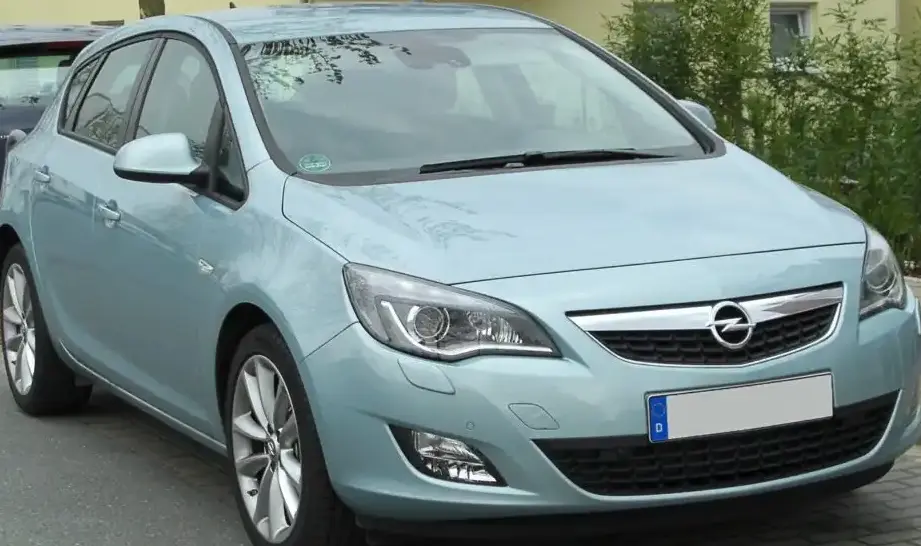
The Opel Astra J 1.4 (87 hp) ecoFLEX, produced between 2009 and 2012, represented an entry-level offering within the broader Astra J range (2009-2015). Positioned as a fuel-efficient option, it targeted buyers prioritizing economy over outright performance. This variant was a key part of Opel’s strategy to offer a diverse lineup catering to various customer needs within the competitive C-segment hatchback market in Europe. The Astra J itself was built on the GM Delta II platform, also known internally as the 1HX0/A3 platform, and represented a significant step forward in design and technology for the Astra model line.
Technical Specifications
| Brand | Opel |
| Model | Astra |
| Generation | Astra J |
| Type (Engine) | 1.4 (87 Hp) ecoFLEX |
| Start of production | 2009 |
| End of production | 2012 |
| Powertrain Architecture | Internal Combustion engine |
| Body type | Hatchback |
| Seats | 5 |
| Doors | 5 |
| Fuel consumption (urban) | 7.2 l/100 km (32.7 US mpg) |
| Fuel consumption (extra urban) | 4.2 l/100 km (56 US mpg) |
| Fuel consumption (combined) | 5.5 l/100 km (42.8 US mpg) |
| CO2 emissions | 129 g/km |
| Fuel Type | Petrol (Gasoline) |
| Acceleration 0 – 100 km/h | 14.7 sec |
| Acceleration 0 – 62 mph | 14.7 sec |
| Acceleration 0 – 60 mph | 14 sec |
| Maximum speed | 169 km/h (105.01 mph) |
| Emission standard | Euro 5 |
| Weight-to-power ratio | 14.9 kg/Hp |
| Weight-to-torque ratio | 10 kg/Nm |
| Power | 87 Hp @ 5600 rpm |
| Torque | 130 Nm @ 4000 rpm (95.88 lb.-ft. @ 4000 rpm) |
| Engine layout | Front, Transverse |
| Engine Model/Code | A14XEL |
| Engine displacement | 1398 cm3 (85.31 cu. in.) |
| Number of cylinders | 4 |
| Engine configuration | Inline |
| Cylinder Bore | 73.4 mm (2.89 in.) |
| Piston Stroke | 82.6 mm (3.25 in.) |
| Compression ratio | 10.5:1 |
| Number of valves per cylinder | 4 |
| Fuel injection system | Multi-port manifold injection |
| Engine aspiration | Naturally aspirated engine |
| Engine oil capacity | 4 l (4.23 US qt | 3.52 UK qt) |
| Coolant capacity | 6.2 l (6.55 US qt | 5.46 UK qt) |
| Kerb Weight | 1298 kg (2861.6 lbs.) |
| Max. weight | 1870 kg (4122.64 lbs.) |
| Max load | 572 kg (1261.04 lbs.) |
| Trunk (boot) space – minimum | 370 l (13.07 cu. ft.) |
| Trunk (boot) space – maximum | 1235 l (43.61 cu. ft.) |
| Fuel tank capacity | 56 l (14.79 US gal | 12.32 UK gal) |
| Length | 4419 mm (173.98 in.) |
| Width | 1814 mm (71.42 in.) |
| Width including mirrors | 2013 mm (79.25 in.) |
| Height | 1510 mm (59.45 in.) |
| Wheelbase | 2685 mm (105.71 in.) |
| Front track | 1541 mm (60.67 in.) |
| Rear (Back) track | 1551 mm (61.06 in.) |
| Ride height (ground clearance) | 160 mm (6.3 in.) |
| Drag coefficient (Cd) | 0.31 |
| Minimum turning circle | 11.4 m (37.4 ft.) |
| Drivetrain Architecture | Front wheel drive |
| Number of gears | 5 |
| Gearbox type | Manual transmission |
| Front brakes | Ventilated discs |
| Rear brakes | Disc |
| Assisting systems | ABS (Anti-lock braking system) |
| Steering type | Steering rack and pinion |
| Power steering | Electric Steering |
| Tires size | 215/60 R16 |
| Wheel rims size | 16 |
Powertrain & Engine Architecture
The Astra J 1.4 ecoFLEX utilized the A14XEL engine, a 1.4-liter (1398 cc) inline-four cylinder gasoline engine. This engine was part of Opel’s Family 1 engine series, known for its relatively simple design and focus on fuel efficiency. The A14XEL featured multi-point fuel injection and a single overhead camshaft (SOHC) valvetrain with four valves per cylinder. The engine’s 87 horsepower output at 5600 rpm and 130 Nm (95.88 lb-ft) of torque at 4000 rpm were achieved through careful tuning and optimization for economy. The engine was paired with a five-speed manual transmission, which was the standard offering for this trim level. The transmission was chosen to complement the engine’s characteristics, providing reasonable acceleration while maximizing fuel economy. The ecoFLEX designation indicated the inclusion of specific fuel-saving technologies, such as optimized engine management and reduced rolling resistance tires.
Driving Characteristics
The 1.4-liter, 87 hp Astra J ecoFLEX offered modest performance. Acceleration from 0-100 km/h (0-62 mph) took approximately 14.7 seconds, making it noticeably slower than higher-powered Astra J variants like the 1.6L or the turbocharged 1.4T models. The five-speed manual transmission was geared for economy, meaning that higher gears were engaged at lower speeds. This contributed to fuel efficiency but also meant that the engine often felt strained when accelerating or climbing hills. Compared to the more powerful versions, the 1.4 ecoFLEX required more frequent downshifts to maintain speed, especially when fully loaded. The steering was light and precise, typical of Opel’s offerings, and the suspension provided a comfortable ride, although it wasn’t particularly sporty. Overall, the driving experience was geared towards practicality and fuel economy rather than driving excitement.
Equipment & Trim Levels
The 1.4 ecoFLEX typically represented the entry-level trim in the Astra J lineup. Standard equipment generally included air conditioning, power windows, power door locks, a basic audio system (usually with CD player and auxiliary input), and ABS brakes. Safety features like front and side airbags were also standard. Interior upholstery was typically cloth, and the dashboard featured a functional but relatively basic design. Optional extras included alloy wheels, upgraded audio systems, parking sensors, and cruise control. The ecoFLEX trim often featured specific interior trim elements designed to highlight its fuel-efficient nature.
Chassis & Braking
The Astra J 1.4 ecoFLEX utilized a MacPherson strut front suspension and a torsion beam rear suspension. This setup provided a good balance between ride comfort and handling. The front brakes were ventilated discs, while the rear brakes were solid discs. ABS (Anti-lock Braking System) was standard, providing enhanced braking performance and stability. The steering system was an electric power steering (EPS) system, which offered light and precise steering feel while also contributing to fuel efficiency. The relatively low weight of the 1.4 ecoFLEX variant, at approximately 1298 kg (2861.6 lbs), helped to compensate for its lower power output.
Market Reception & Comparison
The Astra J 1.4 ecoFLEX was generally well-received by critics as a practical and economical choice. Its fuel efficiency was a major selling point, and it was often praised for its comfortable ride and reasonable handling. However, its lack of outright performance was a common criticism. Compared to the 1.6-liter Astra J, the 1.4 ecoFLEX offered significantly lower fuel consumption but also considerably slower acceleration. The turbocharged 1.4T models provided a better balance of performance and economy, but at a higher price point. In terms of reliability, the A14XEL engine was generally considered to be a reliable unit, although regular maintenance was essential to ensure long-term durability.
Legacy
The Opel Astra J 1.4 ecoFLEX remains a relatively common sight on the used car market. Its reputation for fuel efficiency and reliability has made it a popular choice for budget-conscious buyers. While not known for its performance, the powertrain has proven to be durable with proper maintenance. Common issues reported by owners include occasional problems with the fuel injectors and the electric power steering system. However, these issues are generally not major and can be addressed with relatively affordable repairs. The Astra J 1.4 ecoFLEX represents a practical and economical option for those seeking a reliable and fuel-efficient C-segment hatchback.