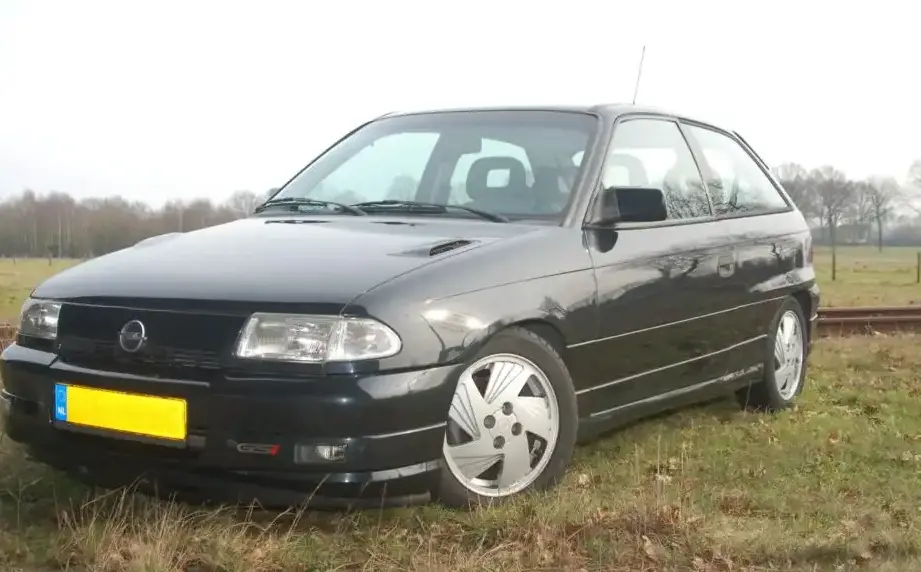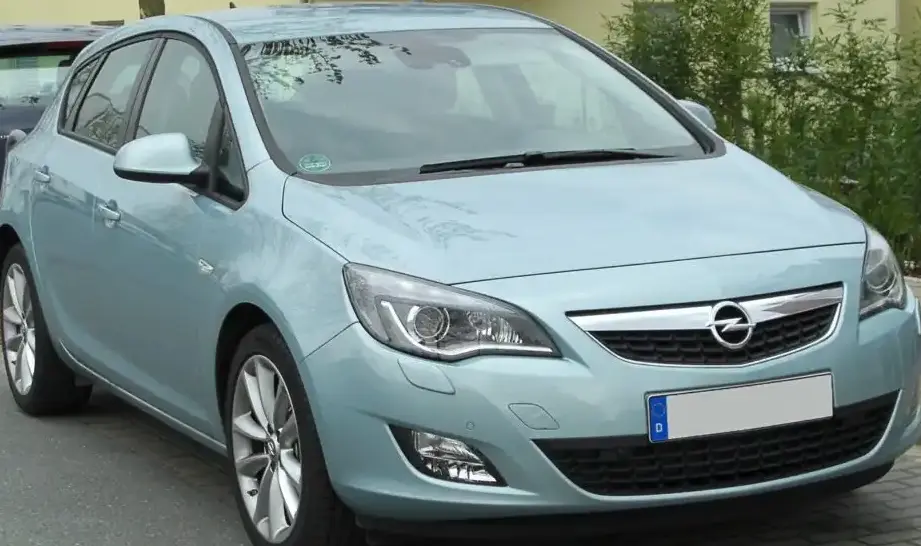
The Opel Astra J 1.4 Turbo, producing 140 horsepower, was a significant variant within the Astra J generation (2009-2015), representing a key balance between fuel efficiency and performance. Introduced as part of the J series, which utilized the General Motors Delta II platform, this model aimed to broaden the Astra’s appeal in the competitive European C-segment. Production of this specific configuration ran from 2009 to 2012, serving as a popular choice for buyers seeking a modern, well-equipped hatchback. It occupied a mid-range position in the Astra J lineup, positioned above the base 1.4-liter naturally aspirated engine and below the more potent 1.6-liter and 2.0-liter turbocharged options.
Technical Specifications
| Brand | Opel |
| Model | Astra |
| Generation | Astra J |
| Type (Engine) | 1.4 Turbo (140 Hp) |
| Start of production | 2009 |
| End of production | 2012 |
| Powertrain Architecture | Internal Combustion engine |
| Body type | Hatchback |
| Seats | 5 |
| Doors | 5 |
| Fuel consumption (urban) | 7.8 l/100 km (30.2 US mpg) |
| Fuel consumption (extra urban) | 4.8 l/100 km (49 US mpg) |
| Fuel consumption (combined) | 5.9 l/100 km (39.9 US mpg) |
| CO2 emissions | 137 g/km |
| Fuel Type | Petrol (Gasoline) |
| Acceleration 0 – 100 km/h | 9.7 sec |
| Acceleration 0 – 62 mph | 9.7 sec |
| Acceleration 0 – 60 mph | 9.2 sec |
| Maximum speed | 204 km/h (126.76 mph) |
| Emission standard | Euro 5 |
| Weight-to-power ratio | 9.3 kg/Hp |
| Weight-to-torque ratio | 6.5 kg/Nm |
| Power | 140 Hp @ 4900 rpm |
| Torque | 200 Nm @ 1850-4900 rpm (147.51 lb.-ft.) |
| Engine layout | Front, Transverse |
| Engine Model/Code | A14NET |
| Engine displacement | 1364 cm3 (83.24 cu. in.) |
| Number of cylinders | 4 |
| Engine configuration | Inline |
| Cylinder Bore | 72.5 mm (2.85 in.) |
| Piston Stroke | 82.6 mm (3.25 in.) |
| Compression ratio | 9.5:1 |
| Number of valves per cylinder | 4 |
| Fuel injection system | Multi-port manifold injection |
| Engine aspiration | Turbocharger, Intercooler |
| Engine oil capacity | 4 l (4.23 US qt | 3.52 UK qt) |
| Coolant capacity | 6.2 l (6.55 US qt | 5.46 UK qt) |
| Kerb Weight | 1298 kg (2861.6 lbs.) |
| Max. weight | 1870 kg (4122.64 lbs.) |
| Max load | 572 kg (1261.04 lbs.) |
| Trunk (boot) space – minimum | 370 l (13.07 cu. ft.) |
| Trunk (boot) space – maximum | 1235 l (43.61 cu. ft.) |
| Fuel tank capacity | 56 l (14.79 US gal | 12.32 UK gal) |
| Length | 4419 mm (173.98 in.) |
| Width | 1814 mm (71.42 in.) |
| Width including mirrors | 2013 mm (79.25 in.) |
| Height | 1510 mm (59.45 in.) |
| Wheelbase | 2685 mm (105.71 in.) |
| Front track | 1541 mm (60.67 in.) |
| Rear track | 1551 mm (61.06 in.) |
| Ride height (ground clearance) | 160 mm (6.3 in.) |
| Drag coefficient (Cd) | 0.31 |
| Minimum turning circle | 11.4 m (37.4 ft.) |
| Drivetrain Architecture | Front wheel drive |
| Number of gears | 6 |
| Gearbox type | Manual transmission |
Powertrain & Engine Architecture
The heart of the Astra J 1.4 Turbo was the A14NET engine, a 1.4-liter inline-four cylinder gasoline engine equipped with a turbocharger and intercooler. This engine was part of Opel/Vauxhall’s family of small-displacement turbocharged engines designed to deliver a balance of power and efficiency. The A14NET utilized multi-point fuel injection and featured a single overhead camshaft (SOHC) valvetrain with four valves per cylinder. The turbocharger, a key component, boosted power output by forcing more air into the cylinders. The engine’s electronic control unit (ECU) carefully managed fuel delivery and ignition timing to optimize performance and minimize emissions, meeting Euro 5 standards. The six-speed manual transmission was the standard offering, providing precise gear changes and contributing to the car’s overall responsiveness.
Driving Characteristics
The 140 hp output of the 1.4 Turbo, coupled with the six-speed manual gearbox, provided a reasonably engaging driving experience. Acceleration from 0 to 60 mph took approximately 9.2 seconds, and the car could reach a top speed of 126.76 mph. While not a performance-oriented variant, the turbocharger provided a noticeable boost in power during acceleration, making overtaking maneuvers relatively effortless. Compared to the base 1.4-liter naturally aspirated engine, the 1.4 Turbo offered significantly improved performance. However, it didn’t quite match the punch of the higher-output 1.6-liter or 2.0-liter turbocharged models. The gear ratios were well-chosen to maximize fuel efficiency while still providing adequate acceleration in most driving situations. The front-wheel-drive configuration offered predictable handling, although it could exhibit some torque steer under hard acceleration.
Equipment & Trim Levels
The Astra J 1.4 Turbo was typically offered in several trim levels, including Essentia, Sport, and SE. The base Essentia trim included standard features such as air conditioning, power windows, a CD/radio system, and ABS brakes. The Sport trim added alloy wheels, sports seats, and a leather-wrapped steering wheel. The SE trim, the most well-equipped, included features like automatic climate control, rain-sensing wipers, and a more advanced audio system. Optional extras available for this variant included a panoramic sunroof, navigation system, and parking sensors. Interior upholstery typically consisted of cloth seats, with leather upholstery available as an option on higher trim levels. The dashboard layout was modern and functional, with a clear instrument cluster and intuitive controls.
Chassis & Braking
The Astra J 1.4 Turbo utilized a MacPherson strut suspension setup at the front and a torsion beam suspension at the rear. This configuration provided a good balance between ride comfort and handling. The front suspension featured stabilizer bars to reduce body roll during cornering. Braking duties were handled by disc brakes at the front and drum brakes at the rear. ABS (Anti-lock Braking System) was standard, enhancing braking performance and safety. The steering system employed a rack-and-pinion setup, providing precise and responsive steering feel. The car’s relatively lightweight construction, at around 2861.6 lbs, contributed to its agility and fuel efficiency.
Market Reception & Comparison
The Opel Astra J 1.4 Turbo was generally well-received by automotive critics. It was praised for its fuel efficiency, comfortable ride, and well-equipped interior. However, some critics noted that the engine could feel a bit strained at higher speeds or when fully loaded. Compared to other trims in the Astra J lineup, the 1.4 Turbo offered a compelling balance between price, performance, and fuel economy. It was a popular choice for buyers who wanted a practical and efficient hatchback without sacrificing too much performance. Fuel economy figures of around 39.9 US mpg combined made it an attractive option for those concerned about running costs. Reliability was generally good, although some owners reported minor issues with the turbocharger and fuel injection system.
Legacy
The Opel Astra J 1.4 Turbo remains a relatively common sight on used car markets today. The A14NET engine, while not without its quirks, has proven to be reasonably durable with proper maintenance. Regular oil changes and timely replacement of wear items are crucial for ensuring long-term reliability. The car’s relatively simple mechanical design makes it relatively easy and affordable to repair. The Astra J 1.4 Turbo represents a solid choice for buyers seeking a practical, fuel-efficient, and well-equipped hatchback at an affordable price point. Its blend of comfort, economy, and reasonable performance continues to make it a popular option in the used car market.