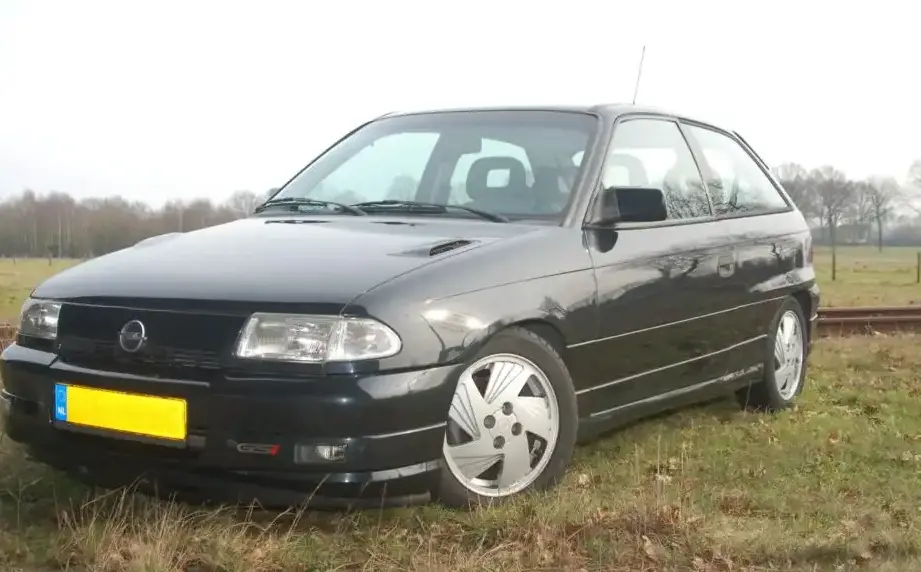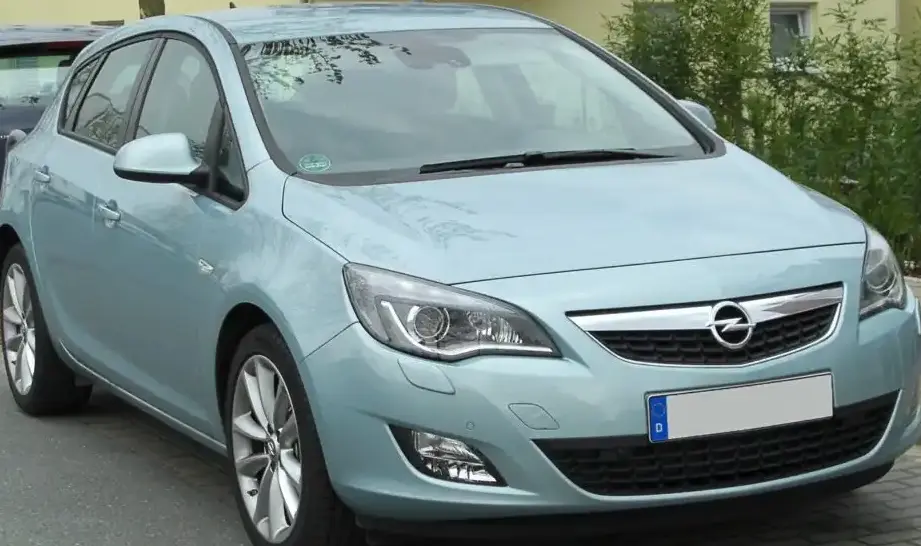
The Opel Astra J 1.6 (115 hp) Automatic, produced between 2009 and 2012, represented a key entry point into the Astra J range, Opel’s compact offering. Part of the Astra J generation (2009-2015), built on the GM Delta II platform, this variant aimed to provide a balance of affordability, practicality, and ease of use for buyers prioritizing comfort over outright performance. It served as a mainstream option within a lineup that also included more powerful petrol engines, diesel variants, and performance-oriented models like the OPC. The Astra J was Opel’s competitor in the highly competitive European C-segment, battling rivals like the Volkswagen Golf, Ford Focus, and Peugeot 308.
Technical Specifications
| Brand | Opel |
| Model | Astra |
| Generation | Astra J |
| Type (Engine) | 1.6 (115 Hp) Automatic |
| Start of production | 2009 |
| End of production | 2012 |
| Powertrain Architecture | Internal Combustion engine |
| Body type | Hatchback |
| Seats | 5 |
| Doors | 5 |
| Fuel consumption (urban) | 9.9 l/100 km (23.8 US mpg) |
| Fuel consumption (extra urban) | 5.5 l/100 km (42.8 US mpg) |
| Fuel consumption (combined) | 7.1 l/100 km (33.1 US mpg) |
| CO2 emissions | 167 g/km |
| Fuel Type | Petrol (Gasoline) |
| Acceleration 0 – 100 km/h | 13.3 sec |
| Acceleration 0 – 62 mph | 13.3 sec |
| Acceleration 0 – 60 mph | 12.6 sec |
| Maximum speed | 182 km/h (113.09 mph) |
| Emission standard | Euro 5 |
| Weight-to-power ratio | 11.3 kg/Hp |
| Weight-to-torque ratio | 8.4 kg/Nm |
| Power | 115 Hp @ 6000 rpm |
| Torque | 155 Nm @ 4000 rpm (114.32 lb.-ft. @ 4000 rpm) |
| Engine layout | Front, Transverse |
| Engine Model/Code | A16XER |
| Engine displacement | 1598 cm3 (97.52 cu. in.) |
| Number of cylinders | 4 |
| Engine configuration | Inline |
| Cylinder Bore | 79 mm (3.11 in.) |
| Piston Stroke | 81.5 mm (3.21 in.) |
| Compression ratio | 10.8:1 |
| Number of valves per cylinder | 4 |
| Fuel injection system | Multi-port manifold injection |
| Engine aspiration | Naturally aspirated |
| Engine oil capacity | 4.5 l (4.76 US qt | 3.96 UK qt) |
| Coolant capacity | 5.6 l (5.92 US qt | 4.93 UK qt) |
| Kerb Weight | 1298 kg (2861.6 lbs.) |
| Max. weight | 1870 kg (4122.64 lbs.) |
| Max load | 572 kg (1261.04 lbs.) |
| Trunk (boot) space – minimum | 370 l (13.07 cu. ft.) |
| Trunk (boot) space – maximum | 1235 l (43.61 cu. ft.) |
| Fuel tank capacity | 56 l (14.79 US gal | 12.32 UK gal) |
| Length | 4419 mm (173.98 in.) |
| Width | 1814 mm (71.42 in.) |
| Width including mirrors | 2013 mm (79.25 in.) |
| Height | 1510 mm (59.45 in.) |
| Wheelbase | 2685 mm (105.71 in.) |
| Front track | 1541 mm (60.67 in.) |
| Rear track | 1551 mm (61.06 in.) |
| Ride height (ground clearance) | 160 mm (6.3 in.) |
| Drag coefficient (Cd) | 0.31 |
| Minimum turning circle | 11.4 m (37.4 ft.) |
| Drivetrain Architecture | Front wheel drive |
| Number of gears | 6 |
| Gearbox type | Automatic transmission |
| Front brakes | Ventilated discs |
| Rear brakes | Disc |
| Assisting systems | ABS (Anti-lock braking system) |
| Tires size | 205/60 R16 |
| Wheel rims size | 16 |
Powertrain & Engine Architecture
The Astra J 1.6 Automatic was powered by the A16XER engine, a 1.6-liter inline-four cylinder petrol engine. This engine was a mainstay of Opel and Vauxhall’s lineup for several years, known for its relative simplicity and affordability. The A16XER featured multi-point fuel injection and a single overhead camshaft (SOHC) valvetrain with four valves per cylinder. It produced 115 horsepower at 6000 rpm and 155 Nm (114 lb-ft) of torque at 4000 rpm. The engine’s design prioritized fuel efficiency and smooth operation over outright performance. Paired with this engine was a six-speed automatic transmission, offering convenient gear changes but impacting acceleration compared to the available manual gearbox options.
Driving Characteristics
The 1.6-liter engine and automatic transmission combination resulted in a driving experience focused on comfort and ease of use. Acceleration was modest, taking approximately 13.3 seconds to reach 62 mph (100 km/h). The automatic transmission, while providing smooth shifts, often held onto gears longer to maximize fuel economy, which could feel sluggish during overtaking maneuvers. Compared to the more powerful 1.4 Turbo or 1.6 Turbo variants, the 1.6 Automatic lacked the punch needed for spirited driving. However, it offered a more relaxed and refined experience for everyday commuting and longer journeys. The gear ratios were tuned for fuel efficiency, with a relatively tall final drive.
Equipment & Trim Levels
The Astra J 1.6 Automatic typically came equipped with a reasonable level of standard features. Base models included air conditioning, power windows, central locking, and an audio system with CD player. Higher trim levels, such as ‘Enjoy’ or ‘Cosmo’, added features like alloy wheels, cruise control, automatic headlights and rain sensors, and upgraded interior trim. Interior upholstery was typically cloth, with options for leather available on higher-spec models. Optional extras included a panoramic sunroof, navigation system, and parking sensors.
Chassis & Braking
The Astra J 1.6 Automatic utilized a MacPherson strut front suspension and a torsion beam rear suspension. This setup provided a good balance between ride comfort and handling. Braking was handled by ventilated discs on the front wheels and solid discs on the rear. Anti-lock Braking System (ABS) was standard. The suspension was tuned for comfort, resulting in a relatively soft ride quality. Stabilizer bars were fitted to both the front and rear axles to reduce body roll during cornering, though the effect was less pronounced than on sportier Astra J variants.
Market Reception & Comparison
The Astra J 1.6 Automatic was generally well-received as a practical and affordable family car. Critics noted its comfortable ride, spacious interior, and reasonable fuel economy. However, the engine’s lack of power and the automatic transmission’s sometimes hesitant responses were common criticisms. Compared to the manual version of the 1.6, the automatic offered less engaging driving experience and slightly worse fuel economy. The diesel variants, such as the 1.3 CDTi, offered significantly better fuel economy but came at a higher purchase price. The 1.4 Turbo provided a better balance of performance and economy, but was also more expensive.
Legacy
The A16XER engine, while generally reliable, is known to have some potential issues, including occasional oil leaks and timing chain wear, particularly if maintenance has been neglected. The six-speed automatic transmission is generally robust, but regular fluid changes are crucial for longevity. Today, the Astra J 1.6 Automatic represents an affordable entry point into used car ownership. Its simplicity and relatively low running costs make it a practical choice for budget-conscious buyers. However, potential buyers should be aware of the engine’s potential weaknesses and ensure a thorough inspection before purchase. The Astra J, in general, remains a popular used car choice due to its practicality and relatively low depreciation.