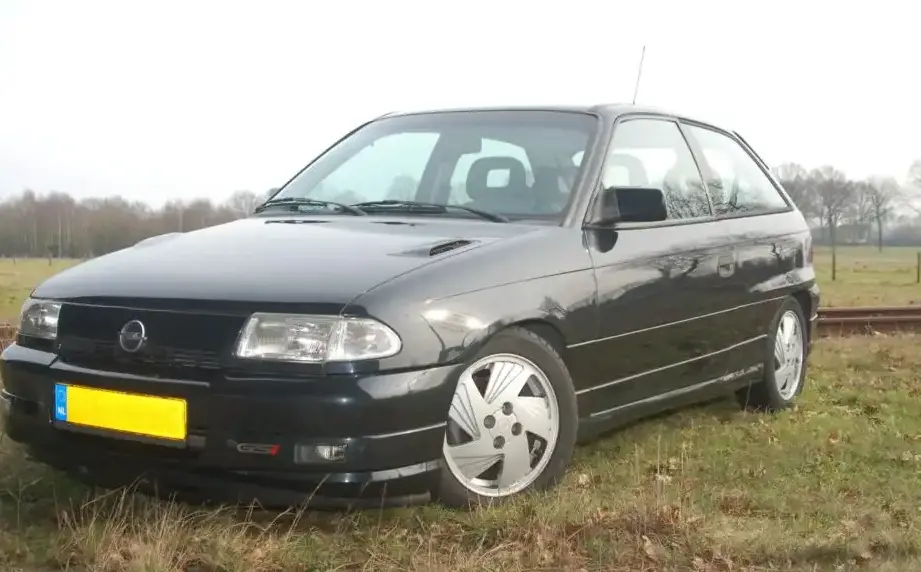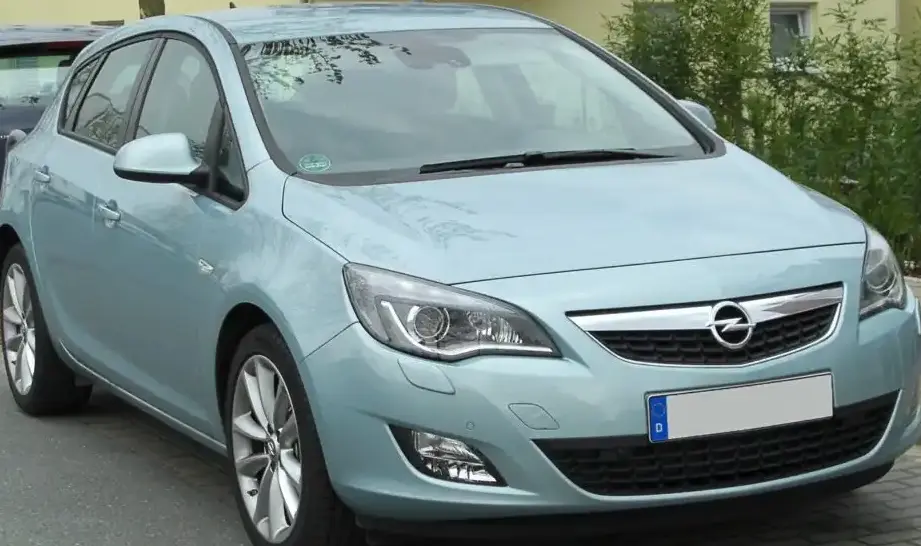
The Opel Astra J 1.6 (115 hp) ecoFLEX, produced between 2009 and 2012, represented an important entry point into the J-series Astra range. Part of the Astra J generation (2009-2015), built on the GM Delta II platform, this variant focused on fuel efficiency and affordability within the broader lineup. It was primarily marketed in Europe as a practical, economical hatchback aimed at cost-conscious buyers. The ecoFLEX designation signified Opel’s efforts to improve fuel economy and reduce emissions through various engineering tweaks. This model occupied the lower-mid range of the Astra J offerings, sitting below the more powerful 1.8L and 2.0L turbocharged variants, and above the base 1.4L engine.
Technical Specifications
| Brand | Opel |
| Model | Astra |
| Generation | Astra J |
| Type (Engine) | 1.6 (115 Hp) ecoFLEX |
| Start of production | 2009 |
| End of production | 2012 |
| Powertrain Architecture | Internal Combustion engine |
| Body type | Hatchback |
| Seats | 5 |
| Doors | 5 |
| Fuel consumption (combined) | 5.9 l/100 km (39.9 US mpg, 47.9 UK mpg, 16.9 km/l) |
| CO2 emissions | 139 g/km |
| Fuel Type | Petrol (Gasoline) |
| Acceleration 0 – 100 km/h | 11.7 sec |
| Acceleration 0 – 62 mph | 11.7 sec |
| Acceleration 0 – 60 mph | 11.1 sec |
| Maximum speed | 188 km/h (116.82 mph) |
| Emission standard | Euro 5 |
| Weight-to-power ratio | 11.3 kg/Hp, 88.6 Hp/tonne |
| Weight-to-torque ratio | 8.4 kg/Nm, 119.4 Nm/tonne |
| Power | 115 Hp @ 6000 rpm |
| Power per litre | 72 Hp/l |
| Torque | 155 Nm @ 4000 rpm (114.32 lb.-ft. @ 4000 rpm) |
| Engine layout | Front, Transverse |
| Engine Model/Code | A16XER |
| Engine displacement | 1598 cm3 (97.52 cu. in.) |
| Number of cylinders | 4 |
| Engine configuration | Inline |
| Cylinder Bore | 79 mm (3.11 in.) |
| Piston Stroke | 81.5 mm (3.21 in.) |
| Compression ratio | 10.8:1 |
| Number of valves per cylinder | 4 |
| Fuel injection system | Multi-port manifold injection |
| Engine aspiration | Naturally aspirated engine |
| Engine oil capacity | 4.5 l (4.76 US qt | 3.96 UK qt) |
| Coolant | 5.6 l (5.92 US qt | 4.93 UK qt) |
| Kerb Weight | 1298 kg (2861.6 lbs.) |
| Max. weight | 1870 kg (4122.64 lbs.) |
| Max load | 572 kg (1261.04 lbs.) |
| Trunk (boot) space – minimum | 370 l (13.07 cu. ft.) |
| Trunk (boot) space – maximum | 1235 l (43.61 cu. ft.) |
| Fuel tank capacity | 56 l (14.79 US gal | 12.32 UK gal) |
| Length | 4419 mm (173.98 in.) |
| Width | 1814 mm (71.42 in.) |
| Width including mirrors | 2013 mm (79.25 in.) |
| Height | 1510 mm (59.45 in.) |
| Wheelbase | 2685 mm (105.71 in.) |
| Front track | 1541 mm (60.67 in.) |
| Rear (Back) track | 1551 mm (61.06 in.) |
| Ride height (ground clearance) | 160 mm (6.3 in.) |
| Drag coefficient (Cd) | 0.31 |
| Minimum turning circle | 11.4 m (37.4 ft.) |
| Drivetrain Architecture | The Internal combustion engine (ICE) drives the front wheels of the vehicle. |
| Drive wheel | Front wheel drive |
| Number of gears and type of gearbox | 5 gears, manual transmission |
| Front brakes | Ventilated discs |
| Rear brakes | Disc |
| Assisting systems | ABS (Anti-lock braking system) |
| Tires size | 205/60 R16 |
| Wheel rims size | 16 |
Powertrain & Engine Architecture
The Astra J 1.6 ecoFLEX utilized the A16XER engine code, a 1.6-liter inline-four cylinder gasoline engine. This engine was a mainstay in many Opel and Vauxhall models during this period. It featured multi-point fuel injection and a single overhead camshaft (SOHC) valvetrain with four valves per cylinder. The engine was designed for efficiency, incorporating features like reduced friction components and optimized combustion chamber design. The 115 horsepower output was achieved at 6000 rpm, with a peak torque of 155 Nm (114 lb-ft) delivered at 4000 rpm. This engine was paired with a five-speed manual transmission, which was the standard offering for this trim level. The transmission was chosen for its simplicity and contribution to overall fuel economy. While an automatic transmission was available on other Astra J models, it wasn’t offered with the 1.6 ecoFLEX due to the focus on maximizing efficiency.
Driving Characteristics
The 1.6L 115 hp engine, coupled with the five-speed manual gearbox, provided adequate, but not exhilarating, performance. Acceleration from 0 to 60 mph took around 11.1 seconds, and the top speed was approximately 116 mph. The power delivery was relatively linear, making it predictable and easy to manage in everyday driving situations. Compared to the more powerful 1.8L and 2.0L turbocharged versions, the 1.6L felt noticeably less responsive, particularly during overtaking maneuvers. However, the lighter engine weight contributed to better handling and a more nimble feel. The gear ratios were tuned for fuel efficiency, meaning the engine often needed to be revved to maintain speed, especially when carrying a full load or climbing hills. The manual transmission allowed drivers to maintain control over the engine’s RPMs, optimizing fuel consumption and performance based on driving conditions.
Equipment & Trim Levels
The Astra J 1.6 ecoFLEX typically came with a reasonable level of standard equipment, focusing on practicality and essential features. Standard features included air conditioning, power windows, power mirrors, a CD/MP3 stereo system, and ABS brakes. Interior upholstery was typically cloth, with a functional and durable design. Optional extras included alloy wheels, a sunroof, parking sensors, and upgraded audio systems. The ecoFLEX trim often featured specific aerodynamic enhancements, such as a lower ride height and optimized underbody panels, to further improve fuel efficiency. The dashboard layout was typical of the Astra J, with a clear and intuitive design. The trim level was positioned as a step up from the base model, offering a good balance of features and affordability.
Chassis & Braking
The Astra J 1.6 ecoFLEX utilized a MacPherson strut front suspension and a torsion beam rear suspension. This setup provided a comfortable ride quality while maintaining reasonable handling characteristics. The front brakes were ventilated discs, while the rear brakes were solid discs. ABS (Anti-lock Braking System) was standard, enhancing safety and control during emergency braking situations. The suspension was tuned to prioritize comfort and fuel efficiency, resulting in a slightly softer ride compared to the sportier Astra J variants. The 16-inch wheels and 205/60 R16 tires contributed to a good balance between ride comfort and handling.
Market Reception & Comparison
The Astra J 1.6 ecoFLEX was generally well-received by critics for its fuel efficiency and affordability. It was praised as a practical and economical choice for everyday commuting and family use. However, some reviewers noted that the engine lacked power, particularly when fully loaded or driving on hilly terrain. Compared to the 1.8L and 2.0L turbocharged versions, the 1.6L offered significantly lower performance but also lower running costs. The 1.6L ecoFLEX typically achieved better fuel economy than the 1.8L, making it a more attractive option for drivers prioritizing fuel savings. Reliability was generally good, with the A16XER engine proving to be a relatively robust and dependable unit.
Legacy
The Opel Astra J 1.6 ecoFLEX remains a relatively common sight on European roads today. The A16XER engine has proven to be reasonably reliable, although regular maintenance is essential to prevent issues such as oil leaks and timing chain wear. In the used car market, these models are often sought after by buyers looking for an affordable and fuel-efficient hatchback. While not a performance car, the Astra J 1.6 ecoFLEX provided a practical and economical transportation solution for a wide range of drivers, and its focus on fuel efficiency helped to establish Opel’s reputation for environmentally conscious engineering.