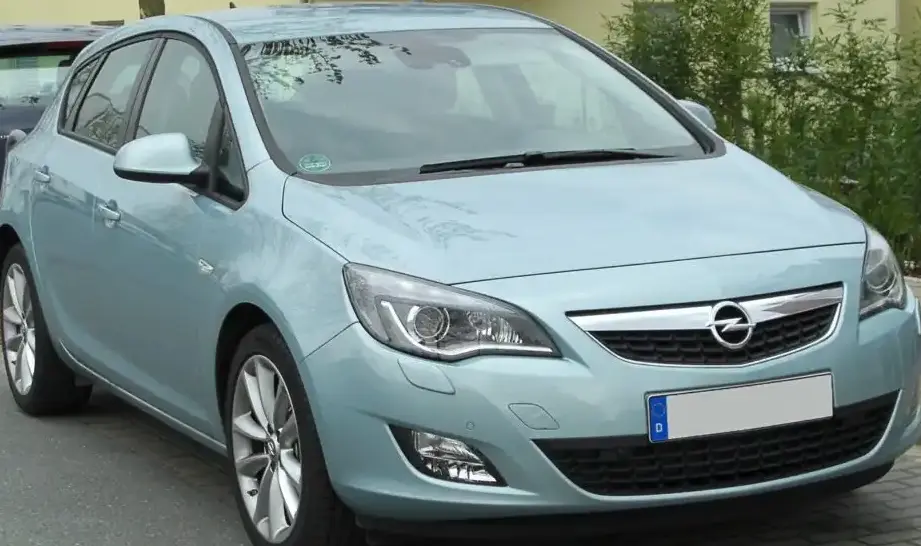
The Opel Astra J 1.6 Turbo Automatic, produced between 2009 and 2012, represented a significant step forward for Opel’s compact offering. Positioned as a mid-range trim within the broader Astra J lineup – which included naturally aspirated engines, diesel variants, and the higher-performance OPC (Vauxhall VXR in the UK) – this variant aimed to balance performance, fuel efficiency, and comfort. It was a key model for Opel in the European market, competing directly with vehicles like the Volkswagen Golf, Ford Focus, and Peugeot 308. The Astra J itself was built on the GM Delta II platform, shared with other GM vehicles of the era, and represented a substantial redesign over its predecessor, the Astra H.
Technical Specifications
| Brand | Opel |
| Model | Astra |
| Generation | Astra J |
| Type (Engine) | 1.6 Turbo (180 Hp) Automatic |
| Start of production | 2009 |
| End of production | 2012 |
| Powertrain Architecture | Internal Combustion engine |
| Body type | Hatchback |
| Seats | 5 |
| Doors | 5 |
| Fuel consumption (urban) | 9.9 l/100 km (23.8 US mpg) |
| Fuel consumption (extra urban) | 5.6 l/100 km (42 US mpg) |
| Fuel consumption (combined) | 7.2 l/100 km (32.7 US mpg) |
| Fuel Type | Petrol (Gasoline) |
| Acceleration 0 – 100 km/h | 9 sec |
| Acceleration 0 – 62 mph | 9 sec |
| Acceleration 0 – 60 mph | 8.6 sec |
| Maximum speed | 211 km/h (131.11 mph) |
| Emission standard | Euro 5 |
| Weight-to-power ratio | 7.2 kg/Hp |
| Weight-to-torque ratio | 5.6 kg/Nm |
| Power | 180 Hp @ 5500 rpm |
| Torque | 230 Nm @ 2200 rpm (169.64 lb.-ft. @ 2200 rpm) |
| Engine layout | Front, Transverse |
| Engine Model/Code | A16LET |
| Engine displacement | 1598 cm3 (97.52 cu. in.) |
| Number of cylinders | 4 |
| Engine configuration | Inline |
| Cylinder Bore | 79 mm (3.11 in.) |
| Piston Stroke | 81.5 mm (3.21 in.) |
| Compression ratio | 8.8:1 |
| Number of valves per cylinder | 4 |
| Fuel injection system | Multi-port manifold injection |
| Engine aspiration | Turbocharger, Intercooler |
| Engine oil capacity | 4.5 l (4.76 US qt | 3.96 UK qt) |
| Coolant | 5.6 l (5.92 US qt | 4.93 UK qt) |
| Kerb Weight | 1298 kg (2861.6 lbs.) |
| Max. weight | 1870 kg (4122.64 lbs.) |
| Max load | 572 kg (1261.04 lbs.) |
| Trunk (boot) space – minimum | 370 l (13.07 cu. ft.) |
| Trunk (boot) space – maximum | 1235 l (43.61 cu. ft.) |
| Fuel tank capacity | 56 l (14.79 US gal | 12.32 UK gal) |
| Length | 4419 mm (173.98 in.) |
| Width | 1814 mm (71.42 in.) |
| Width including mirrors | 2013 mm (79.25 in.) |
| Height | 1510 mm (59.45 in.) |
| Wheelbase | 2685 mm (105.71 in.) |
| Front track | 1541 mm (60.67 in.) |
| Rear (Back) track | 1551 mm (61.06 in.) |
| Ride height (ground clearance) | 160 mm (6.3 in.) |
| Drag coefficient (Cd) | 0.31 |
| Minimum turning circle | 11.4 m (37.4 ft.) |
| Drive wheel | Front wheel drive |
| Number of gears | 6 |
| Gearbox type | Automatic transmission |
Introduction
The Astra J 1.6 Turbo Automatic offered a compelling blend of performance and practicality. Introduced as part of the J series’ mid-cycle refresh, it aimed to broaden the Astra’s appeal to drivers seeking a more engaging driving experience without sacrificing fuel economy. The 1.6 Turbo engine, designated A16LET, was a key component of Opel’s downsizing strategy, offering power comparable to larger displacement engines while reducing emissions and fuel consumption. This particular configuration, paired with a six-speed automatic transmission, was positioned as a comfortable and convenient option for daily commuting and longer journeys.
Powertrain & Engine Architecture
The heart of the Astra J 1.6 Turbo Automatic is the A16LET engine, a 1.6-liter inline-four cylinder gasoline engine equipped with a turbocharger and intercooler. This engine utilizes multi-point fuel injection and a single overhead camshaft (SOHC) valvetrain with four valves per cylinder. The turbocharger, a key element in boosting power output, provides increased air intake to the engine, resulting in a higher power-to-weight ratio. The six-speed automatic transmission, sourced from Aisin, was chosen for its smooth shifting characteristics and efficiency. It features adaptive shift patterns, adjusting to the driver’s style and road conditions. The transmission’s gear ratios are tuned to provide a balance between acceleration and fuel economy, with a relatively tall final drive to aid in highway cruising.
Driving Characteristics
The 180 horsepower and 230 Nm (169.64 lb-ft) of torque delivered by the 1.6 Turbo engine, combined with the six-speed automatic, provided a respectable level of performance. Acceleration from 0 to 60 mph took approximately 8.6 seconds, and the car could reach a top speed of 211 km/h (131.11 mph). While not as quick as the Astra J OPC, the 1.6 Turbo Automatic offered a more than adequate driving experience for most drivers. The automatic transmission, while smooth, could sometimes feel hesitant during quick overtaking maneuvers. Compared to the manual transmission version of the same engine, the automatic offered slightly reduced acceleration due to transmission losses. However, it provided a more relaxed and convenient driving experience, particularly in urban traffic.
Equipment & Trim Levels
The Astra J 1.6 Turbo Automatic typically came equipped with a generous level of standard features. These included air conditioning, power windows, power mirrors, a CD/MP3 stereo system, and alloy wheels. Higher trim levels, such as the ‘Sport’ or ‘Cosmo’ variants, added features like automatic climate control, rain-sensing wipers, a trip computer, and upgraded interior upholstery. Optional extras included a panoramic sunroof, leather seats, a navigation system, and parking sensors. Interior materials were generally of good quality, with a focus on durability and comfort. The dashboard layout was clean and functional, with intuitive controls.
Chassis & Braking
The Astra J featured a MacPherson strut front suspension and a torsion beam rear suspension. This setup provided a good balance between ride comfort and handling. The 1.6 Turbo Automatic models typically came equipped with disc brakes on the front wheels and drum brakes on the rear wheels. ABS (Anti-lock Braking System) was standard, providing enhanced braking performance and stability. Steering was via a rack and pinion system, offering precise and responsive handling. Stabilizer bars were fitted to both the front and rear axles to reduce body roll during cornering.
Market Reception & Comparison
The Astra J 1.6 Turbo Automatic was generally well-received by automotive critics. It was praised for its fuel efficiency, comfortable ride, and well-equipped interior. However, some critics noted that the automatic transmission could be slow to respond at times. Compared to the 1.4-liter naturally aspirated engine, the 1.6 Turbo offered significantly more power and torque, resulting in improved acceleration and overall driving performance. Compared to the 2.0-liter diesel variants, the 1.6 Turbo offered a more refined and quieter driving experience, but with slightly higher fuel consumption. The Astra J 1.6 Turbo Automatic proved to be a popular choice for buyers seeking a practical and enjoyable compact car.
Legacy
The A16LET engine, while generally reliable, is known to require regular maintenance, particularly regarding the turbocharger and timing chain. Oil changes should be performed at the manufacturer’s recommended intervals to prevent premature wear. The six-speed automatic transmission is also relatively reliable, but it’s important to ensure that the transmission fluid is changed regularly. Today, the Astra J 1.6 Turbo Automatic can be found on the used car market at relatively affordable prices. It remains a viable option for buyers seeking a comfortable, fuel-efficient, and well-equipped compact car, provided that it has been properly maintained.