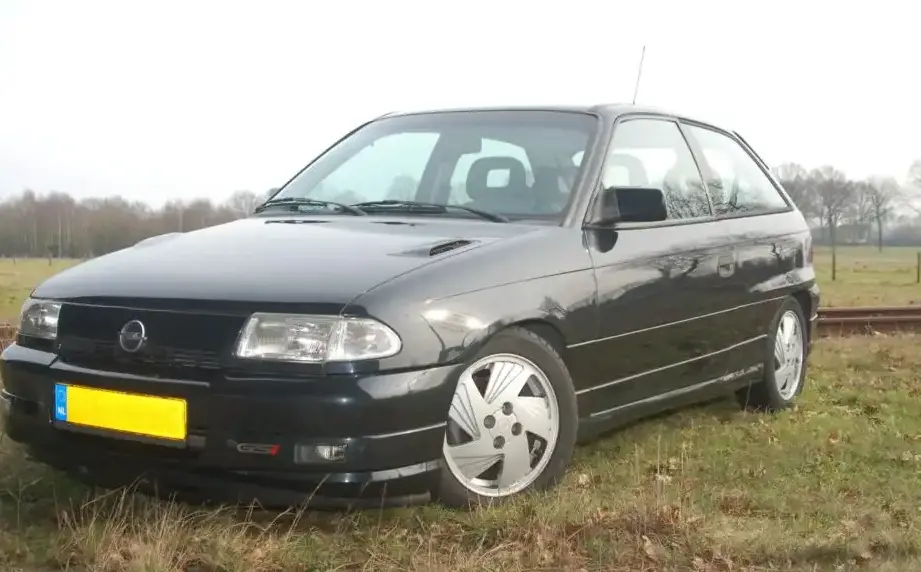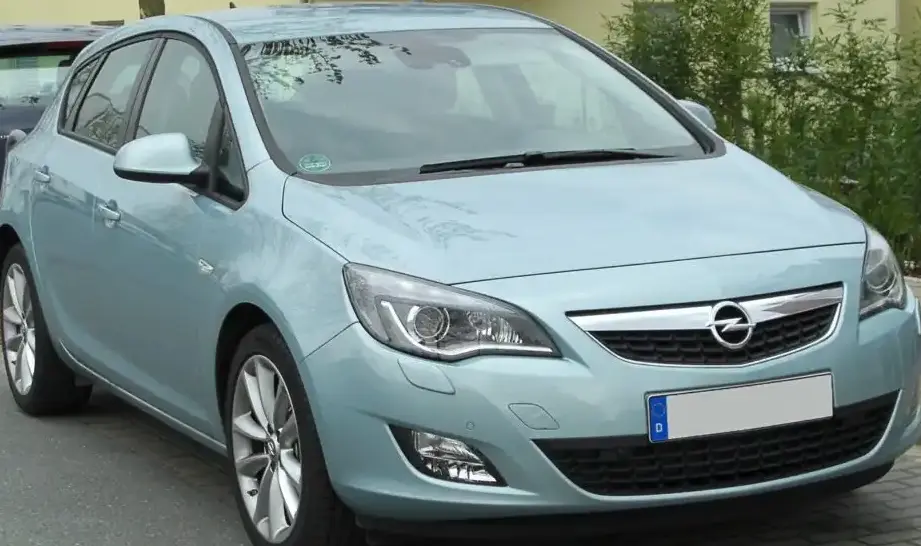
The Opel Astra J 1.7 CDTI, producing 125 horsepower, was a significant variant within the broader Astra J range (2009-2015). Positioned as a fuel-efficient and practical option, it catered to buyers seeking a balance between economy and everyday usability. Introduced as part of the J generation, which represented a substantial leap forward in design and technology for the Astra, this model aimed to compete directly with rivals like the Volkswagen Golf, Ford Focus, and Peugeot 308 in the competitive European C-segment. Production of this specific engine and transmission combination ran from 2009 to 2012, before being superseded by updated engine variants and transmission options within the Astra J lineup.
Technical Specifications
| Brand | Opel |
| Model | Astra |
| Generation | Astra J |
| Type (Engine) | 1.7 CDTI (125 Hp) |
| Start of production | 2009 year |
| End of production | 2012 year |
| Powertrain Architecture | Internal Combustion engine |
| Body type | Hatchback |
| Seats | 5 |
| Doors | 5 |
| Fuel consumption (urban) | 5.7 l/100 km (41.3 US mpg, 49.6 UK mpg, 17.5 km/l) |
| Fuel consumption (extra urban) | 4.2 l/100 km (56 US mpg, 67.3 UK mpg, 23.8 km/l) |
| Fuel consumption (combined) | 4.7 l/100 km (50 US mpg, 60.1 UK mpg, 21.3 km/l) |
| CO2 emissions | 125 g/km |
| Fuel Type | Diesel |
| Acceleration 0 – 100 km/h | 11.5 sec |
| Acceleration 0 – 62 mph | 11.5 sec |
| Acceleration 0 – 60 mph | 10.9 sec |
| Maximum speed | 195 km/h (121.17 mph) |
| Emission standard | Euro 5 |
| Weight-to-power ratio | 12.1 kg/Hp, 82.5 Hp/tonne |
| Weight-to-torque ratio | 5.4 kg/Nm, 184.8 Nm/tonne |
| Power | 125 Hp @ 4000 rpm |
| Power per litre | 74.1 Hp/l |
| Torque | 280 Nm @ 2300 rpm (206.52 lb.-ft. @ 2300 rpm) |
| Engine layout | Front, Transverse |
| Engine Model/Code | A17DTR |
| Engine displacement | 1686 cm3 (102.89 cu. in.) |
| Number of cylinders | 4 |
| Engine configuration | Inline |
| Cylinder Bore | 79 mm (3.11 in.) |
| Piston Stroke | 86 mm (3.39 in.) |
| Compression ratio | 18:1 |
| Number of valves per cylinder | 4 |
| Fuel injection system | Diesel Commonrail |
| Engine aspiration | Turbocharger, Intercooler |
| Engine oil capacity | 5.4 l (5.71 US qt | 4.75 UK qt) |
| Coolant | 7.1 l (7.5 US qt | 6.25 UK qt) |
| Kerb Weight | 1515 kg (3340 lbs.) |
| Max. weight | 2065 kg (4552.55 lbs.) |
| Max load | 550 kg (1212.54 lbs.) |
| Trunk (boot) space – minimum | 370 l (13.07 cu. ft.) |
| Trunk (boot) space – maximum | 1235 l (43.61 cu. ft.) |
| Fuel tank capacity | 56 l (14.79 US gal | 12.32 UK gal) |
| Length | 4419 mm (173.98 in.) |
| Width | 1814 mm (71.42 in.) |
| Width including mirrors | 2013 mm (79.25 in.) |
| Height | 1510 mm (59.45 in.) |
| Wheelbase | 2685 mm (105.71 in.) |
| Front track | 1541 mm (60.67 in.) |
| Rear (Back) track | 1551 mm (61.06 in.) |
| Ride height (ground clearance) | 160 mm (6.3 in.) |
| Drag coefficient (Cd) | 0.31 |
| Minimum turning circle | 11.4 m (37.4 ft.) |
| Drivetrain Architecture | ICE to Front Wheels |
| Drive wheel | Front wheel drive |
| Number of gears | 6 gears, manual transmission |
| Front brakes | Ventilated discs |
| Rear brakes | Disc |
| Tires size | 215/60 R16 |
| Wheel rims size | 16 |
Powertrain & Engine Architecture
The heart of the Astra J 1.7 CDTI was the A17DTR engine, a 1.7-liter inline-four cylinder diesel. This engine was part of Opel/Vauxhall’s family of small-displacement diesel engines, designed for efficiency and reduced emissions. It featured a common rail direct injection system, delivering fuel at extremely high pressure for optimized combustion. A turbocharger with an intercooler was employed to boost power output and improve torque across a wider rev range. The engine utilized four valves per cylinder and a single overhead camshaft. The 125 horsepower output was achieved at 4000 rpm, while peak torque of 280 Nm (206 lb-ft) was available from just 2300 rpm, providing good low-end responsiveness. The engine was paired with a six-speed manual transmission, offering a balance between fuel economy and driver control. While an automatic transmission was available on other Astra J variants, it wasn’t commonly paired with this specific 1.7 CDTI engine.
Driving Characteristics
The 1.7 CDTI with the manual transmission provided a practical and economical driving experience. Acceleration to 60 mph took around 10.9 seconds, and top speed was approximately 121 mph. While not a performance-oriented variant, the engine’s strong low-end torque made it well-suited for everyday driving, providing sufficient power for overtaking and navigating urban environments. The six-speed gearbox allowed for efficient cruising on highways, keeping engine speeds relatively low. Compared to the more powerful 1.6-liter Turbo petrol or the 2.0-liter CDTI diesel options, the 1.7 CDTI felt less refined and offered slower acceleration. However, it excelled in fuel economy, consistently achieving combined figures around 50 US mpg.
Equipment & Trim Levels
The Astra J 1.7 CDTI was typically offered in base or mid-level trim configurations, such as ‘Essentia’ or ‘Sportive’ depending on the market. Standard equipment generally included air conditioning, power windows, central locking, and a basic audio system. Higher trim levels added features like alloy wheels, cruise control, a multi-function steering wheel, and upgraded interior trim. Interior upholstery was typically cloth, with options for more premium materials on higher-spec models. Safety features included ABS, electronic stability control, and multiple airbags.
Chassis & Braking
The Astra J utilized a MacPherson strut front suspension and a torsion beam rear suspension. This setup provided a good balance between ride comfort and handling. The front brakes were ventilated discs, while the rear brakes were solid discs. The steering was a rack and pinion system, offering precise and responsive control. The 1.7 CDTI models typically featured smaller wheels (16-inch) and narrower tires (215/60 R16) compared to higher-performance variants, contributing to improved fuel efficiency and ride comfort.
Market Reception & Comparison
The Astra J 1.7 CDTI was well-received by critics for its fuel efficiency and practicality. It was often praised as a sensible choice for drivers prioritizing economy over performance. Compared to the petrol-powered Astra J models, the 1.7 CDTI offered significantly better fuel economy. However, it was often criticized for being somewhat noisy and lacking the refinement of some of its competitors, such as the Volkswagen Golf TDI. In terms of reliability, the A17DTR engine proved to be generally robust, although some owners reported issues with the diesel particulate filter (DPF) and the electronic throttle control.
Legacy
The Opel Astra J 1.7 CDTI remains a popular choice in the used car market, particularly for buyers seeking an affordable and fuel-efficient hatchback. The A17DTR engine, while not without its quirks, has proven to be relatively durable with proper maintenance. The availability of spare parts is generally good, and repair costs are reasonable. However, potential buyers should be aware of the potential for DPF issues, especially if the vehicle has primarily been used for short journeys. Overall, the Astra J 1.7 CDTI represents a solid and practical option in the used car market, offering a good balance of economy, reliability, and everyday usability.