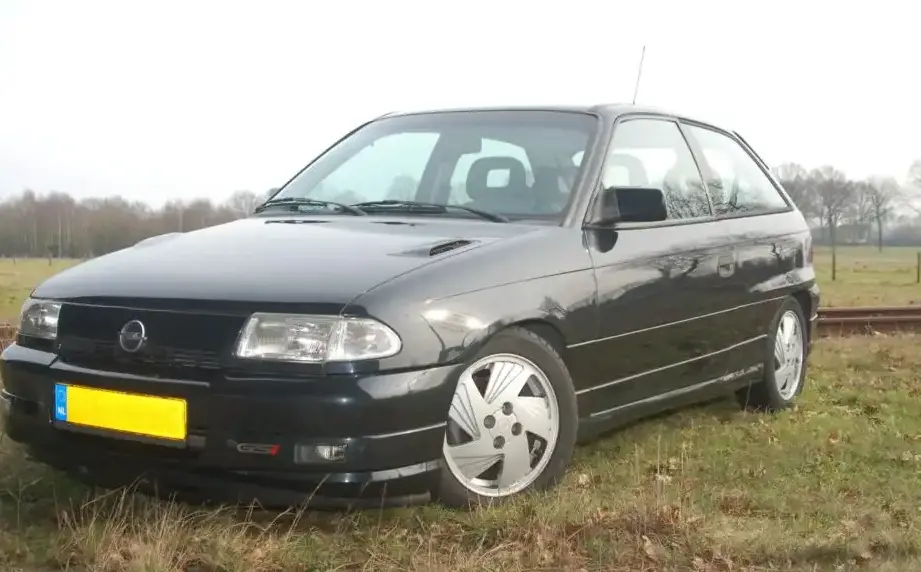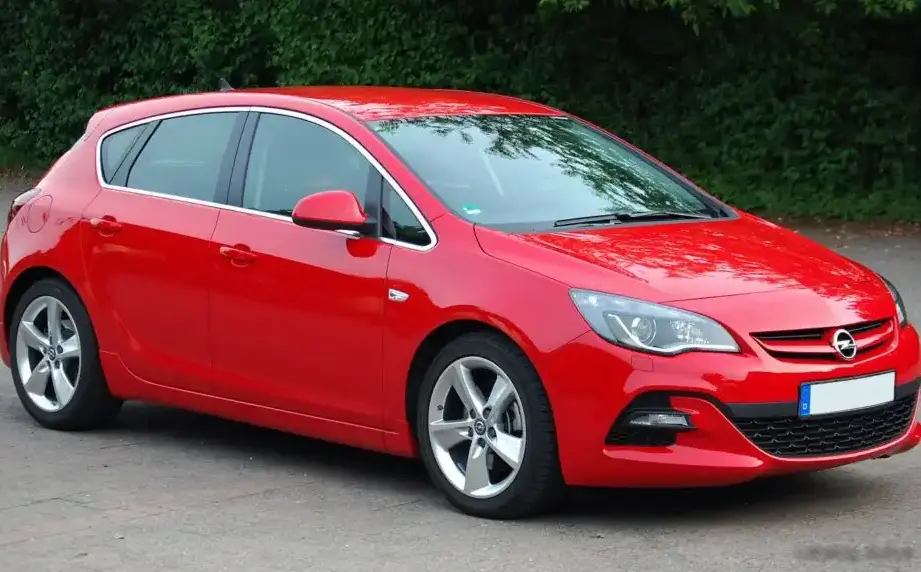
The Opel Astra J (facelift, introduced in 2012) 1.6 Turbo Ecotec, producing 180 horsepower, represented a significant mid-cycle refresh of Opel’s popular compact hatchback. Produced from 2012 through 2015, this variant occupied a mid-range position within the Astra J lineup, offering a balance between performance and fuel efficiency. It was designed to appeal to drivers seeking a more engaging driving experience than the base models, without the higher price tag and sport-tuned suspension of the OPC (Opel Performance Center) version. The facelift brought updated styling, improved interior materials, and a revised range of engines, including this potent 1.6-liter turbocharged unit. The Astra J itself was built on the General Motors Delta II platform, shared with other vehicles like the Chevrolet Cruze and Buick Verano.
Technical Specifications
| Brand | Opel |
| Model | Astra |
| Generation | Astra J (facelift 2012) |
| Type (Engine) | 1.6 (180 Hp) Turbo Ecotec |
| Start of production | 2012 |
| End of production | 2015 |
| Powertrain Architecture | Internal Combustion engine |
| Body type | Hatchback |
| Seats | 5 |
| Doors | 5 |
| Fuel consumption (urban) | 8.8-8.9 l/100 km (26.7 – 26.4 US mpg) |
| Fuel consumption (extra urban) | 5.6 l/100 km (42 US mpg) |
| Fuel consumption (combined) | 6.8 l/100 km (34.6 US mpg) |
| CO2 emissions | 159-160 g/km |
| Fuel Type | Petrol (Gasoline) |
| Acceleration 0 – 100 km/h | 8.5 sec |
| Acceleration 0 – 62 mph | 8.5 sec |
| Acceleration 0 – 60 mph | 8.1 sec |
| Maximum speed | 221 km/h (137.32 mph) |
| Emission standard | Euro 5 |
| Power | 180 Hp @ 5500 rpm |
| Torque | 230 Nm @ 2200-5500 rpm (169.64 lb.-ft. @ 2200-5500 rpm) |
| Engine layout | Front, Transverse |
| Engine Model/Code | A16LET |
| Engine displacement | 1598 cm3 (97.52 cu. in.) |
| Number of cylinders | 4 |
| Engine configuration | Inline |
| Cylinder Bore | 79 mm (3.11 in.) |
| Piston Stroke | 81.5 mm (3.21 in.) |
| Number of valves per cylinder | 4 |
| Fuel injection system | Multi-port manifold injection |
| Engine aspiration | Turbocharger, Intercooler |
| Engine oil capacity | 4.5 l (4.76 US qt | 3.96 UK qt) |
| Coolant capacity | 5.6 l (5.92 US qt | 4.93 UK qt) |
| Trunk (boot) space – minimum | 370 l (13.07 cu. ft.) |
| Trunk (boot) space – maximum | 1235 l (43.61 cu. ft.) |
| Fuel tank capacity | 56 l (14.79 US gal | 12.32 UK gal) |
| Length | 4419 mm (173.98 in.) |
| Width | 1814 mm (71.42 in.) |
| Width with mirrors folded | 1831 mm (72.09 in.) |
| Width including mirrors | 2013 mm (79.25 in.) |
| Height | 1510 mm (59.45 in.) |
| Wheelbase | 2685 mm (105.71 in.) |
| Front track | 1541 mm (60.67 in.) |
| Rear track | 1551 mm (61.06 in.) |
| Minimum turning circle | 11.4 m (37.4 ft.) |
| Drivetrain | Front wheel drive |
| Number of gears | 6 |
| Gearbox type | Manual transmission |
| Assisting systems | ABS (Anti-lock braking system) |
| Steering type | Steering rack and pinion |
| Power steering | Electric Steering |
| Tires size | 205/60 R16 |
| Wheel rims size | 16 |
Powertrain & Engine Architecture
The heart of this Astra J variant is the A16LET engine, a 1.6-liter inline-four cylinder gasoline engine equipped with a turbocharger and intercooler. This engine is part of Opel’s “Ecotec” family, known for its focus on efficiency and refinement. The A16LET utilizes multi-port fuel injection and a single overhead camshaft (SOHC) valvetrain with four valves per cylinder. The turbocharger, a key component in achieving the 180 horsepower output, provides a significant boost in power and torque compared to naturally aspirated engines of similar displacement. The engine’s control unit (ECU) carefully manages fuel delivery, ignition timing, and turbo boost to optimize performance and emissions. The six-speed manual transmission was the standard offering, providing drivers with precise control over gear selection and contributing to the car’s engaging driving experience.
Driving Characteristics
The 1.6 Turbo Ecotec-equipped Astra J offered a noticeable step up in performance compared to the lower-powered engine options. The 180 hp and 230 Nm (169.64 lb-ft) of torque provided brisk acceleration, with a 0-60 mph time of around 8.1 seconds. The turbocharger delivers a surge of power in the mid-range, making overtaking maneuvers easy and confident. The six-speed manual transmission is well-matched to the engine’s powerband, allowing drivers to keep the engine in its optimal rev range. While not as overtly sporty as the Astra OPC, this variant offered a satisfying balance of performance and everyday usability. The steering was precise and well-weighted, and the suspension provided a comfortable ride without sacrificing handling.
Equipment & Trim Levels
The 1.6 Turbo Ecotec Astra J typically came equipped with a reasonable level of standard features. These included air conditioning, power windows, power mirrors, a CD/MP3 stereo system, and alloy wheels. Higher trim levels, such as the “Sport” or “Cosmo” variants, added features like automatic climate control, a touchscreen infotainment system, parking sensors, and upgraded interior trim. Upholstery options ranged from cloth to leather, and optional extras included a panoramic sunroof, heated seats, and a navigation system. Safety features such as ABS, electronic stability control, and multiple airbags were standard across the range.
Chassis & Braking
The Astra J utilized a MacPherson strut front suspension and a torsion beam rear suspension. This setup provided a good balance of ride comfort and handling. The front brakes were typically ventilated discs, while the rear brakes were solid discs on higher trim levels, and drums on the base models. The steering system was an electric power-assisted rack and pinion system, offering precise and responsive steering feel. The chassis was designed to be relatively lightweight, contributing to the car’s agility and fuel efficiency.
Market Reception & Comparison
The Astra J 1.6 Turbo Ecotec was generally well-received by automotive critics. It was praised for its strong performance, good fuel economy, and comfortable ride. Compared to other engines in the Astra J lineup, the 1.6 Turbo offered a significant performance advantage over the naturally aspirated 1.4-liter engine, while being more affordable and fuel-efficient than the 2.0-liter turbocharged engine found in the OPC model. The 1.6 Turbo also offered a more engaging driving experience than the diesel-powered Astra J variants. However, some critics noted that the engine could be a bit noisy under hard acceleration.
Legacy
The A16LET engine proved to be a relatively reliable unit, although like any turbocharged engine, it requires regular maintenance, including oil changes and inspection of the turbocharger and intercooler. The Astra J 1.6 Turbo Ecotec remains a popular choice in the used car market, offering a good balance of performance, fuel efficiency, and affordability. Its relatively simple engine design and readily available parts contribute to its ongoing appeal. While not a particularly rare or collectible vehicle, it represents a well-rounded and capable compact hatchback that continues to provide reliable transportation for many drivers.