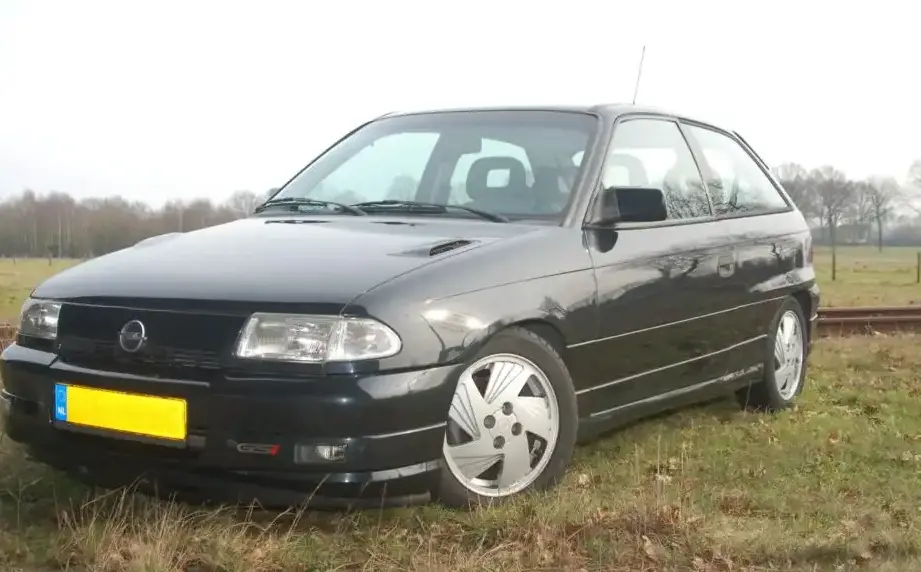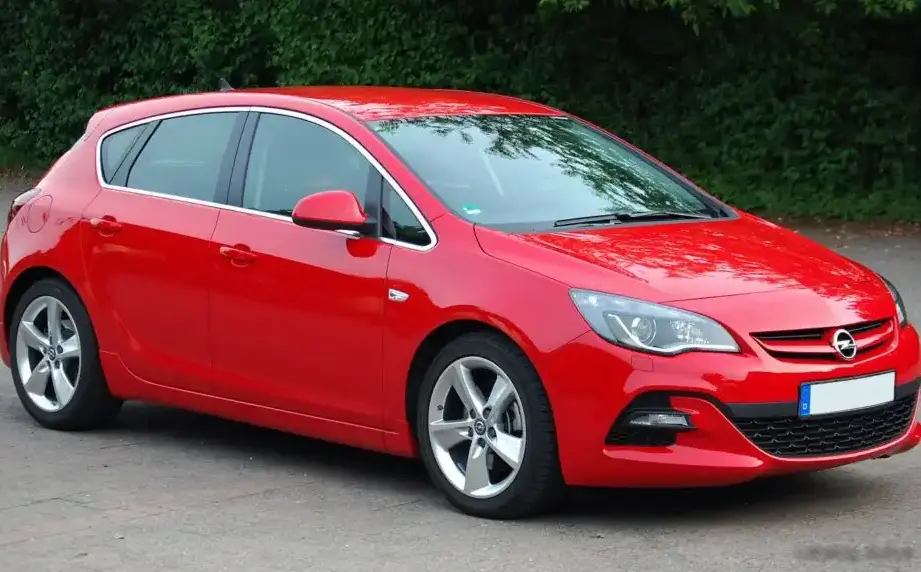
The Opel Astra J (facelift, introduced in 2012) 1.6 CDTI (136 hp) Ecotec start/stop represents a significant iteration within the Astra J generation, produced from 2009 to 2015. This particular variant, launched in 2014 and continuing through 2015, was positioned as a fuel-efficient and practical option within the Astra J lineup, appealing to buyers prioritizing economy and everyday usability. It utilized Opel’s ‘Ecotec’ engine family, emphasizing reduced emissions and improved fuel consumption. The facelift brought styling updates and technological enhancements to the J series, solidifying its position as a competitive offering in the European compact car segment.
Technical Specifications
| Brand | Opel |
| Model | Astra |
| Generation | Astra J (facelift 2012) |
| Type (Engine) | 1.6 CDTI (136 Hp) Ecotec start/stop |
| Start of production | 2014 |
| End of production | 2015 |
| Powertrain Architecture | Internal Combustion engine |
| Body type | Hatchback |
| Seats | 5 |
| Doors | 5 |
| Fuel consumption (urban) | 4.6-4.8 l/100 km (51.1 – 49 US mpg, 61.4 – 58.9 UK mpg, 21.7 – 20.8 km/l) |
| Fuel consumption (extra urban) | 3.6-3.8 l/100 km (65.3 – 61.9 US mpg, 78.5 – 74.3 UK mpg, 27.8 – 26.3 km/l) |
| Fuel consumption (combined) | 3.9-4.2 l/100 km (60.3 – 56 US mpg, 72.4 – 67.3 UK mpg, 25.6 – 23.8 km/l) |
| CO2 emissions | 104-110 g/km |
| Fuel Type | Diesel |
| Acceleration 0 – 100 km/h | 10.3 sec |
| Acceleration 0 – 62 mph | 10.3 sec |
| Acceleration 0 – 60 mph | 9.8 sec |
| Maximum speed | 200 km/h (124.27 mph) |
| Emission standard | Euro 5 |
| Weight-to-power ratio | 9.7 kg/Hp, 103.6 Hp/tonne |
| Weight-to-torque ratio | 4.1 kg/Nm, 243.7 Nm/tonne |
| Power | 136 Hp @ 3500-4000 rpm |
| Power per litre | 85.1 Hp/l |
| Torque | 320 Nm @ 2000 rpm (236.02 lb.-ft. @ 2000 rpm) |
| Engine layout | Front, Transverse |
| Engine Model/Code | B16DTH |
| Engine displacement | 1598 cm3 (97.52 cu. in.) |
| Number of cylinders | 4 |
| Engine configuration | Inline |
| Cylinder Bore | 79.7 mm (3.14 in.) |
| Piston Stroke | 80.1 mm (3.15 in.) |
| Number of valves per cylinder | 4 |
| Fuel injection system | Diesel Commonrail |
| Engine aspiration | Turbocharger, Intercooler |
| Engine oil capacity | 5 l (5.28 US qt | 4.4 UK qt) |
| Coolant | 6.2 l (6.55 US qt | 5.46 UK qt) |
| Kerb Weight | 1313 kg (2894.67 lbs.) |
| Max. weight | 1885 kg (4155.71 lbs.) |
| Max load | 572 kg (1261.04 lbs.) |
| Trunk (boot) space – minimum | 370 l (13.07 cu. ft.) |
| Trunk (boot) space – maximum | 1235 l (43.61 cu. ft.) |
| Fuel tank capacity | 56 l (14.79 US gal | 12.32 UK gal) |
| Max. roof load | 75 kg (165.35 lbs.) |
| Permitted trailer load with brakes (12%) | 1400 kg (3086.47 lbs.) |
| Permitted trailer load without brakes | 730 kg (1609.37 lbs.) |
| Length | 4419 mm (173.98 in.) |
| Width | 1814 mm (71.42 in.) |
| Width with mirrors folded | 1831 mm (72.09 in.) |
| Width including mirrors | 2013 mm (79.25 in.) |
| Height | 1510 mm (59.45 in.) |
| Wheelbase | 2685 mm (105.71 in.) |
| Front track | 1541 mm (60.67 in.) |
| Rear (Back) track | 1551 mm (61.06 in.) |
| Minimum turning circle | 11.4 m (37.4 ft.) |
| Drivetrain Architecture | The Internal combustion engine (ICE) drives the front wheels of the vehicle. |
| Drive wheel | Front wheel drive |
| Number of gears and type of gearbox | 6 gears, manual transmission |
| Front brakes | Ventilated discs |
| Assisting systems | ABS (Anti-lock braking system) |
| Steering type | Steering rack and pinion |
| Power steering | Electric Steering |
| Tires size | 205/60 R16 |
| Wheel rims size | 16 |
Powertrain & Engine Architecture
The heart of this Astra J variant is the 1.6-liter (1598 cc) B16DTH turbodiesel engine. This engine is part of Opel/Vauxhall’s ‘Ecotec’ family, known for its focus on efficiency and reduced emissions. The B16DTH is an inline-four cylinder engine featuring a common-rail direct fuel injection system, delivering precise fuel metering for optimal combustion. A turbocharger with an intercooler is employed to boost power output and improve torque across a wider rev range. The engine produces 136 horsepower at 3500-4000 rpm and a substantial 320 Nm (236 lb-ft) of torque at just 2000 rpm. This torque figure is particularly noteworthy, providing strong pulling power for everyday driving. The engine utilizes four valves per cylinder and a timing chain for durability. The 6-speed manual transmission was standard, offering a good balance between fuel economy and driver engagement. The start/stop system further enhances fuel efficiency by automatically shutting off the engine when the vehicle is stationary.
Driving Characteristics
The 1.6 CDTI with the manual transmission delivers a practical and efficient driving experience. While not a performance-oriented model, the 320 Nm of torque provides ample power for overtaking and merging onto highways. The gear ratios are well-chosen to maximize fuel economy, but this does mean the engine needs to be revved slightly to access its full potential. Compared to higher-output Astra J variants, such as those with the 2.0 CDTI engine, this 1.6L version feels less urgent in acceleration. However, it offers a more relaxed and economical driving experience, particularly in urban environments. The manual gearbox is precise and easy to use, contributing to a more engaging driving experience than an automatic would.
Equipment & Trim Levels
The 1.6 CDTI variant typically came equipped with a reasonable level of standard features. These generally included air conditioning, electric front windows, a basic audio system with USB connectivity, and stability control. Higher trim levels, such as ‘Sport’ or ‘Elite’, added features like alloy wheels, cruise control, automatic climate control, a touchscreen infotainment system, and parking sensors. Interior upholstery was typically cloth, with options for upgraded materials on higher trims. The dashboard layout was functional and well-designed, with a focus on ergonomics.
Chassis & Braking
The Astra J utilized a MacPherson strut front suspension and a torsion beam rear suspension. This setup provided a good balance between ride comfort and handling. The front brakes were ventilated discs, while the rear brakes were typically solid discs, depending on the specific trim level. ABS (Anti-lock Braking System) was standard, enhancing safety. The electric power steering provided light and precise steering feel. The chassis was tuned to prioritize comfort and stability, making it a pleasant vehicle for long journeys.
Market Reception & Comparison
The Astra J 1.6 CDTI was generally well-received by automotive critics as a practical and economical choice. Its fuel efficiency was a major selling point, and its comfortable ride quality was also praised. Compared to other trims in the Astra J lineup, the 1.6 CDTI offered a more affordable entry point, making it attractive to budget-conscious buyers. However, some critics noted that its performance was not as exciting as that of the higher-output engines. Compared to rivals like the Volkswagen Golf and Ford Focus, the Astra J 1.6 CDTI offered a competitive package in terms of fuel economy, features, and price.
Legacy
The B16DTH engine, while not without its share of reported issues (such as potential DPF clogging and EGR valve failures common to modern diesels), has proven to be relatively durable when properly maintained. In the used car market, the Astra J 1.6 CDTI remains a popular choice for buyers seeking a fuel-efficient and reliable compact car. Its relatively low running costs and practical features continue to make it an appealing option. Regular servicing, including oil changes and DPF maintenance, is crucial to ensure the long-term reliability of this powertrain.