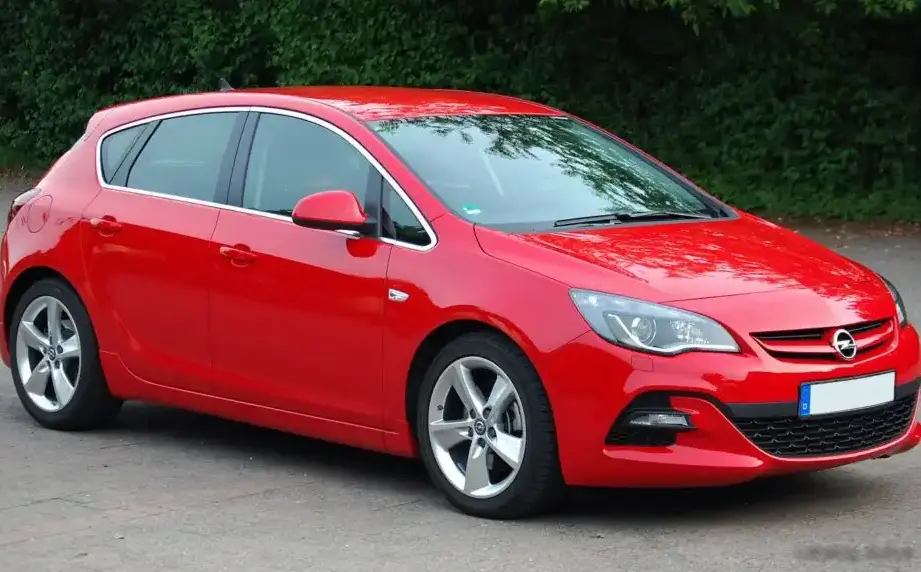
The Opel Astra J (facelift, introduced in 2012) 1.7 CDTI Ecotec, producing 100 horsepower, represented an entry-level diesel option within the broader Astra J range. Positioned as a fuel-efficient and practical choice, this variant was primarily aimed at European markets where diesel engines held significant popularity. Production of this specific configuration ran from 2012 to 2014, falling within the mid-life cycle refresh of the J series, which brought styling updates and revised technology. It served as a key model in Opel’s lineup, offering a balance between affordability and the benefits of modern diesel technology.
Technical Specifications
| Brand | Opel |
| Model | Astra |
| Generation | Astra J (facelift 2012) |
| Type (Engine) | 1.7 CDTI (100 Hp) Ecotec |
| Start of production | 2012 |
| End of production | 2014 |
| Powertrain Architecture | Internal Combustion engine |
| Body type | Hatchback |
| Seats | 5 |
| Doors | 5 |
| Fuel Type | Diesel |
| Emission standard | Euro 5 |
| Power | 100 Hp @ 4000 rpm |
| Power per litre | 59.3 Hp/l |
| Torque | 260 Nm @ 1750-2500 rpm (191.77 lb.-ft. @ 1750-2500 rpm) |
| Engine layout | Front, Transverse |
| Engine Model/Code | A17DTL, A17DTN |
| Engine displacement | 1686 cm3 (102.89 cu. in.) |
| Number of cylinders | 4 |
| Engine configuration | Inline |
| Cylinder Bore | 79 mm (3.11 in.) |
| Piston Stroke | 86 mm (3.39 in.) |
| Number of valves per cylinder | 4 |
| Fuel injection system | Diesel Commonrail |
| Engine aspiration | Turbocharger, Intercooler |
| Engine oil capacity | 5.4 l (5.71 US qt | 4.75 UK qt) |
| Coolant | 6.2 l (6.55 US qt | 5.46 UK qt) |
| Trunk (boot) space – minimum | 370 l (13.07 cu. ft.) |
| Trunk (boot) space – maximum | 1235 l (43.61 cu. ft.) |
| Fuel tank capacity | 56 l (14.79 US gal | 12.32 UK gal) |
| Length | 4419 mm (173.98 in.) |
| Width | 1814 mm (71.42 in.) |
| Width with mirrors folded | 1831 mm (72.09 in.) |
| Width including mirrors | 2013 mm (79.25 in.) |
| Height | 1510 mm (59.45 in.) |
| Wheelbase | 2685 mm (105.71 in.) |
| Front track | 1541 mm (60.67 in.) |
| Rear (Back) track | 1551 mm (61.06 in.) |
| Minimum turning circle | 11.4 m (37.4 ft.) |
| Drivetrain Architecture | Front wheel drive |
| Number of gears and type of gearbox | 6 gears, manual transmission |
| Front brakes | Ventilated discs |
| Assisting systems | ABS (Anti-lock braking system) |
| Steering type | Steering rack and pinion |
| Power steering | Electric Steering |
| Tires size | 205/60 R16 |
| Wheel rims size | 16 |
Powertrain & Engine Architecture
The heart of the Astra J 1.7 CDTI was the A17DTL or A17DTN engine, a 1.7-liter inline-four cylinder diesel. This engine belonged to Opel/Fiat’s family of small-displacement diesel engines, known for their efficiency. It utilized a common rail direct injection system, delivering fuel at extremely high pressures for optimized combustion. A turbocharger with an intercooler was employed to boost power output and improve torque across a wider rev range. The engine featured four valves per cylinder, contributing to its breathing efficiency. The 100 horsepower output was achieved at 4000 rpm, while peak torque of 260 Nm (191.77 lb-ft) was available from 1750 to 2500 rpm, prioritizing low-end grunt for everyday driving. This engine was designed to meet Euro 5 emission standards, incorporating a diesel particulate filter (DPF) to reduce soot emissions.
Driving Characteristics
The 1.7 CDTI with the six-speed manual transmission offered a practical and economical driving experience. While not a performance-oriented setup, the engine provided adequate power for typical commuting and highway cruising. The relatively high torque output at low revs meant that the car felt responsive in urban environments, requiring minimal gear changes. Compared to the more powerful 1.4 Turbo petrol or 2.0 CDTI diesel variants, the 1.7 CDTI was noticeably slower in acceleration. However, its strength lay in its fuel efficiency. The gear ratios were tuned for economy, with a relatively long final drive. This resulted in a comfortable cruising experience but limited outright speed. The manual transmission offered precise shifts, enhancing driver engagement compared to the optional automatic transmission available on other Astra J models.
Equipment & Trim Levels
The 1.7 CDTI typically came in base or mid-level trim configurations, such as ‘Essentia’ or ‘Sport’. Standard equipment generally included air conditioning, electric front windows, a basic audio system with USB connectivity, and ABS brakes. Safety features like ESP (Electronic Stability Program) were also standard. Higher trim levels added features like alloy wheels, cruise control, a more advanced infotainment system, and parking sensors. Interior upholstery was typically cloth, with a functional and durable design. Optional extras included a panoramic sunroof, leather upholstery, and a navigation system.
Chassis & Braking
The Astra J utilized a MacPherson strut front suspension and a torsion beam rear suspension. This setup provided a good balance between ride comfort and handling. The torsion beam rear suspension was a cost-effective solution, but it didn’t offer the same level of sophistication as a multi-link setup found on higher-spec models. Brakes were ventilated discs on the front wheels and solid discs on the rear. ABS (Anti-lock Braking System) was standard, providing enhanced braking performance in emergency situations. The electric power steering offered light and precise steering feel, making it easy to maneuver in tight spaces.
Market Reception & Comparison
The Astra J 1.7 CDTI was generally well-received by critics as a sensible and economical choice. It was praised for its fuel efficiency and low running costs. However, some reviewers noted that the engine could feel strained when fully loaded or driving uphill. Compared to the 1.4 Turbo petrol, the 1.7 CDTI offered significantly better fuel economy but less outright performance. The 2.0 CDTI diesel provided more power and refinement but came at a higher price point. In terms of reliability, the 1.7 CDTI proved to be a relatively dependable engine, although issues with the DPF and EGR valve were occasionally reported, common to many modern diesel engines.
Legacy
The Opel Astra J 1.7 CDTI Ecotec remains a common sight on European roads today. Its reputation for fuel efficiency and relatively low maintenance costs has made it a popular choice in the used car market. While not a particularly exciting car to drive, it offers a practical and reliable transportation solution. The engine itself, while not without its potential issues (DPF regeneration being a key concern), has proven to be reasonably durable with proper maintenance. The Astra J, in general, helped solidify Opel’s position as a mainstream automotive brand, offering a competitive alternative to other European hatchbacks.