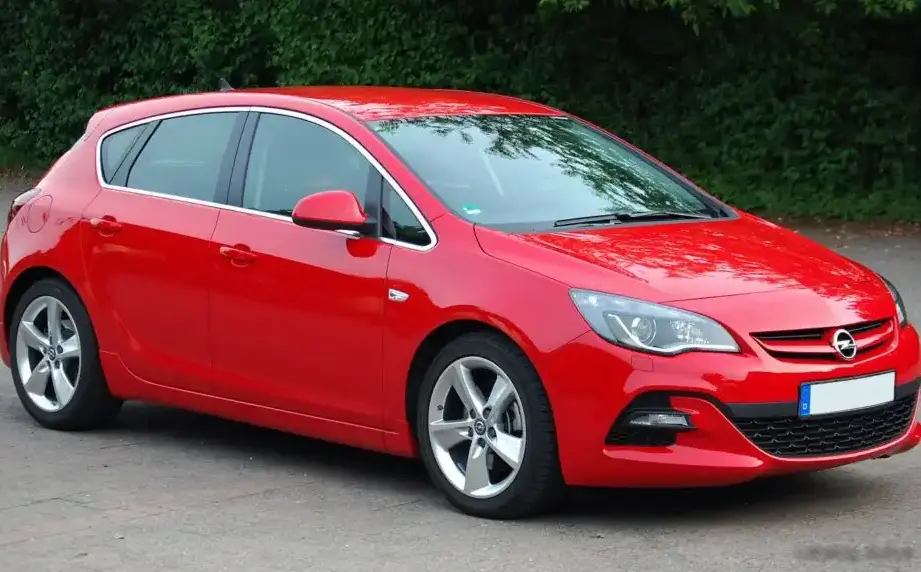
The Opel Astra J (facelift, introduced in 2012) 2.0 CDTI Ecotec Automatic represents a mid-cycle refresh of the Astra J, Opel’s compact family car. Produced from 2012 to 2015, this variant combined a 2.0-liter turbocharged diesel engine with a six-speed automatic transmission. It was positioned as a higher-trim level offering, appealing to buyers seeking a balance of performance, fuel efficiency, and convenience. The facelift brought revised styling, improved interior materials, and updated technology, solidifying the Astra J’s position as a competitive offering in the European C-segment.
Technical Specifications
| Brand | Opel |
| Model | Astra |
| Generation | Astra J (facelift 2012) |
| Type (Engine) | 2.0 CDTI (165 Hp) Ecotec Automatic |
| Start of production | 2012 |
| End of production | 2015 |
| Powertrain Architecture | Internal Combustion engine |
| Body type | Hatchback |
| Seats | 5 |
| Doors | 5 |
| Fuel consumption (urban) | 7.9-8.0 l/100 km (29.8 – 29.4 US mpg) |
| Fuel consumption (extra urban) | 4.7-4.8 l/100 km (50 – 49 US mpg) |
| Fuel consumption (combined) | 5.8-6.0 l/100 km (40.6 – 39.2 US mpg) |
| CO2 emissions | 154-158 g/km |
| Fuel Type | Diesel |
| Acceleration 0 – 100 km/h | 9.2 sec |
| Acceleration 0 – 62 mph | 9.2 sec |
| Acceleration 0 – 60 mph | 8.7 sec |
| Maximum speed | 209 km/h (129.87 mph) |
| Emission standard | Euro 5 |
| Power | 165 Hp @ 4000 rpm |
| Torque | 350 Nm @ 1750-2500 rpm (258.15 lb.-ft. @ 1750-2500 rpm) |
| Engine layout | Front, Transverse |
| Engine Model/Code | A20DTH |
| Engine displacement | 1956 cm3 (119.36 cu. in.) |
| Number of cylinders | 4 |
| Engine configuration | Inline |
| Cylinder Bore | 83 mm (3.27 in.) |
| Piston Stroke | 90.4 mm (3.56 in.) |
| Number of valves per cylinder | 4 |
| Fuel injection system | Diesel Commonrail |
| Engine aspiration | Turbocharger, Intercooler |
| Engine oil capacity | 4.5 l (4.76 US qt | 3.96 UK qt) |
| Coolant capacity | 6.9 l (7.29 US qt | 6.07 UK qt) |
| Max. weight | 1870 kg (4122.64 lbs.) |
| Trunk (boot) space – minimum | 370 l (13.07 cu. ft.) |
| Trunk (boot) space – maximum | 1235 l (43.61 cu. ft.) |
| Fuel tank capacity | 56 l (14.79 US gal | 12.32 UK gal) |
| Max. roof load | 75 kg (165.35 lbs.) |
| Length | 4419 mm (173.98 in.) |
| Width | 1814 mm (71.42 in.) |
| Width with mirrors folded | 1831 mm (72.09 in.) |
| Width including mirrors | 2013 mm (79.25 in.) |
| Height | 1510 mm (59.45 in.) |
| Wheelbase | 2685 mm (105.71 in.) |
| Front track | 1541 mm (60.67 in.) |
| Rear track | 1551 mm (61.06 in.) |
| Minimum turning circle | 11.4 m (37.4 ft.) |
| Drivetrain Architecture | Front wheel drive |
| Number of gears | 6 |
| Gearbox type | Automatic transmission |
| Front brakes | Ventilated discs |
| Assisting systems | ABS (Anti-lock braking system) |
| Steering type | Steering rack and pinion |
| Power steering | Electric Steering |
| Tires size | 205/60 R16 |
| Wheel rims size | 16 |
Powertrain & Engine Architecture
The heart of the Astra J 2.0 CDTI Automatic is the A20DTH engine, a 1.956-liter inline-four cylinder diesel. This engine utilizes a common rail direct injection system, delivering fuel at extremely high pressure for optimized combustion. A turbocharger with an intercooler further enhances performance by forcing more air into the cylinders. The engine produces 165 horsepower at 4,000 rpm and a substantial 350 Nm (258 lb-ft) of torque between 1,750 and 2,500 rpm. This broad torque curve is a hallmark of modern diesel engines, providing strong pulling power across a wide range of engine speeds. The six-speed automatic transmission, sourced from Aisin, was chosen for its smoothness and efficiency. It features adaptive shift patterns, adjusting to the driver’s style and road conditions.
Driving Characteristics
The 2.0 CDTI Automatic offered a comfortable and refined driving experience. While not as overtly sporty as the petrol-powered Astra J variants, the diesel engine’s ample torque provided brisk acceleration. The 0-60 mph time of around 8.7 seconds was respectable for a family hatchback. The automatic transmission contributed to ease of driving, particularly in urban environments. Compared to the manual transmission versions, the automatic offered less driver involvement but greater convenience. The gear ratios were tuned for a balance of fuel economy and performance, with a relatively tall final drive to maximize efficiency on the highway. The engine was generally quiet and refined, although some diesel clatter was noticeable during cold starts.
Equipment & Trim Levels
The 2.0 CDTI Automatic typically came equipped with a generous level of standard features. These included air conditioning, power windows, power mirrors, a CD/MP3 stereo system, and alloy wheels. Higher trim levels, such as ‘Sport’ or ‘Elite’, added features like leather upholstery, heated front seats, a touchscreen infotainment system with navigation, and parking sensors. Optional extras included a panoramic sunroof, adaptive cruise control, and a premium sound system. Interior upholstery was typically cloth on lower trims, with leather available as an upgrade. The dashboard layout was clean and functional, with a focus on ergonomics.
Chassis & Braking
The Astra J utilized a MacPherson strut front suspension and a torsion beam rear suspension. This setup provided a good balance of ride comfort and handling. The 2.0 CDTI Automatic, being a heavier variant, often featured slightly stiffer springs and dampers compared to lower-powered models. Braking duties were handled by ventilated discs on the front wheels and either discs or drums on the rear wheels, depending on the trim level. Anti-lock brakes (ABS) were standard, along with electronic brakeforce distribution (EBD). The steering was electrically assisted, providing light and precise control.
Market Reception & Comparison
The Astra J 2.0 CDTI Automatic was generally well-received by automotive critics. It was praised for its fuel efficiency, comfortable ride, and refined engine. However, some reviewers noted that the automatic transmission could occasionally feel hesitant, and the steering lacked the sharpness of some competitors. Compared to the 1.4-liter petrol versions, the 2.0 CDTI offered significantly more torque and better fuel economy, but at a higher purchase price. Against rivals like the Volkswagen Golf, Ford Focus, and Peugeot 308, the Astra J offered a competitive package, particularly in terms of value for money.
Legacy
The A20DTH engine proved to be a reliable and durable unit when properly maintained. Common issues included diesel particulate filter (DPF) clogging, particularly on vehicles used primarily for short journeys, and occasional turbocharger failures. The six-speed Aisin automatic transmission is also generally considered reliable. Today, the Astra J 2.0 CDTI Automatic represents a sensible and affordable used car option. Its fuel efficiency and comfortable ride make it well-suited for long-distance driving, while its relatively low running costs appeal to budget-conscious buyers. However, potential buyers should be aware of the potential DPF issues and ensure the vehicle has a full service history.