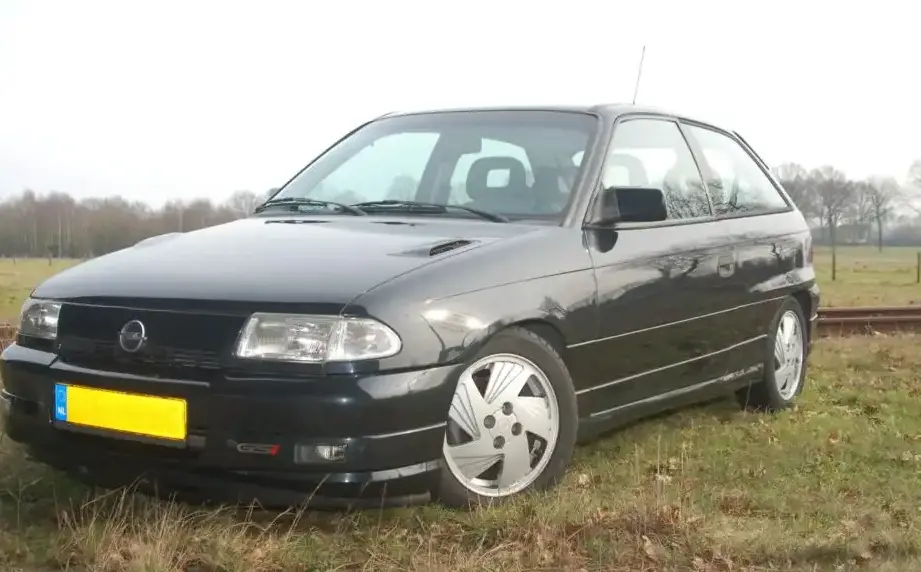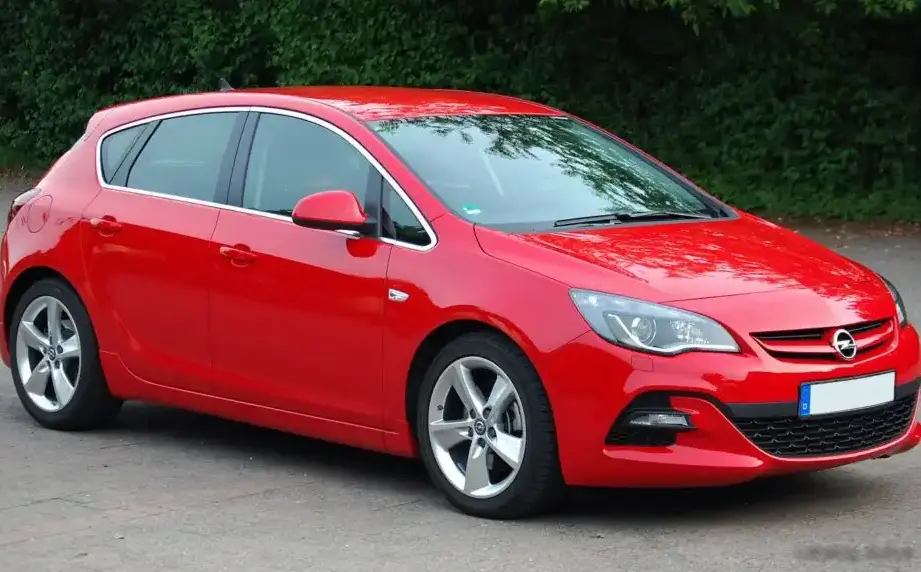
The Opel Astra J (facelift, introduced in 2012) 2.0 CDTI BiTurbo Ecotec, producing 195 horsepower, represented a performance-oriented variant within the Astra J range. Produced from 2012 to 2015, this model aimed to deliver a blend of fuel efficiency and spirited driving, appealing to buyers seeking a more engaging experience than the base engine options. It sat near the top of the Astra J engine lineup, positioned below the OPC (Vauxhall VXR) performance model but significantly above the lower-powered diesel and gasoline variants. The facelift brought styling updates and technological enhancements to the Astra J, further refining the model’s appeal in the competitive European compact car segment.
Technical Specifications
| Brand | Opel |
| Model | Astra |
| Generation | Astra J (facelift 2012) |
| Type (Engine) | 2.0 CDTI (195 Hp) BiTurbo Ecotec start/stop |
| Start of production | 2012 |
| End of production | 2015 |
| Powertrain Architecture | Internal Combustion engine |
| Body type | Hatchback |
| Seats | 5 |
| Doors | 5 |
| Fuel consumption (urban) | 6.2 l/100 km (37.9 US mpg, 45.6 UK mpg, 16.1 km/l) |
| Fuel consumption (extra urban) | 4.4 l/100 km (53.5 US mpg, 64.2 UK mpg, 22.7 km/l) |
| Fuel consumption (combined) | 5.1 l/100 km (46.1 US mpg, 55.4 UK mpg, 19.6 km/l) |
| CO2 emissions | 134 g/km |
| Fuel Type | Diesel |
| Acceleration 0 – 100 km/h | 8.9 sec |
| Acceleration 0 – 62 mph | 8.9 sec |
| Acceleration 0 – 60 mph | 8.5 sec |
| Maximum speed | 226 km/h (140.43 mph) |
| Emission standard | Euro 5 |
| Weight-to-power ratio | 7.3 kg/Hp, 136.4 Hp/tonne |
| Weight-to-torque ratio | 3.6 kg/Nm, 279.7 Nm/tonne |
| Power | 195 Hp @ 4000 rpm |
| Power per litre | 99.7 Hp/l |
| Torque | 400 Nm @ 1750-2500 rpm (295.02 lb.-ft. @ 1750-2500 rpm) |
| Engine layout | Front, Transverse |
| Engine Model/Code | A20DTR |
| Engine displacement | 1956 cm3 (119.36 cu. in.) |
| Number of cylinders | 4 |
| Engine configuration | Inline |
| Cylinder Bore | 83 mm (3.27 in.) |
| Piston Stroke | 90.4 mm (3.56 in.) |
| Number of valves per cylinder | 4 |
| Fuel injection system | Diesel Commonrail |
| Engine aspiration | Twin-Turbo, Intercooler |
| Engine oil capacity | 4.5 l (4.76 US qt | 3.96 UK qt) |
| Coolant | 6.9 l (7.29 US qt | 6.07 UK qt) |
| Kerb Weight | 1430 kg (3152.61 lbs.) |
| Max. weight | 2000 kg (4409.25 lbs.) |
| Max load | 570 kg (1256.63 lbs.) |
| Trunk (boot) space – minimum | 370 l (13.07 cu. ft.) |
| Trunk (boot) space – maximum | 1235 l (43.61 cu. ft.) |
| Fuel tank capacity | 56 l (14.79 US gal | 12.32 UK gal) |
| Max. roof load | 75 kg (165.35 lbs.) |
| Length | 4419 mm (173.98 in.) |
| Width | 1814 mm (71.42 in.) |
| Width with mirrors folded | 1831 mm (72.09 in.) |
| Width including mirrors | 2013 mm (79.25 in.) |
| Height | 1510 mm (59.45 in.) |
| Wheelbase | 2685 mm (105.71 in.) |
| Front track | 1541 mm (60.67 in.) |
| Rear (Back) track | 1551 mm (61.06 in.) |
| Minimum turning circle | 11.4 m (37.4 ft.) |
| Drivetrain Architecture | Front wheel drive |
| Number of gears and type of gearbox | 6 gears, manual transmission |
| Front brakes | Ventilated discs |
| Assisting systems | ABS (Anti-lock braking system) |
| Steering type | Steering rack and pinion |
| Power steering | Electric Steering |
| Tires size | 205/60 R16 |
| Wheel rims size | 16 |
Powertrain & Engine Architecture
The heart of the Astra J 2.0 CDTI BiTurbo was the A20DTR engine, a 1.956-liter inline-four cylinder diesel. This engine utilized a sophisticated twin-turbocharger setup – a smaller turbo for quick spool-up and responsiveness at low engine speeds, and a larger turbo for increased power at higher RPMs. This configuration helped to mitigate turbo lag, a common issue with turbocharged engines. The engine employed a common rail direct injection system, delivering fuel directly into the combustion chamber at extremely high pressure for optimized combustion. The A20DTR featured a 16-valve cylinder head (four valves per cylinder) and an intercooler to cool the compressed intake air, further enhancing performance. The 6-speed manual transmission was the standard offering, providing drivers with full control over gear selection. The Start/Stop system was included to improve fuel economy in urban driving conditions.
Driving Characteristics
The 195 horsepower and 400 Nm (295 lb-ft) of torque delivered by the 2.0 CDTI BiTurbo provided a noticeable performance upgrade over the lower-powered Astra J diesel variants. Acceleration from 0 to 60 mph took approximately 8.5 seconds, and the car could reach a top speed of 140 mph. The twin-turbo setup provided a broad torque curve, resulting in strong acceleration across a wide range of engine speeds. While not as overtly sporty as the Astra OPC, the BiTurbo offered a satisfyingly brisk driving experience. The manual transmission allowed for precise gear changes, and the chassis provided a good balance between comfort and handling. Compared to the 1.4L turbo petrol, the 2.0 CDTI offered significantly more torque, making it more effortless for highway cruising and overtaking.
Equipment & Trim Levels
The Astra J 2.0 CDTI BiTurbo was typically offered in higher trim levels, such as Sport or Elite, depending on the specific market. Standard equipment often included air conditioning, alloy wheels, a touchscreen infotainment system, Bluetooth connectivity, and a suite of safety features like ABS, ESP (Electronic Stability Program), and multiple airbags. Optional extras could include leather upholstery, a panoramic sunroof, parking sensors, and advanced driver-assistance systems. Interior upholstery was generally cloth on the base trims, with leather available as an upgrade. The dashboard layout was typical of the Astra J, with a focus on ergonomics and functionality.
Chassis & Braking
The Astra J utilized a MacPherson strut front suspension and a multi-link rear suspension, providing a comfortable ride and good handling characteristics. The 2.0 CDTI BiTurbo models typically featured slightly stiffer suspension components compared to the base models to better manage the increased power and torque. Braking systems consisted of ventilated front discs and solid rear discs. ABS (Anti-lock Braking System) and ESP (Electronic Stability Program) were standard features, enhancing safety and stability. The steering was electrically assisted, providing a light and precise feel.
Market Reception & Comparison
The Astra J 2.0 CDTI BiTurbo was generally well-received by automotive critics. It was praised for its strong performance, good fuel economy, and comfortable ride. Compared to other diesel-powered compact cars in its class, such as the Volkswagen Golf TDI and the Ford Focus TDCi, the Astra J BiTurbo offered a competitive blend of performance and efficiency. However, some critics noted that the engine could be slightly noisy compared to some of its rivals. Fuel economy figures of around 46 mpg combined were considered respectable for a car of its performance level. Reliability reports were generally positive, although, like any diesel engine, it required regular maintenance and the potential for issues with the diesel particulate filter (DPF).
Legacy
The Opel/Vauxhall Astra J 2.0 CDTI BiTurbo remains a popular choice in the used car market. The A20DTR engine, while capable, requires diligent maintenance, particularly regarding the DPF and fuel system. The twin-turbo setup, while providing good performance, can be more complex and potentially more expensive to repair than a single-turbo engine. However, the car’s overall build quality and relatively modern features continue to appeal to buyers seeking a practical and efficient compact car with a bit of extra performance. The 2.0 CDTI BiTurbo represents a sweet spot in the Astra J range, offering a compelling combination of power, economy, and comfort.