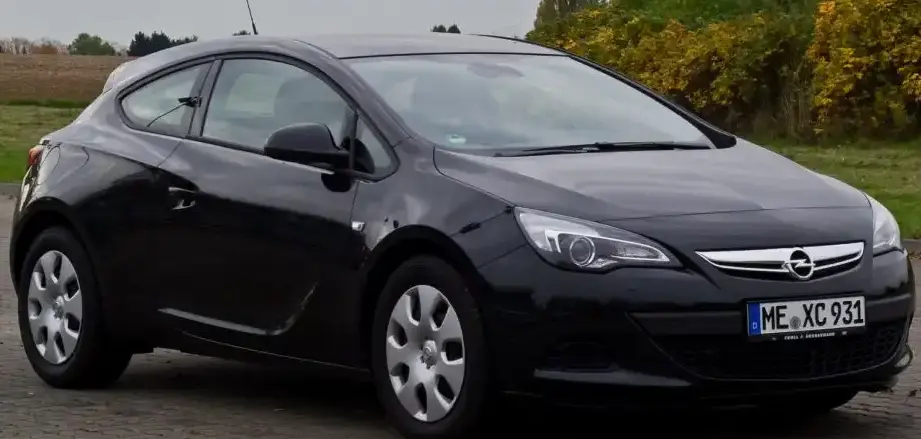
The Opel Astra J GTC 1.7 CDTI (110 hp) Ecotec start/stop, produced between 2011 and 2014, represented a fuel-efficient and practical offering within the broader Astra J GTC range. Positioned as a mid-range trim, it aimed to balance affordability with reasonable performance and modern features. This three-door hatchback variant was primarily marketed in Europe, capitalizing on the region’s preference for diesel engines and compact, sporty designs. The GTC, or Gran Turismo Coupe, was Opel’s attempt to inject a more dynamic and stylish aesthetic into the Astra lineup, differentiating it from the more conventional five-door hatchback and estate models.
Technical Specifications
| Brand | Opel |
| Model | Astra |
| Generation | Astra J GTC |
| Type (Engine) | 1.7 CDTI (110 Hp) Ecotec start/stop |
| Start of production | 2011 |
| End of production | 2014 |
| Powertrain Architecture | Internal Combustion engine |
| Body type | Hatchback |
| Seats | 5 |
| Doors | 3 |
| Fuel consumption (urban) | 4.8 l/100 km (49 US mpg, 58.9 UK mpg, 20.8 km/l) |
| Fuel consumption (extra urban) | 4.0-4.1 l/100 km (58.8 – 57.4 US mpg, 70.6 – 68.9 UK mpg, 25 – 24.4 km/l) |
| Fuel consumption (combined) | 4.3-4.4 l/100 km (54.7 – 53.5 US mpg, 65.7 – 64.2 UK mpg, 23.3 – 22.7 km/l) |
| CO2 emissions | 114-116 g/km |
| Fuel Type | Diesel |
| Acceleration 0 – 100 km/h | 11.9 sec |
| Acceleration 0 – 62 mph | 11.9 sec |
| Acceleration 0 – 60 mph | 11.3 sec |
| Maximum speed | 182 km/h (113.09 mph) |
| Emission standard | Euro 5 |
| Weight-to-power ratio | 13 kg/Hp, 76.9 Hp/tonne |
| Weight-to-torque ratio | 5.1 kg/Nm, 195.8 Nm/tonne |
| Power | 110 Hp @ 4000 rpm |
| Power per litre | 65.2 Hp/l |
| Torque | 280 Nm @ 1750-2500 rpm (206.52 lb.-ft. @ 1750-2500 rpm) |
| Engine layout | Front, Transverse |
| Engine Model/Code | A17DTC |
| Engine displacement | 1686 cm3 (102.89 cu. in.) |
| Number of cylinders | 4 |
| Engine configuration | Inline |
| Cylinder Bore | 79 mm (3.11 in.) |
| Piston Stroke | 86 mm (3.39 in.) |
| Compression ratio | 18:1 |
| Number of valves per cylinder | 4 |
| Fuel injection system | Diesel Commonrail |
| Engine aspiration | Turbocharger, Intercooler |
| Engine oil capacity | 5.4 l (5.71 US qt | 4.75 UK qt) |
| Coolant | 7.1 l (7.5 US qt | 6.25 UK qt) |
| Kerb Weight | 1430 kg (3152.61 lbs.) |
| Max. weight | 1890 kg (4166.74 lbs.) |
| Max load | 460 kg (1014.13 lbs.) |
| Trunk (boot) space – minimum | 380 l (13.42 cu. ft.) |
| Trunk (boot) space – maximum | 1165 l (41.14 cu. ft.) |
| Fuel tank capacity | 56 l (14.79 US gal | 12.32 UK gal) |
| Length | 4466 mm (175.83 in.) |
| Width | 1840 mm (72.44 in.) |
| Width including mirrors | 2020 mm (79.53 in.) |
| Height | 1482 mm (58.35 in.) |
| Wheelbase | 2695 mm (106.1 in.) |
| Front track | 1584 mm (62.36 in.) |
| Rear (Back) track | 1588 mm (62.52 in.) |
| Ride height (ground clearance) | 112 mm (4.41 in.) |
| Drag coefficient (Cd) | 0.31 |
| Minimum turning circle | 11.4 m (37.4 ft.) |
| Drivetrain Architecture | The Internal combustion engine (ICE) drives the front wheels of the vehicle. |
| Drive wheel | Front wheel drive |
| Number of gears and type of gearbox | 6 gears, manual transmission |
| Front brakes | Ventilated discs |
| Rear brakes | Disc |
| Assisting systems | ABS (Anti-lock braking system) |
| Steering type | Steering rack and pinion |
| Power steering | Electric Steering |
| Tires size | 235/55 R17 |
| Wheel rims size | 17 |
INTRODUCTION
The Opel Astra J GTC 1.7 CDTI Ecotec start/stop, launched in 2011, was a key component of Opel’s efforts to modernize the Astra range and appeal to a broader customer base. Built on the 1HX0/A3 platform shared with other General Motors and Stellantis vehicles, the GTC variant distinguished itself with its three-door body style and more aggressive styling cues. The 1.7 CDTI engine, part of Opel’s ‘Ecotec’ family, was designed to deliver a balance of fuel efficiency and acceptable performance, making it a popular choice for European drivers. The inclusion of a start/stop system further enhanced its environmental credentials. This particular engine and transmission combination occupied a middle ground within the GTC lineup, offering a more affordable alternative to the more powerful petrol engines and higher-specification diesel models.
Powertrain & Engine Architecture
The heart of the Astra J GTC 1.7 CDTI is the A17DTC engine, a 1.7-liter inline-four cylinder diesel. This engine utilizes a common rail direct injection system, delivering fuel at extremely high pressure for optimized combustion. A turbocharger with an intercooler is employed to boost power output and improve torque across a wider rev range. The engine features four valves per cylinder and a relatively high compression ratio of 18:1, contributing to its efficiency. The Ecotec designation signifies Opel’s commitment to fuel economy and reduced emissions. The 110 hp output is achieved at 4000 rpm, while peak torque of 280 Nm (206.52 lb.-ft.) is available between 1750 and 2500 rpm. This engine was typically paired with a six-speed manual transmission, although an automatic option was also available, albeit less common. The automatic transmission, a traditional torque converter type, was tuned for smooth shifts and fuel efficiency rather than outright performance.
Driving Characteristics
The 1.7 CDTI engine, when coupled with the six-speed manual transmission, provided adequate performance for everyday driving. Acceleration from 0 to 100 km/h (0-62 mph) took approximately 11.9 seconds, and top speed was limited to 182 km/h (113 mph). While not a particularly sporty setup, the engine’s strong low-end torque made it well-suited for navigating city streets and overtaking on highways. The gear ratios were optimized for fuel economy, meaning the engine often needed to be revved to access its full power potential. Compared to the more powerful 1.6-liter petrol turbo or the 2.0-liter CDTI variants, the 1.7 CDTI felt noticeably less responsive. However, it offered a significant advantage in fuel economy, achieving combined figures of 4.3-4.4 l/100 km (54.7-53.5 US mpg). The automatic transmission, while convenient, further dulled the driving experience, resulting in slightly slower acceleration and a less engaging feel.
Equipment & Trim Levels
The Astra J GTC 1.7 CDTI typically came equipped with a reasonable level of standard features. These included air conditioning, electric front windows, a CD/MP3 stereo system, and ABS brakes. Higher trim levels added features such as alloy wheels, a multi-function steering wheel, cruise control, and parking sensors. Interior upholstery was typically cloth, with options for upgraded materials available. The dashboard layout was functional and modern, with a focus on ergonomics. Optional extras included a panoramic sunroof, leather seats, and a more advanced infotainment system with navigation.
Chassis & Braking
The Astra J GTC featured a MacPherson strut front suspension and a torsion beam rear suspension. This setup provided a good balance of ride comfort and handling. The GTC variant generally had a slightly stiffer suspension setup compared to the standard Astra J hatchback, enhancing its cornering ability. Braking duties were handled by ventilated discs at the front and solid discs at the rear. ABS (Anti-lock Braking System) was standard, providing enhanced stopping power and stability. The steering was electrically assisted, offering a light and precise feel.
Market Reception & Comparison
The Astra J GTC 1.7 CDTI was generally well-received by automotive critics as a practical and fuel-efficient option. It was praised for its comfortable ride, decent handling, and low running costs. However, some reviewers criticized its lack of outright performance and its somewhat bland interior design. Compared to the petrol-powered GTC models, the 1.7 CDTI offered significantly better fuel economy but lacked the same level of excitement. Against other diesel-powered competitors, such as the Volkswagen Golf and Ford Focus, the Astra J GTC 1.7 CDTI held its own in terms of fuel efficiency and value for money.
Legacy
The A17DTC engine proved to be a relatively reliable unit, although, like all diesel engines, it was susceptible to issues related to the diesel particulate filter (DPF) if not properly maintained. Regular oil changes and occasional long journeys to allow the DPF to regenerate were crucial for long-term reliability. In the used car market, the Astra J GTC 1.7 CDTI remains a popular choice for buyers seeking an affordable and fuel-efficient hatchback. Its relatively low running costs and decent reliability make it a sensible option for daily commuting and long-distance driving. However, potential buyers should be aware of the potential for DPF-related issues and ensure the vehicle has been properly serviced.