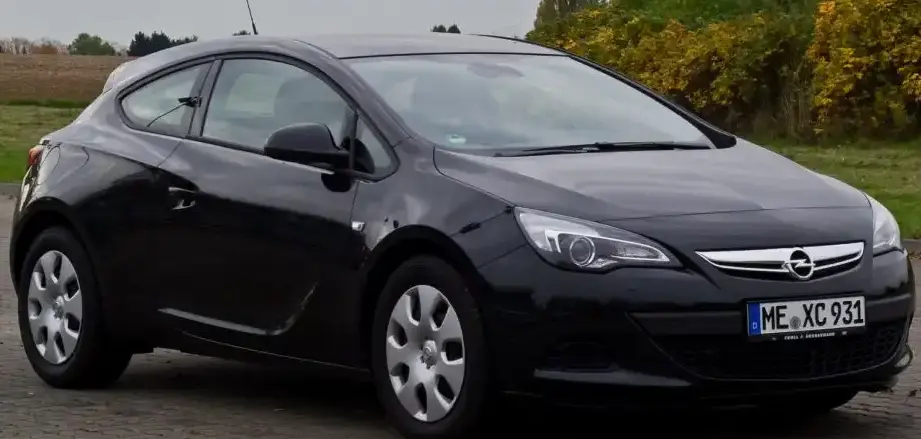
The Opel Astra J GTC 1.7 CDTI (130 hp) Ecotec start/stop, produced between 2011 and 2014, represented a key variant within the third generation (J) Astra GTC lineup. Positioned as a fuel-efficient and relatively affordable option, it catered to buyers seeking a stylish three-door hatchback with diesel economy. This model occupied a middle ground in the GTC range, slotting below the more powerful petrol variants and above the base-level engine options. It was primarily marketed in Europe, where compact hatchbacks with diesel engines were – and continue to be – highly popular due to fuel costs and emissions regulations.
Technical Specifications
| Brand | Opel |
| Model | Astra |
| Generation | Astra J GTC |
| Type (Engine) | 1.7 CDTI (130 Hp) Ecotec start/stop |
| Start of production | 2011 |
| End of production | 2014 |
| Powertrain Architecture | Internal Combustion engine |
| Body type | Hatchback |
| Seats | 5 |
| Doors | 3 |
| Fuel consumption (urban) | 4.8 l/100 km (49 US mpg, 58.9 UK mpg, 20.8 km/l) |
| Fuel consumption (extra urban) | 4.0-4.1 l/100 km (58.8 – 57.4 US mpg, 70.6 – 68.9 UK mpg, 25 – 24.4 km/l) |
| Fuel consumption (combined) | 4.3-4.4 l/100 km (54.7 – 53.5 US mpg, 65.7 – 64.2 UK mpg, 23.3 – 22.7 km/l) |
| CO2 emissions | 114-116 g/km |
| Fuel Type | Diesel |
| Acceleration 0 – 100 km/h | 10.8 sec |
| Acceleration 0 – 62 mph | 10.8 sec |
| Acceleration 0 – 60 mph | 10.3 sec |
| Maximum speed | 196 km/h (121.79 mph) |
| Emission standard | Euro 5 |
| Weight-to-power ratio | 11 kg/Hp, 90.9 Hp/tonne |
| Weight-to-torque ratio | 4.8 kg/Nm, 209.8 Nm/tonne |
| Power | 130 Hp @ 4000 rpm |
| Power per litre | 77.1 Hp/l |
| Torque | 300 Nm @ 2000-2500 rpm (221.27 lb.-ft. @ 2000-2500 rpm) |
| Engine layout | Front, Transverse |
| Engine Model/Code | A17DTS |
| Engine displacement | 1686 cm3 (102.89 cu. in.) |
| Number of cylinders | 4 |
| Engine configuration | Inline |
| Cylinder Bore | 79 mm (3.11 in.) |
| Piston Stroke | 86 mm (3.39 in.) |
| Compression ratio | 18:1 |
| Number of valves per cylinder | 4 |
| Fuel injection system | Diesel Commonrail |
| Engine aspiration | Turbocharger, Intercooler |
| Engine oil capacity | 5.4 l (5.71 US qt | 4.75 UK qt) |
| Coolant | 7.1 l (7.5 US qt | 6.25 UK qt) |
| Kerb Weight | 1430 kg (3152.61 lbs.) |
| Max. weight | 1890 kg (4166.74 lbs.) |
| Max load | 460 kg (1014.13 lbs.) |
| Trunk (boot) space – minimum | 380 l (13.42 cu. ft.) |
| Trunk (boot) space – maximum | 1165 l (41.14 cu. ft.) |
| Fuel tank capacity | 56 l (14.79 US gal | 12.32 UK gal) |
| Length | 4466 mm (175.83 in.) |
| Width | 1840 mm (72.44 in.) |
| Width including mirrors | 2020 mm (79.53 in.) |
| Height | 1482 mm (58.35 in.) |
| Wheelbase | 2695 mm (106.1 in.) |
| Front track | 1584 mm (62.36 in.) |
| Rear (Back) track | 1588 mm (62.52 in.) |
| Ride height (ground clearance) | 112 mm (4.41 in.) |
| Drag coefficient (Cd) | 0.31 |
| Minimum turning circle | 11.4 m (37.4 ft.) |
| Drivetrain Architecture | Front wheel drive |
| Number of gears and type of gearbox | 6 gears, manual transmission |
| Front brakes | Ventilated discs |
| Rear brakes | Disc |
INTRODUCTION
The Opel Astra J GTC 1.7 CDTI Ecotec start/stop, launched in 2011, was a three-door hatchback variant of the broader Astra J series. The GTC (Gran Turismo Coupe) designation signified Opel’s attempt to inject a degree of sportiness into the Astra range, offering a more coupe-like profile compared to the five-door hatchback and estate models. The 1.7 CDTI engine, part of Opel/Vauxhall’s ‘Ecotec’ family, was a key component in offering a balance between performance and fuel efficiency. The inclusion of the Start/Stop system further emphasized the model’s focus on reducing emissions and improving fuel economy. This variant was a significant seller in European markets, appealing to buyers looking for a stylish, practical, and economical vehicle.
Powertrain & Engine Architecture
The heart of the Astra J GTC 1.7 CDTI is the A17DTS engine, a 1.7-liter inline-four cylinder diesel. This engine utilizes a common rail direct injection system, delivering fuel directly into the combustion chamber at extremely high pressure. This technology, coupled with a variable geometry turbocharger and intercooler, allows for efficient combustion and increased power output. The engine produces 130 horsepower at 4000 rpm and 300 Nm (221 lb-ft) of torque between 2000 and 2500 rpm. The engine features a 18:1 compression ratio, typical for diesel engines, and four valves per cylinder. The Start/Stop system automatically shuts off the engine when the vehicle is stationary (e.g., at traffic lights) and restarts it instantly when the clutch is depressed (in manual transmission models) or the brake pedal is released. The engine is transversely mounted at the front of the vehicle. The 6-speed manual transmission was the standard offering, providing a good balance between fuel economy and driver engagement.
Driving Characteristics
The 1.7 CDTI engine, while not exceptionally powerful, provided adequate performance for everyday driving. Acceleration from 0-62 mph (0-100 km/h) took around 10.8 seconds, and the top speed was 196 km/h (121.79 mph). The engine’s strong low-end torque made it feel responsive in urban environments and provided sufficient power for overtaking on highways. Compared to the more powerful petrol versions of the Astra GTC, the 1.7 CDTI prioritized fuel economy over outright speed. The manual transmission offered precise shifts, but the gear ratios were tuned for efficiency rather than sporty acceleration. The driving experience was generally comfortable, with the suspension tuned to provide a good balance between ride quality and handling. It wasn’t a particularly engaging car to drive for enthusiasts, but it was perfectly competent and practical for daily use.
Equipment & Trim Levels
The Astra J GTC 1.7 CDTI typically came with a reasonable level of standard equipment. This included air conditioning, electric front windows, a CD/MP3 stereo system, and ABS brakes. Higher trim levels, such as ‘Sport’ or ‘Design’, added features like alloy wheels, a multi-function steering wheel, cruise control, and upgraded interior trim. Interior upholstery was typically cloth, with options for leather available on higher-spec models. Optional extras included a panoramic sunroof, parking sensors, and a more advanced infotainment system with navigation. The dashboard layout was modern and functional, with a clear instrument cluster and logically arranged controls.
Chassis & Braking
The Astra J GTC utilized a MacPherson strut front suspension and a torsion beam rear suspension. This setup provided a good compromise between ride comfort and handling. The front brakes were ventilated discs, while the rear brakes were solid discs. ABS (Anti-lock Braking System) was standard, enhancing braking performance and safety. The steering was electrically assisted, providing light and precise control. The GTC models generally featured a slightly stiffer suspension setup compared to the standard Astra J hatchback, contributing to improved handling characteristics. Stabilizer bars were fitted to both the front and rear axles to reduce body roll during cornering.
Market Reception & Comparison
The Astra J GTC 1.7 CDTI was generally well-received by automotive critics. It was praised for its fuel efficiency, comfortable ride, and stylish design. However, some reviewers noted that the engine lacked the punch of the petrol variants and that the interior, while functional, wasn’t particularly luxurious. Compared to other diesel-powered hatchbacks in its class, such as the Volkswagen Golf and Ford Focus, the Astra J GTC offered a competitive level of equipment and fuel economy at a relatively affordable price point. The 1.7 CDTI engine proved to be reliable, although regular servicing was essential to maintain optimal performance.
Legacy
The Opel Astra J GTC 1.7 CDTI remains a popular choice in the used car market, particularly for buyers seeking an economical and practical hatchback. The A17DTS engine has proven to be relatively durable, although it’s important to check for signs of wear and tear, such as excessive oil consumption or unusual engine noises. The Start/Stop system can sometimes experience issues with the starter motor or battery, so it’s worth inspecting these components. Overall, the Astra J GTC 1.7 CDTI represents a solid and dependable vehicle that offers a good balance of style, economy, and practicality.