Technical Specifications
| Brand | Opel |
| Model | Astra |
| Generation | Astra J GTC |
| Type (Engine) | 2.0 CDTI (165 Hp) Ecotec Automatic |
| Start of production | 2011 |
| End of production | 2015 |
| Powertrain Architecture | Internal Combustion engine |
| Body type | Hatchback |
| Seats | 5 |
| Doors | 3 |
| Fuel consumption (urban) | 7.6 l/100 km (30.9 US mpg) |
| Fuel consumption (extra urban) | 4.5 l/100 km (52.3 US mpg) |
| Fuel consumption (combined) | 5.6-5.7 l/100 km (42 – 41.3 US mpg) |
| CO2 emissions | 149-150 g/km |
| Fuel Type | Diesel |
| Acceleration 0 – 100 km/h | 9.2 sec |
| Acceleration 0 – 62 mph | 9.2 sec |
| Acceleration 0 – 60 mph | 8.7 sec |
| Maximum speed | 207 km/h (128.62 mph) |
| Emission standard | Euro 5 |
| Weight-to-power ratio | 9.4 kg/Hp |
| Weight-to-torque ratio | 4.4 kg/Nm |
| Power | 165 Hp @ 4000 rpm |
| Torque | 350 Nm @ 1750-2500 rpm (258.15 lb.-ft.) |
| Engine layout | Front, Transverse |
| Engine Model/Code | A20DTH |
| Engine displacement | 1956 cm3 (119.36 cu. in.) |
| Number of cylinders | 4 |
| Engine configuration | Inline |
| Cylinder Bore | 83 mm (3.27 in.) |
| Piston Stroke | 90.4 mm (3.56 in.) |
| Compression ratio | 17:1 |
| Number of valves per cylinder | 4 |
| Fuel injection system | Diesel Commonrail |
| Engine aspiration | Turbocharger, Intercooler |
| Engine oil capacity | 4.5 l (4.76 US qt | 3.96 UK qt) |
| Coolant capacity | 6.9 l (7.29 US qt | 6.07 UK qt) |
| Kerb Weight | 1550 kg (3417.17 lbs.) |
| Max. weight | 2040 kg (4497.43 lbs.) |
| Max load | 490 kg (1080.27 lbs.) |
| Trunk (boot) space – minimum | 380 l (13.42 cu. ft.) |
| Trunk (boot) space – maximum | 1165 l (41.14 cu. ft.) |
| Fuel tank capacity | 56 l (14.79 US gal | 12.32 UK gal) |
| Length | 4466 mm (175.83 in.) |
| Width | 1840 mm (72.44 in.) |
| Width including mirrors | 2020 mm (79.53 in.) |
| Height | 1482 mm (58.35 in.) |
| Wheelbase | 2695 mm (106.1 in.) |
| Front track | 1584 mm (62.36 in.) |
| Rear track | 1588 mm (62.52 in.) |
| Ride height (ground clearance) | 112 mm (4.41 in.) |
| Drag coefficient (Cd) | 0.31 |
| Minimum turning circle | 11.4 m (37.4 ft.) |
| Drivetrain | Front wheel drive |
| Number of gears | 6 |
| Gearbox type | Automatic transmission |
| Front brakes | Ventilated discs |
| Rear brakes | Disc |
| Tires size | 235/55 R17 |
| Wheel rims size | 17 |
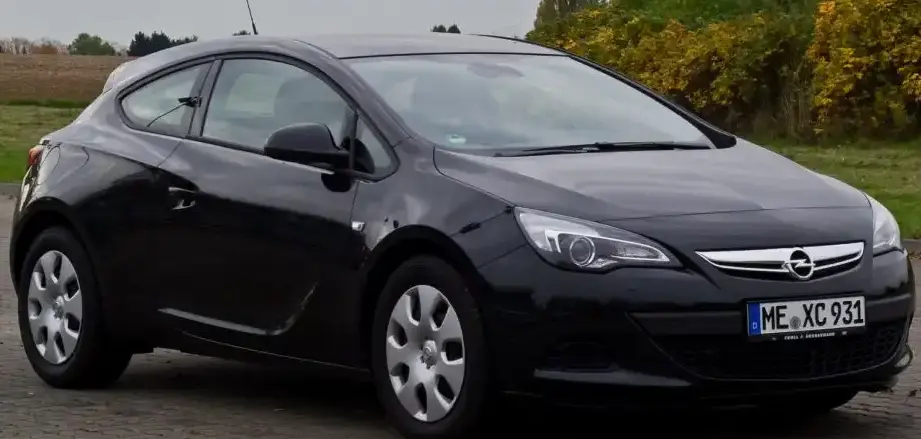
The Opel Astra J GTC 2.0 CDTI Automatic, launched in 2011, was a significant addition to the Astra J GTC lineup. Built on the 1HX0/A3 platform, shared with other GM and Stellantis vehicles, the GTC aimed to provide a more emotionally engaging driving experience than its more practical Astra siblings. The 2.0 CDTI variant, paired with a six-speed automatic transmission, offered a compelling blend of performance, fuel efficiency, and convenience. It was designed to appeal to buyers who desired a stylish, sporty hatchback without sacrificing the benefits of a modern diesel engine.
Powertrain & Engine Architecture
At the heart of the Astra J GTC 2.0 CDTI Automatic lies the A20DTH engine, a 1956cc inline-four cylinder diesel. This engine is a member of Opel’s Ecotec family, known for its focus on efficiency and reduced emissions. The A20DTH utilizes a common rail direct injection system, delivering fuel at extremely high pressure for optimized combustion. A turbocharger with an intercooler further enhances performance, boosting power output to 165 horsepower at 4000 rpm and generating a substantial 350 Nm (258 lb-ft) of torque between 1750 and 2500 rpm. The engine features four valves per cylinder and a compression ratio of 17:1. The six-speed automatic transmission, sourced from Aisin, was chosen for its smooth shifting characteristics and responsiveness. It was programmed to balance fuel economy with acceptable acceleration, offering a ‘manual’ mode for greater driver control.
Driving Characteristics
The 2.0 CDTI Automatic offered a noticeably more relaxed driving experience compared to the lower-powered Astra J GTC variants. The ample torque available from low engine speeds provided strong acceleration in everyday driving situations. While not a sports car, the 9.2-second 0-62 mph acceleration time was respectable for a diesel-powered hatchback. The automatic transmission, while smooth, wasn’t particularly quick to downshift, which could sometimes feel sluggish during aggressive driving. The gear ratios were tuned for fuel efficiency, prioritizing higher gears at cruising speeds. Compared to the six-speed manual version of the same engine, the automatic offered less direct control but greater convenience, particularly in urban traffic. The manual version generally felt more engaging and slightly quicker.
Equipment & Trim Levels
The Astra J GTC 2.0 CDTI Automatic typically came equipped with a generous level of standard features. These included air conditioning, electric windows and mirrors, a CD/MP3 stereo system, and alloy wheels. Higher trim levels added features such as leather upholstery, heated front seats, a panoramic sunroof, and a more advanced infotainment system with navigation. Optional extras included parking sensors, automatic headlights and wipers, and a premium sound system. Interior upholstery was typically cloth on base models, with leather options available on higher trims. The dashboard layout was modern and driver-focused, with a clear instrument cluster and logically arranged controls.
Chassis & Braking
The Astra J GTC featured a fully independent suspension system, with MacPherson struts at the front and a multi-link setup at the rear. This configuration provided a good balance between ride comfort and handling. The 2.0 CDTI Automatic, being one of the heavier variants, benefited from slightly stiffer spring rates to manage body roll. Braking duties were handled by ventilated discs at the front and solid discs at the rear. Anti-lock Braking System (ABS) was standard, ensuring safe and controlled stopping power. The steering was electrically assisted, providing a light and precise feel.
Market Reception & Comparison
The Astra J GTC 2.0 CDTI Automatic received generally positive reviews from automotive critics. It was praised for its comfortable ride, refined engine, and fuel efficiency. However, some reviewers noted that the automatic transmission could feel a bit slow to respond at times. Compared to the 1.7 CDTI variants, the 2.0 CDTI offered significantly more power and a more enjoyable driving experience. Fuel economy was comparable to other diesel hatchbacks in its class, averaging around 42-49 mpg in combined driving. Reliability was generally good, although some owners reported issues with the diesel particulate filter (DPF) system, a common concern with modern diesel engines.
Legacy
The Opel Astra J GTC 2.0 CDTI Automatic remains a popular choice in the used car market. The A20DTH engine is known for its durability and relatively low maintenance costs, provided it is properly serviced. The automatic transmission, while not the sportiest, has proven to be reliable. However, potential buyers should be aware of the potential for DPF issues and ensure that the vehicle has been regularly maintained. The Astra J GTC 2.0 CDTI Automatic represents a well-rounded and practical hatchback that continues to offer a compelling combination of performance, efficiency, and style.