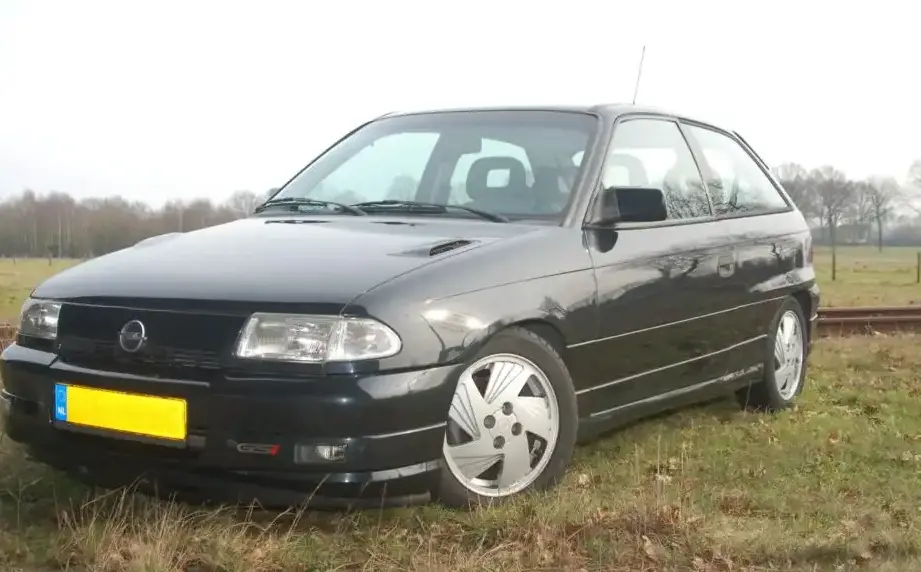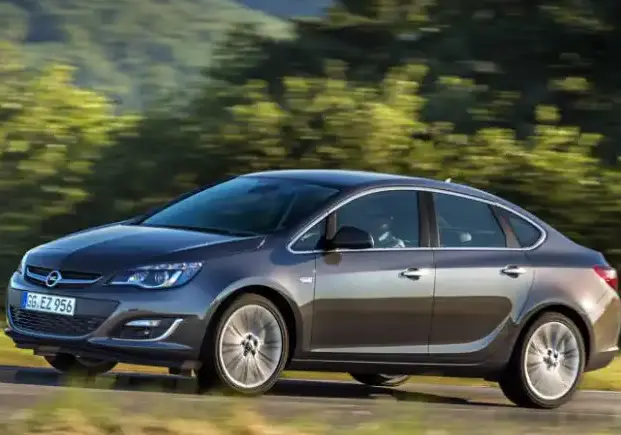
The Opel Astra J Sedan 1.6 Turbo (180 hp) Automatic, produced for the 2012 model year, represented a mid-cycle offering within the broader Astra J Sedan range (2009-2015). Positioned as a performance-oriented trim, it aimed to bridge the gap between the base models and the more powerful, yet often more expensive, variants. This particular configuration was primarily marketed in Europe, where the Astra J Sedan competed in the compact sedan segment against rivals like the Ford Focus, Volkswagen Jetta, and Peugeot 308. The Astra J generation, built on the GM Delta II platform, sought to improve upon its predecessor with enhanced refinement, technology, and fuel efficiency.
Technical Specifications
| Brand | Opel |
| Model | Astra |
| Generation | Astra J Sedan |
| Type (Engine) | 1.6 Turbo (180 Hp) Automatic |
| Start of production | 2012 |
| End of production | 2012 |
| Powertrain Architecture | Internal Combustion engine |
| Body type | Sedan |
| Seats | 5 |
| Doors | 4 |
| Fuel consumption (urban) | 9.9-10.1 l/100 km (23.8 – 23.3 US mpg) |
| Fuel consumption (extra urban) | 5.6-5.8 l/100 km (42 – 40.6 US mpg) |
| Fuel consumption (combined) | 7.2-7.4 l/100 km (32.7 – 31.8 US mpg) |
| CO2 emissions | 169-174 g/km |
| Fuel Type | Petrol (Gasoline) |
| Acceleration 0 – 100 km/h | 8.7 sec |
| Acceleration 0 – 62 mph | 8.7 sec |
| Acceleration 0 – 60 mph | 8.3 sec |
| Maximum speed | 223 km/h (138.57 mph) |
| Emission standard | Euro 5 |
| Power | 180 Hp @ 5500 rpm |
| Torque | 230 Nm @ 2200-5500 rpm (169.64 lb.-ft. @ 2200-5500 rpm) |
| Engine layout | Front, Transverse |
| Engine Model/Code | A16LET |
| Engine displacement | 1598 cm3 (97.52 cu. in.) |
| Number of cylinders | 4 |
| Engine configuration | Inline |
| Cylinder Bore | 79 mm (3.11 in.) |
| Piston Stroke | 81.5 mm (3.21 in.) |
| Number of valves per cylinder | 4 |
| Fuel injection system | Multi-port manifold injection |
| Engine aspiration | Turbocharger, Intercooler |
| Engine oil capacity | 4.5 l (4.76 US qt | 3.96 UK qt) |
| Coolant | 5.6 l (5.92 US qt | 4.93 UK qt) |
| Trunk (boot) space – minimum | 460 l (16.24 cu. ft.) |
| Trunk (boot) space – maximum | 1010 l (35.67 cu. ft.) |
| Fuel tank capacity | 56 l (14.79 US gal | 12.32 UK gal) |
| Length | 4658 mm (183.39 in.) |
| Width | 1814 mm (71.42 in.) |
| Width including mirrors | 2013 mm (79.25 in.) |
| Height | 1500 mm (59.06 in.) |
| Wheelbase | 2685 mm (105.71 in.) |
| Front track | 1541 mm (60.67 in.) |
| Rear (Back) track | 1551 mm (61.06 in.) |
| Front overhang | 974 mm (38.35 in.) |
| Rear overhang | 999 mm (39.33 in.) |
| Minimum turning circle | 11.5 m (37.73 ft.) |
| Drivetrain Architecture | Front wheel drive |
| Number of gears | 6 |
| Gearbox type | Automatic transmission |
| Front brakes | Ventilated discs |
| Assisting systems | ABS (Anti-lock braking system) |
| Steering type | Steering rack and pinion |
| Power steering | Electric Steering |
Powertrain & Engine Architecture
The heart of the Astra J Sedan 1.6 Turbo Automatic is the A16LET engine, a 1.6-liter inline-four cylinder gasoline engine equipped with a turbocharger and intercooler. This engine is part of Opel’s ‘family 1’ engine series. The A16LET utilizes multi-port fuel injection and a single overhead camshaft (SOHC) valvetrain with four valves per cylinder. The turbocharger, a key component in achieving the 180 hp output, provides increased air intake to the engine, boosting power and torque. The engine’s control unit (ECU) manages fuel delivery, ignition timing, and turbocharger boost pressure to optimize performance and efficiency. The six-speed automatic transmission, sourced from Aisin, was chosen for its smooth shifting characteristics and relative affordability. It features adaptive shift patterns, adjusting to the driver’s style and road conditions.
Driving Characteristics
The 180 hp and 230 Nm (169.64 lb-ft) of torque delivered by the 1.6 Turbo engine, coupled with the six-speed automatic, provided a respectable level of performance. Acceleration from 0-60 mph was achieved in approximately 8.3 seconds, making it noticeably quicker than the base 1.4-liter models. However, it didn’t match the outright pace of the Astra J’s OPC (Vauxhall VXR) variant. The automatic transmission, while convenient, did exhibit some typical characteristics of torque-converter automatics, such as slight hesitation during downshifts. The gear ratios were tuned for a balance between acceleration and fuel economy, with a relatively tall final drive. Compared to the manual transmission versions of the 1.6 Turbo, the automatic offered less driver engagement but greater ease of use, particularly in urban traffic.
Equipment & Trim Levels
The Astra J Sedan 1.6 Turbo Automatic typically came with a fairly comprehensive standard equipment list. This included air conditioning, power windows, power mirrors, a CD/MP3 stereo system, and alloy wheels. Higher trim levels, often denoted by names like ‘Sport’ or ‘Cosmo’, added features such as automatic climate control, rain-sensing wipers, a trip computer, and upgraded interior upholstery. Optional extras included a navigation system, parking sensors, and a panoramic sunroof. Interior materials were generally of good quality for the segment, with a focus on durability and practicality. The dashboard layout was clean and functional, with intuitive controls.
Chassis & Braking
The Astra J Sedan featured a MacPherson strut front suspension and a torsion beam rear suspension. The torsion beam setup, while cost-effective, was a compromise compared to the independent rear suspension found on some competitors. The front brakes were ventilated discs, providing adequate stopping power, while the rear brakes were typically solid discs. Anti-lock Braking System (ABS) was standard. The steering was electrically assisted, offering a light and precise feel. Stabilizer bars were fitted to both the front and rear axles to reduce body roll during cornering. The suspension tuning aimed for a balance between comfort and handling, providing a reasonably compliant ride without sacrificing too much agility.
Market Reception & Comparison
The Astra J Sedan 1.6 Turbo Automatic received generally positive reviews from automotive critics. It was praised for its refined engine, comfortable ride, and well-equipped interior. However, some reviewers noted that the automatic transmission could feel slightly sluggish at times, and the torsion beam rear suspension didn’t offer the same level of sophistication as independent setups. Fuel economy was considered competitive for the segment, with combined figures ranging from 7.2 to 7.4 l/100 km. Compared to the 1.4-liter turbocharged models, the 1.6 Turbo offered a noticeable performance upgrade, while remaining more affordable than the higher-powered variants. The 1.7 CDTI diesel models were often favored by those prioritizing fuel efficiency, while the OPC offered a more focused driving experience.
Legacy
The A16LET engine, while generally reliable, is known to require regular maintenance, particularly regarding oil changes and timing chain inspection. The six-speed Aisin automatic transmission has also proven to be relatively durable, but proper fluid changes are crucial for longevity. Today, the Astra J Sedan 1.6 Turbo Automatic can be found on the used car market at relatively affordable prices. It represents a practical and reasonably well-equipped compact sedan, offering a good balance of performance, comfort, and fuel economy. However, potential buyers should be aware of the importance of a thorough pre-purchase inspection to identify any potential maintenance issues.