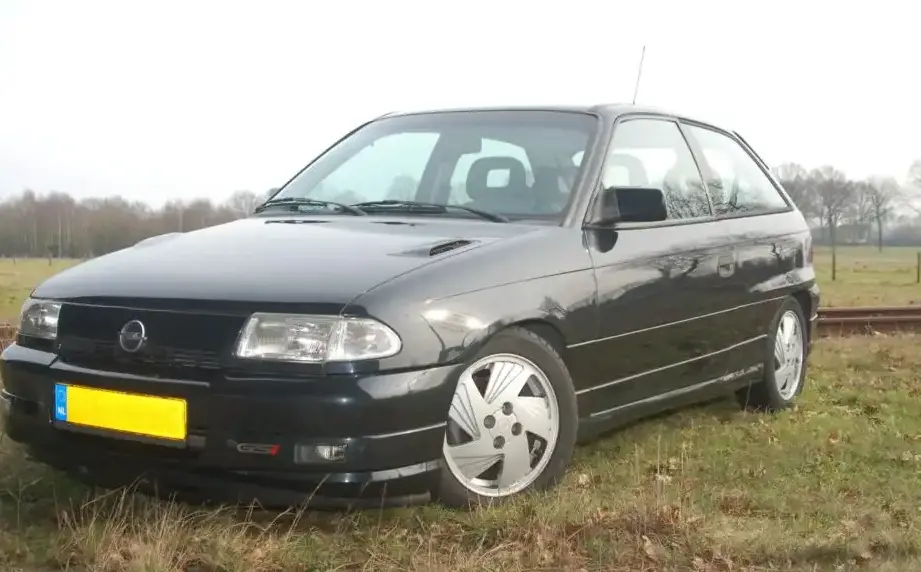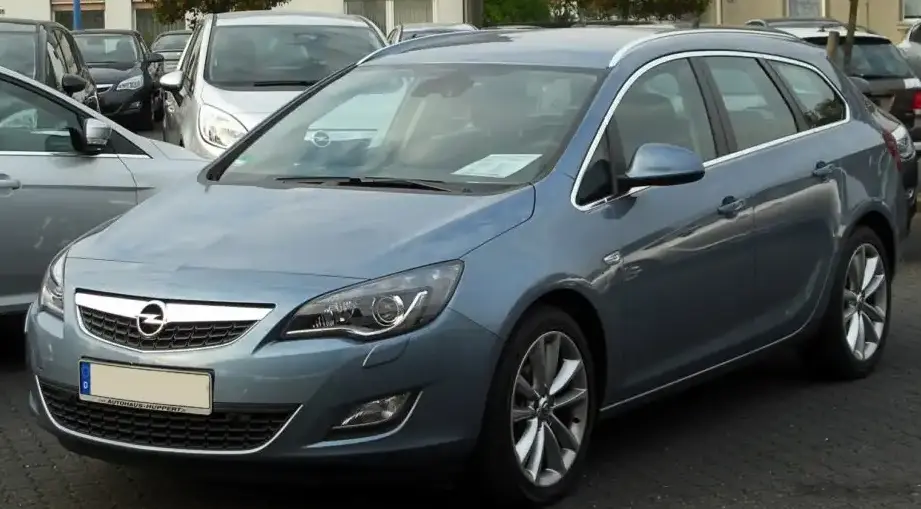
The Opel Astra J Sports Tourer 1.4 Turbo, producing 140 horsepower, was a key variant within the Astra J series, specifically the Sports Tourer (estate/wagon) body style. Introduced in 2010 and remaining in production through 2012, this model aimed to provide a balance between fuel efficiency, practicality, and reasonable performance for European buyers. It occupied a mid-range position in the Astra J Sports Tourer lineup, slotting between the lower-powered 1.3 CDTI diesel and the more potent 1.6 Turbo variants. The Astra J generation (2009-2015) represented a significant step forward for Opel in terms of design, technology, and overall refinement, and the 1.4 Turbo Sports Tourer was a popular choice for families and individuals needing a versatile vehicle.
Technical Specifications
| Brand | Opel |
| Model | Astra |
| Generation | Astra J Sports Tourer |
| Type (Engine) | 1.4 Turbo (140 Hp) |
| Start of production | 2010 |
| End of production | 2012 |
| Powertrain Architecture | Internal Combustion engine |
| Body type | Station wagon (estate) |
| Seats | 5 |
| Doors | 5 |
| Fuel consumption (urban) | 8.4 l/100 km (28 US mpg, 33.6 UK mpg, 11.9 km/l) |
| Fuel consumption (extra urban) | 4.9 l/100 km (48 US mpg, 57.6 UK mpg, 20.4 km/l) |
| Fuel consumption (combined) | 6.1 l/100 km (38.6 US mpg, 46.3 UK mpg, 16.4 km/l) |
| CO2 emissions | 144 g/km |
| Fuel Type | Petrol (Gasoline) |
| Acceleration 0 – 100 km/h | 10.4 sec |
| Acceleration 0 – 62 mph | 10.4 sec |
| Acceleration 0 – 60 mph | 9.9 sec |
| Maximum speed | 200 km/h (124.27 mph) |
| Emission standard | Euro 5 |
| Weight-to-power ratio | 9.6 kg/Hp, 103.7 Hp/tonne |
| Weight-to-torque ratio | 6.8 kg/Nm, 147.4 Nm/tonne |
| Power | 140 Hp @ 6000 rpm |
| Power per litre | 100.1 Hp/l |
| Torque | 199 Nm @ 4900 rpm (146.77 lb.-ft. @ 4900 rpm) |
| Engine layout | Front, Transverse |
| Engine Model/Code | A14NET |
| Engine displacement | 1398 cm3 (85.31 cu. in.) |
| Number of cylinders | 4 |
| Engine configuration | Inline |
| Cylinder Bore | 73.4 mm (2.89 in.) |
| Piston Stroke | 82.6 mm (3.25 in.) |
| Compression ratio | 10.5:1 |
| Number of valves per cylinder | 4 |
| Fuel injection system | Direct injection |
| Engine aspiration | Turbocharger, Intercooler |
| Valvetrain | DOHC |
| Engine oil capacity | 4 l (4.23 US qt | 3.52 UK qt) |
| Coolant | 6.2 l (6.55 US qt | 5.46 UK qt) |
| Kerb Weight | 1350 kg (2976.24 lbs.) |
| Max. weight | 1990 kg (4387.2 lbs.) |
| Max load | 640 kg (1410.96 lbs.) |
| Trunk (boot) space – minimum | 550 l (19.42 cu. ft.) |
| Trunk (boot) space – maximum | 1550 l (54.74 cu. ft.) |
| Fuel tank capacity | 56 l (14.79 US gal | 12.32 UK gal) |
| Length | 4698 mm (184.96 in.) |
| Width | 1814 mm (71.42 in.) |
| Width including mirrors | 2013 mm (79.25 in.) |
| Height | 1535 mm (60.43 in.) |
| Wheelbase | 2685 mm (105.71 in.) |
| Front track | 1544 mm (60.79 in.) |
| Rear (Back) track | 1558 mm (61.34 in.) |
| Front overhang | 974 mm (38.35 in.) |
| Rear overhang | 1039 mm (40.91 in.) |
| Ride height (ground clearance) | 117 mm (4.61 in.) |
| Drag coefficient (Cd) | 0.33 |
| Drivetrain Architecture | The Internal combustion engine (ICE) drives the front wheels of the vehicle. |
| Drive wheel | Front wheel drive |
| Number of gears and type of gearbox | 6 gears, manual transmission |
| Front suspension | Independent type McPherson |
| Rear suspension | Semi-independent, coil spring |
| Front brakes | Ventilated discs |
| Rear brakes | Disc |
| Assisting systems | ABS (Anti-lock braking system) |
| Steering type | Steering rack and pinion |
| Power steering | Electric Steering |
| Tires size | 215/50 R17 |
| Wheel rims size | 17 |
Powertrain & Engine Architecture
The heart of the Astra J Sports Tourer 1.4 Turbo was the A14NET engine, a 1.4-liter inline-four cylinder gasoline engine. This engine was part of Opel’s family of small-displacement turbocharged engines designed to deliver a balance of performance and fuel economy. It featured direct fuel injection, a technology that improved combustion efficiency and reduced emissions. The engine utilized a single-scroll turbocharger with an intercooler to increase air density and boost power output. The valvetrain employed a Dual Overhead Camshaft (DOHC) design with four valves per cylinder, optimizing airflow for improved performance. The 6-speed manual transmission was the standard offering, providing a good spread of gears for both acceleration and highway cruising. The transmission was chosen for its efficiency and driver engagement, although an automatic transmission was available as an option.
Driving Characteristics
The 140 hp 1.4 Turbo engine in the Astra J Sports Tourer provided adequate, though not exhilarating, performance. Acceleration from 0-60 mph took around 9.9 seconds, making it competitive with other vehicles in its class. The turbocharger provided a noticeable boost in power during acceleration, but turbo lag was present, particularly at lower engine speeds. The 6-speed manual transmission allowed drivers to keep the engine in its optimal power band. Compared to the more powerful 1.6 Turbo models, the 1.4 Turbo felt less responsive, but it offered better fuel economy. The suspension was tuned for comfort, providing a relatively smooth ride, but handling was still competent, especially considering the vehicle’s size and weight. The steering was precise and well-weighted, offering a good level of feedback to the driver.
Equipment & Trim Levels
The Astra J Sports Tourer 1.4 Turbo typically came with a reasonable level of standard equipment. This included air conditioning, power windows, power mirrors, a CD/MP3 stereo system, and ABS brakes. Higher trim levels added features such as alloy wheels, a multi-function steering wheel, cruise control, and a more advanced infotainment system. Optional extras included a sunroof, leather upholstery, and parking sensors. Interior upholstery was typically cloth, with higher trims offering partial leather options. The dashboard layout was modern and functional, with a clear instrument cluster and logically placed controls.
Chassis & Braking
The Astra J Sports Tourer utilized a McPherson strut front suspension and a semi-independent coil spring rear suspension. This setup provided a good balance between ride comfort and handling. The front brakes were ventilated discs, while the rear brakes were solid discs. ABS (Anti-lock Braking System) was standard, enhancing safety during emergency braking situations. The chassis was designed to provide good rigidity, contributing to the vehicle’s handling characteristics. Stabilizer bars were fitted to both the front and rear axles to reduce body roll during cornering.
Market Reception & Comparison
The Opel Astra J Sports Tourer 1.4 Turbo was generally well-received by automotive critics. It was praised for its fuel efficiency, practicality, and comfortable ride. However, some critics found the engine to be somewhat underpowered, particularly when the vehicle was fully loaded. Compared to the 1.3 CDTI diesel, the 1.4 Turbo offered more power and a more refined driving experience, but it consumed more fuel. Compared to the 1.6 Turbo, it was less powerful but more affordable and fuel-efficient. The Astra J Sports Tourer competed with other compact estate cars such as the Ford Focus Estate, Volkswagen Golf Estate, and Peugeot 308 SW.
Legacy
The A14NET engine, while not known for any major inherent flaws, requires regular maintenance to ensure longevity. Common issues include turbocharger wear and potential oil leaks. The Astra J Sports Tourer 1.4 Turbo remains a relatively affordable and practical used car option. Its fuel efficiency and spacious interior make it a good choice for families and individuals needing a versatile vehicle. The availability of spare parts is generally good, and the vehicle’s relatively simple mechanical design makes it relatively easy to repair. However, potential buyers should be aware of the potential for turbocharger issues and ensure that the vehicle has been properly maintained.