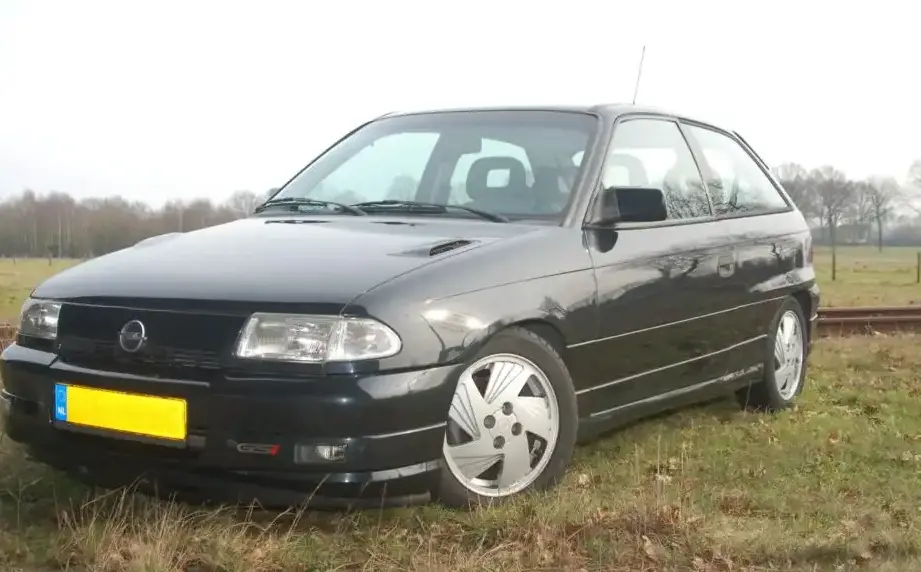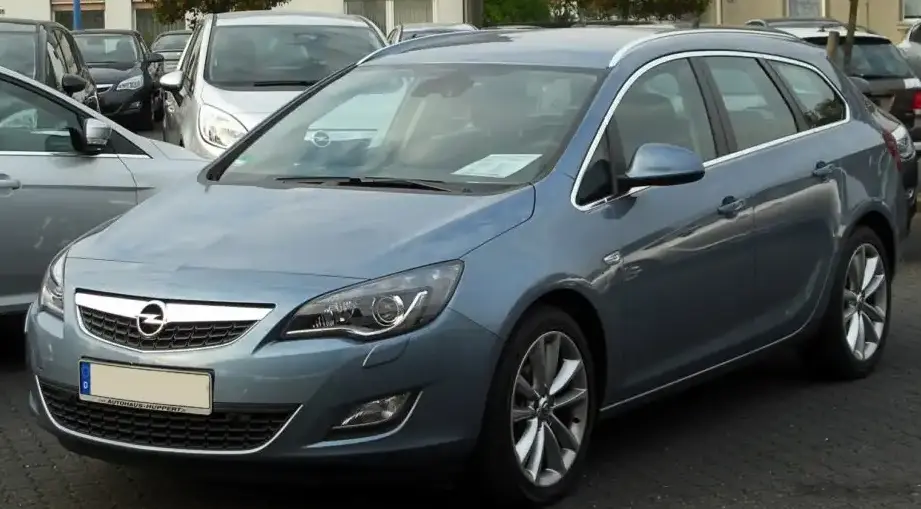
The Opel Astra J Sports Tourer 1.7 CDTI (110 hp) ecoFLEX start/stop is a diesel-powered station wagon produced between 2010 and 2012. Part of the Astra J generation (2009-2015), this variant occupied a key position in the European market as an efficient and practical family vehicle. It was designed to appeal to buyers prioritizing fuel economy and low running costs, while still offering the versatility of a wagon body style. The “ecoFLEX” designation indicated Opel’s efforts to maximize fuel efficiency through various technologies, including a start/stop system. This model sat within the Astra J Sports Tourer lineup as a mid-range offering, positioned below the more powerful petrol and diesel variants, and above the base-level trims.
Technical Specifications
| Brand | Opel |
| Model | Astra |
| Generation | Astra J Sports Tourer |
| Type (Engine) | 1.7 CDTI (110 Hp) ecoFLEX start/stop |
| Start of production | 2010 |
| End of production | 2012 |
| Powertrain Architecture | Internal Combustion engine |
| Body type | Station wagon (estate) |
| Seats | 5 |
| Doors | 5 |
| Fuel consumption (urban) | 4.5 l/100 km (52.3 US mpg, 62.8 UK mpg, 22.2 km/l) |
| Fuel consumption (extra urban) | 3.4 l/100 km (69.2 US mpg, 83.1 UK mpg, 29.4 km/l) |
| Fuel consumption (combined) | 3.7 l/100 km (63.6 US mpg, 76.3 UK mpg, 27 km/l) |
| CO2 emissions | 99 g/km |
| Fuel Type | Diesel |
| Acceleration 0 – 100 km/h | 13 sec |
| Acceleration 0 – 62 mph | 13 sec |
| Acceleration 0 – 60 mph | 12.4 sec |
| Maximum speed | 180 km/h (111.85 mph) |
| Emission standard | Euro 5 |
| Weight-to-power ratio | 12.7 kg/Hp, 79 Hp/tonne |
| Weight-to-torque ratio | 5.4 kg/Nm, 186.6 Nm/tonne |
| Power | 110 Hp @ 3800 rpm |
| Power per litre | 65.2 Hp/l |
| Torque | 260 Nm @ 2550 rpm (191.77 lb.-ft. @ 2550 rpm) |
| Engine layout | Front, Transverse |
| Engine Model/Code | A17DTJ |
| Engine displacement | 1686 cm3 (102.89 cu. in.) |
| Number of cylinders | 4 |
| Engine configuration | Inline |
| Cylinder Bore | 79 mm (3.11 in.) |
| Piston Stroke | 86 mm (3.39 in.) |
| Compression ratio | 18.4:1 |
| Number of valves per cylinder | 4 |
| Fuel injection system | Diesel Commonrail |
| Engine aspiration | Turbocharger, Intercooler |
| Valvetrain | DOHC |
| Engine oil capacity | 5.4 l (5.71 US qt | 4.75 UK qt) |
| Coolant | 7.1 l (7.5 US qt | 6.25 UK qt) |
| Kerb Weight | 1393 kg (3071.04 lbs.) |
| Max. weight | 1960 kg (4321.06 lbs.) |
| Max load | 567 kg (1250.02 lbs.) |
| Trunk (boot) space – minimum | 550 l (19.42 cu. ft.) |
| Trunk (boot) space – maximum | 1550 l (54.74 cu. ft.) |
| Fuel tank capacity | 56 l (14.79 US gal | 12.32 UK gal) |
| Length | 4698 mm (184.96 in.) |
| Width | 1814 mm (71.42 in.) |
| Width including mirrors | 2013 mm (79.25 in.) |
| Height | 1535 mm (60.43 in.) |
| Wheelbase | 2685 mm (105.71 in.) |
| Front track | 1544 mm (60.79 in.) |
| Rear (Back) track | 1558 mm (61.34 in.) |
| Front overhang | 974 mm (38.35 in.) |
| Rear overhang | 1039 mm (40.91 in.) |
| Ride height (ground clearance) | 109 mm (4.29 in.) |
| Drag coefficient (Cd) | 0.33 |
| Drivetrain Architecture | The Internal combustion engine (ICE) drives the front wheels of the vehicle. |
| Drive wheel | Front wheel drive |
| Number of gears and type of gearbox | 6 gears, manual transmission |
| Front brakes | Ventilated discs |
| Rear brakes | Disc |
| Assisting systems | ABS (Anti-lock braking system) |
| Steering type | Steering rack and pinion |
| Power steering | Electric Steering |
| Tires size | 215/50 R17 |
| Wheel rims size | 17 |
Powertrain & Engine Architecture
The Astra J Sports Tourer 1.7 CDTI utilized the A17DTJ engine, a 1.7-liter inline-four cylinder diesel engine. This engine was a common choice in various Opel and Vauxhall models, known for its balance of fuel efficiency and reasonable performance. The A17DTJ featured a common rail direct injection system, delivering fuel directly into the combustion chamber at extremely high pressure for optimized combustion. A turbocharger with an intercooler was employed to increase power output and improve torque. The engine also incorporated a Dual Overhead Camshaft (DOHC) valvetrain with four valves per cylinder, enhancing breathing and overall efficiency. The start/stop system, a key component of the ecoFLEX package, automatically shut off the engine when the vehicle came to a halt (e.g., at traffic lights) and restarted it instantly when the driver released the brake pedal. This feature significantly reduced fuel consumption in urban driving conditions. The engine was paired with a six-speed manual transmission, chosen for its efficiency and driver engagement.
Driving Characteristics
The 110 hp output and 260 Nm (191.77 lb-ft) of torque provided adequate, though not exhilarating, performance. Acceleration from 0-60 mph took around 12.4 seconds, and top speed was limited to 111.85 mph. The engine felt most comfortable in the mid-range, offering sufficient power for everyday driving and overtaking maneuvers. Compared to the more powerful 1.4 Turbo petrol or 2.0 CDTI diesel variants, the 1.7 CDTI felt less responsive, particularly at higher engine speeds. The six-speed manual transmission was well-matched to the engine’s characteristics, allowing drivers to keep the engine in its optimal power band. The gear ratios were spaced to prioritize fuel economy, rather than outright acceleration. The ride quality was generally comfortable, typical of the Astra J, but the car could feel slightly underpowered when fully loaded with passengers and luggage.
Equipment & Trim Levels
The 1.7 CDTI ecoFLEX typically came with a reasonable level of standard equipment. This included air conditioning, electric front windows, a CD/MP3 stereo system, and ABS brakes. Safety features such as front and side airbags were also standard. Higher trim levels offered additional features like alloy wheels, cruise control, a multi-function steering wheel, and upgraded interior trim. Interior upholstery was typically cloth, with options for more premium materials available on higher-spec models. The dashboard layout was functional and well-designed, with a clear instrument cluster and intuitive controls.
Chassis & Braking
The Astra J Sports Tourer featured a MacPherson strut front suspension and a torsion beam rear suspension. This setup provided a good balance of ride comfort and handling. The front brakes were ventilated discs, offering good stopping power, while the rear brakes were solid discs. The steering was electrically assisted, providing a light and precise feel. The car’s weight of approximately 1393 kg (3071.04 lbs) was relatively moderate for a station wagon, contributing to its decent handling characteristics. Stabilizer bars were fitted to both the front and rear axles to reduce body roll during cornering.
Market Reception & Comparison
The Astra J Sports Tourer 1.7 CDTI ecoFLEX was generally well-received by automotive critics for its fuel efficiency and practicality. It was praised for its low running costs and comfortable ride. However, some reviewers noted that the engine lacked the punch of more powerful alternatives. Compared to the 1.4 Turbo petrol version, the 1.7 CDTI offered significantly better fuel economy but less performance. The 2.0 CDTI diesel provided more power and torque but at the expense of fuel efficiency and increased emissions. The 1.7 CDTI appealed to buyers who prioritized economy and practicality over outright performance.
Legacy
The A17DTJ engine proved to be a relatively reliable unit, although, like all diesel engines, it required regular maintenance, including oil changes and filter replacements. The start/stop system could occasionally experience issues, but these were generally minor. In the used car market, the Astra J Sports Tourer 1.7 CDTI ecoFLEX remains a popular choice for buyers seeking an affordable and fuel-efficient family vehicle. Its reputation for reliability and low running costs continues to make it a compelling option, even years after production ceased. Parts availability is generally good, and maintenance costs are relatively low, making it a sensible choice for budget-conscious buyers.