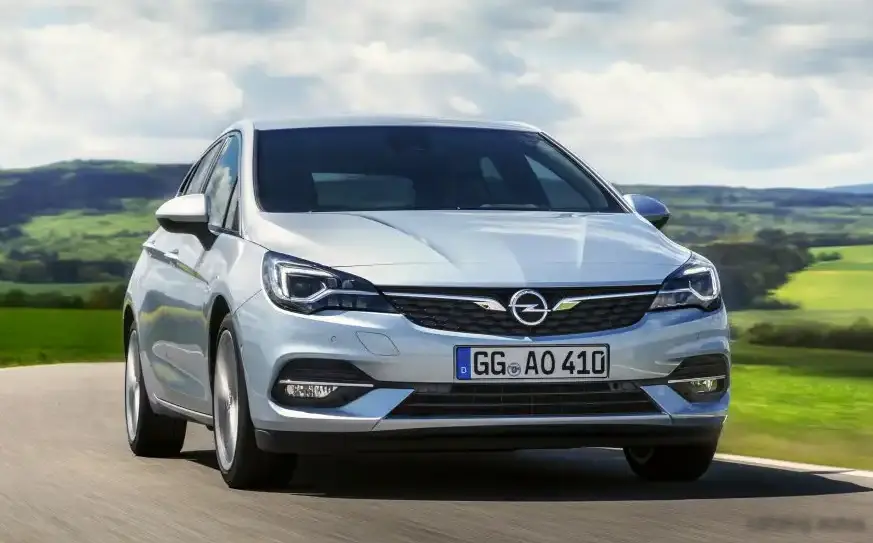
The Opel Astra K (facelift, introduced in August 2019 and produced through October 2021) represented a mid-cycle refresh of the highly successful Astra K generation, built on the GM’s 1HX0/A3 platform. Within the Astra K lineup, the 1.2 Turbo variant, producing 130 horsepower, occupied a key position as a balance between affordability, fuel efficiency, and acceptable performance. It was aimed at buyers seeking a practical, modern hatchback without the higher costs associated with more powerful engine options or premium trim levels. This version was particularly popular in European markets where fuel economy and compact dimensions are highly valued.
Technical Specifications
| Brand | Opel |
| Model | Astra |
| Generation | Astra K (facelift 2019) |
| Type (Engine) | 1.2 Turbo (130 Hp) |
| Start of production | August, 2019 |
| End of production | October, 2021 |
| Powertrain Architecture | Internal Combustion engine |
| Body type | Hatchback |
| Seats | 5 |
| Doors | 5 |
| Fuel consumption (urban) | 5.2-5.3 l/100 km (45.2 – 44.4 US mpg) |
| Fuel consumption (extra urban) | 3.8-3.9 l/100 km (61.9 – 60.3 US mpg) |
| Fuel consumption (combined) | 4.3-4.4 l/100 km (54.7 – 53.5 US mpg) |
| CO2 emissions | 99-101 g/km |
| Fuel Type | Petrol (Gasoline) |
| Acceleration 0 – 100 km/h | 9.9 sec |
| Acceleration 0 – 62 mph | 9.9 sec |
| Acceleration 0 – 60 mph | 9.4 sec |
| Maximum speed | 215 km/h (133.59 mph) |
| Emission standard | Euro 6d |
| Weight-to-power ratio | 9.3 kg/Hp, 107.9 Hp/tonne |
| Weight-to-torque ratio | 5.4 kg/Nm, 186.7 Nm/tonne |
| Power | 130 Hp @ 5500 rpm |
| Power per litre | 108.4 Hp/l |
| Torque | 225 Nm @ 2000-3500 rpm (165.95 lb.-ft. @ 2000-3500 rpm) |
| Engine layout | Front, Transverse |
| Engine Model/Code | F12SHT |
| Engine displacement | 1199 cm3 (73.17 cu. in.) |
| Number of cylinders | 3 |
| Engine configuration | Inline |
| Cylinder Bore | 75 mm (2.95 in.) |
| Piston Stroke | 90.5 mm (3.56 in.) |
| Compression ratio | 10:1 |
| Number of valves per cylinder | 4 |
| Fuel injection system | Direct injection |
| Engine aspiration | Turbocharger, Intercooler |
| Engine oil capacity | 4 l (4.23 US qt | 3.52 UK qt) |
| Coolant | 5.4 l (5.71 US qt | 4.75 UK qt) |
| Kerb Weight | 1205 kg (2656.57 lbs.) |
| Max. weight | 1805 kg (3979.34 lbs.) |
| Max load | 600 kg (1322.77 lbs.) |
| Trunk (boot) space – minimum | 370 l (13.07 cu. ft.) |
| Trunk (boot) space – maximum | 1210 l (42.73 cu. ft.) |
| Fuel tank capacity | 48 l (12.68 US gal | 10.56 UK gal) |
| Max. roof load | 75 kg (165.35 lbs.) |
| Permitted trailer load with brakes (12%) | 1350 kg (2976.24 lbs.) |
| Permitted trailer load without brakes | 620 kg (1366.87 lbs.) |
| Length | 4370 mm (172.05 in.) |
| Width | 1809 mm (71.22 in.) |
| Width with mirrors folded | 1871 mm (73.66 in.) |
| Width including mirrors | 2042 mm (80.39 in.) |
| Height | 1485 mm (58.46 in.) |
| Wheelbase | 2662 mm (104.8 in.) |
| Front track | 1548 mm (60.94 in.) |
| Rear (Back) track | 1565 mm (61.61 in.) |
| Front overhang | 960 mm (37.8 in.) |
| Rear overhang | 748 mm (29.45 in.) |
| Drag coefficient (Cd) | 0.26 |
| Minimum turning circle (turning diameter) | 11.05 m (36.25 ft.) |
| Drivetrain Architecture | The Internal combustion engine (ICE) drives the front wheels of the vehicle. |
| Drive wheel | Front wheel drive |
| Number of gears and type of gearbox | 6 gears, manual transmission |
| Front brakes | Disc |
| Rear brakes | Disc |
| Assisting systems | ABS (Anti-lock braking system) |
| Steering type | Steering rack and pinion |
| Power steering | Electric Steering |
| Tires size | 205/65 R16; 225/45 R17 |
| Wheel rims size | 6.5J x 16; 7J x 16; 7.5J x 17 |
Powertrain & Engine Architecture
The heart of this Astra K variant is the F12SHT, a 1.2-liter turbocharged three-cylinder gasoline engine. This engine is part of Opel’s (and subsequently Stellantis’) Small Engine Family (SEF), designed for modularity and efficiency. The F12SHT utilizes direct fuel injection, delivering fuel directly into the combustion chamber for improved combustion control and efficiency. A single-scroll turbocharger with an intercooler provides forced induction, boosting power output. The engine features a timing chain for durability and reduced maintenance compared to timing belts. The engine’s aluminum block contributes to weight savings. The 6-speed manual transmission was standard, offering a relatively conventional gear ratio spread optimized for both fuel economy and everyday drivability.
Driving Characteristics
The 130 hp 1.2 Turbo engine, paired with the 6-speed manual, provided adequate performance for typical commuting and highway driving. Acceleration from 0-60 mph took approximately 9.4 seconds, which was competitive within its class but noticeably slower than Astra K models equipped with larger engines like the 1.6 Diesel or the 1.4 Turbo. The turbocharger did introduce a degree of turbo lag, meaning there was a slight delay between pressing the accelerator and feeling the full power delivery. However, once the turbo spooled up, the engine provided a usable surge of torque, particularly in the mid-range. The manual transmission offered precise shifts, and the gear ratios were well-matched to the engine’s powerband. While not a sporty experience, the 1.2 Turbo offered a comfortable and predictable driving experience.
Equipment & Trim Levels
The 1.2 Turbo variant typically came equipped as a mid-range trim, often designated as “Edition” or “Sports Tourer” depending on the body style. Standard features generally included air conditioning, a touchscreen infotainment system with Bluetooth connectivity, alloy wheels, and basic safety equipment like ABS, ESP, and multiple airbags. Optional extras included features like a larger touchscreen display, navigation system, parking sensors, heated seats, and advanced driver-assistance systems (ADAS) such as lane departure warning and automatic emergency braking. Interior upholstery was typically cloth, with the option of upgrading to leatherette or full leather in some markets.
Chassis & Braking
The Astra K utilized a MacPherson strut front suspension and a torsion beam rear suspension. This setup provided a good balance between ride comfort and handling. The torsion beam rear suspension was a cost-effective solution, but it didn’t offer the same level of sophistication as a multi-link setup found in some higher-end Astra K models. Braking was handled by disc brakes on all four wheels, providing adequate stopping power for the vehicle’s weight and performance. ABS (Anti-lock Braking System) and ESP (Electronic Stability Program) were standard safety features.
Market Reception & Comparison
The 1.2 Turbo Astra K was generally well-received by automotive critics as a sensible and practical choice. It was praised for its fuel efficiency, comfortable ride, and modern features. However, some reviewers noted that the engine could feel strained when fully loaded or driving uphill. Compared to the 1.6 Diesel variant, the 1.2 Turbo offered less torque and slightly lower fuel economy, but it was quieter and more refined. Against the 1.4 Turbo, it offered a lower price point but less overall performance. The 1.2 Turbo appealed to buyers prioritizing fuel economy and affordability over outright performance.
Legacy
The F12SHT engine has proven to be a relatively reliable powertrain, with few widespread issues reported. Common maintenance items include regular oil changes, spark plug replacements, and occasional turbocharger inspections. The Astra K, in general, has maintained a good reputation for build quality and durability. On the used car market, the 1.2 Turbo variant represents a good value proposition, offering a modern and well-equipped hatchback at a competitive price. Its fuel efficiency and relatively low running costs make it an attractive option for budget-conscious buyers.