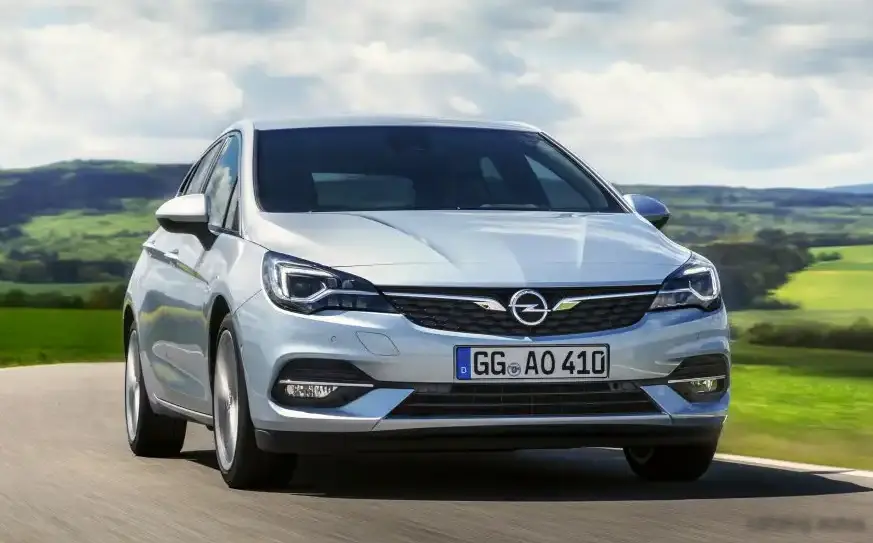
The Opel Astra K (facelift, introduced in August 2019 and produced through October 2021) 1.5d variant, generating 122 horsepower, represented a key offering within the broader Astra K range. Positioned as a fuel-efficient and practical option, it aimed to balance performance with economy for everyday drivers. This model year saw a significant refresh of the Astra K, incorporating updated styling, technology, and powertrain options. The 1.5d trim served as a popular choice in European markets, particularly for those prioritizing lower running costs and a comfortable driving experience. It was built on the GM’s Delta platform, also known as the 1HX0/A3 platform.
Technical Specifications
| Brand | Opel |
| Model | Astra |
| Generation | Astra K (facelift 2019) |
| Type (Engine) | 1.5d (122 Hp) |
| Start of production | August, 2019 |
| End of production | October, 2021 |
| Powertrain Architecture | Internal Combustion engine |
| Body type | Hatchback |
| Seats | 5 |
| Doors | 5 |
| Fuel consumption (urban) | 4.3-4.5 l/100 km (54.7 – 52.3 US mpg, 65.7 – 62.8 UK mpg, 23.3 – 22.2 km/l) |
| Fuel consumption (extra urban) | 3.2-3.4 l/100 km (73.5 – 69.2 US mpg, 88.3 – 83.1 UK mpg, 31.3 – 29.4 km/l) |
| Fuel consumption (combined) | 3.6-3.8 l/100 km (65.3 – 61.9 US mpg, 78.5 – 74.3 UK mpg, 27.8 – 26.3 km/l) |
| CO2 emissions | 95-100 g/km |
| Fuel Type | Diesel |
| Acceleration 0 – 100 km/h | 10.2 sec |
| Acceleration 0 – 62 mph | 10.2 sec |
| Acceleration 0 – 60 mph | 9.7 sec |
| Maximum speed | 210 km/h (130.49 mph) |
| Emission standard | Euro 6d |
| Weight-to-power ratio | 10.6 kg/Hp, 94.1 Hp/tonne |
| Weight-to-torque ratio | 4.3 kg/Nm, 231.5 Nm/tonne |
| Power | 122 Hp @ 3500 rpm |
| Power per litre | 81.6 Hp/l |
| Torque | 300 Nm @ 1750-2500 rpm (221.27 lb.-ft. @ 1750-2500 rpm) |
| Engine layout | Front, Transverse |
| Engine Model/Code | F15DVH |
| Engine displacement | 1496 cm3 (91.29 cu. in.) |
| Number of cylinders | 3 |
| Engine configuration | Inline |
| Cylinder Bore | 84 mm (3.31 in.) |
| Piston Stroke | 90 mm (3.54 in.) |
| Compression ratio | 15.5:1 |
| Number of valves per cylinder | 4 |
| Fuel injection system | Diesel Commonrail |
| Engine aspiration | Turbocharger, Intercooler |
| Engine oil capacity | 4.25 l (4.49 US qt | 3.74 UK qt) |
| Coolant | 7 l (7.4 US qt | 6.16 UK qt) |
| Kerb Weight | 1296 kg (2857.19 lbs.) |
| Max. weight | 1880 kg (4144.69 lbs.) |
| Max load | 584 kg (1287.5 lbs.) |
| Trunk (boot) space – minimum | 370 l (13.07 cu. ft.) |
| Trunk (boot) space – maximum | 1210 l (42.73 cu. ft.) |
| Fuel tank capacity | 48 l (12.68 US gal | 10.56 UK gal) |
| AdBlue tank | 12.5 l (3.3 US gal | 2.75 UK gal) |
| Permitted trailer load with brakes (12%) | 1450 kg (3196.7 lbs.) |
| Permitted trailer load without brakes | 660 kg (1455.05 lbs.) |
| Length | 4370 mm (172.05 in.) |
| Width | 1809 mm (71.22 in.) |
| Width with mirrors folded | 1871 mm (73.66 in.) |
| Width including mirrors | 2042 mm (80.39 in.) |
| Height | 1485 mm (58.46 in.) |
| Wheelbase | 2662 mm (104.8 in.) |
| Front track | 1548 mm (60.94 in.) |
| Rear (Back) track | 1565 mm (61.61 in.) |
| Front overhang | 960 mm (37.8 in.) |
| Rear overhang | 748 mm (29.45 in.) |
| Drag coefficient (Cd) | 0.26 |
| Minimum turning circle (turning diameter) | 11.05 m (36.25 ft.) |
| Drivetrain Architecture | The Internal combustion engine (ICE) drives the front wheels of the vehicle. |
| Drive wheel | Front wheel drive |
| Number of gears and type of gearbox | 6 gears, manual transmission |
| Front brakes | Disc |
| Rear brakes | Disc |
| Assisting systems | ABS (Anti-lock braking system) |
| Steering type | Steering rack and pinion |
| Power steering | Electric Steering |
| Tires size | 205/65 R16; 225/45 R17 |
| Wheel rims size | 6.5J x 16; 7J x 16; 7.5J x 17 |
Powertrain & Engine Architecture
The Astra K 1.5d utilized Opel’s F15DVH engine, a 1.5-liter inline three-cylinder diesel engine. This engine is part of Opel’s ‘Small Diesel’ family, designed for efficiency and reduced emissions. The engine features a turbocharger with an intercooler to boost power output, and a common-rail direct fuel injection system for precise fuel delivery. The 15.5:1 compression ratio is typical for modern diesel engines, contributing to thermal efficiency. The engine produces 122 horsepower at 3500 rpm and 300 Nm (221 lb-ft) of torque between 1750 and 2500 rpm. The engine also incorporates a diesel particulate filter (DPF) to meet stringent Euro 6d emission standards. The 6-speed manual transmission was standard, chosen for its balance of fuel efficiency and driver engagement.
Driving Characteristics
The 1.5d 122 hp Astra K offered a practical and economical driving experience. While not a performance-oriented variant, the engine provided adequate power for everyday driving situations. The 300 Nm of torque, available from relatively low engine speeds, ensured decent acceleration and effortless cruising. The manual transmission allowed for precise gear selection, but the gear ratios were tuned for fuel economy rather than outright speed. Compared to higher-output Astra K models (like those with larger gasoline engines), the 1.5d felt less responsive, particularly during overtaking maneuvers. However, its lower weight and efficient engine contributed to better fuel economy and reduced running costs.
Equipment & Trim Levels
The 1.5d trim level typically included standard features such as air conditioning, a touchscreen infotainment system with Bluetooth connectivity, power windows, and central locking. Safety features included ABS, electronic stability control, and multiple airbags. Higher trim levels offered additional features like alloy wheels, a more advanced infotainment system with navigation, parking sensors, and climate control. Interior upholstery was typically cloth, with options for upgraded materials on higher trims. The dashboard layout was modern and functional, with a focus on ergonomics and ease of use.
Chassis & Braking
The Astra K featured a MacPherson strut front suspension and a torsion beam rear suspension. This setup provided a good balance between ride comfort and handling. The front brakes were ventilated discs, while the rear brakes were solid discs. The electric power steering offered light and precise steering feel. The chassis was designed to minimize weight and maximize rigidity, contributing to improved handling and stability. Stabilizer bars were fitted to both the front and rear axles to reduce body roll during cornering.
Market Reception & Comparison
The Astra K 1.5d was generally well-received by automotive critics for its fuel efficiency and practicality. It was often praised for its comfortable ride and well-equipped interior. However, some critics noted that the engine could feel underpowered, especially when fully loaded or driving uphill. Compared to the 1.0-liter turbocharged gasoline engine, the 1.5d offered better fuel economy and more torque, but less overall power. The 1.5d was also more refined and quieter than the gasoline engine. In terms of reliability, the 1.5d engine proved to be generally dependable, although owners should be mindful of maintaining the DPF system to avoid potential issues.
Legacy
The Opel Astra K 1.5d remains a popular choice in the used car market, particularly for buyers seeking a fuel-efficient and reliable hatchback. The engine’s robust design and relatively simple technology contribute to its long-term durability. While the DPF system requires periodic maintenance, the engine itself is generally considered to be reliable. The Astra K’s modern styling and well-equipped interior continue to appeal to buyers looking for a practical and affordable vehicle. The 1.5d variant represents a solid all-around package, offering a good balance of performance, economy, and comfort.