
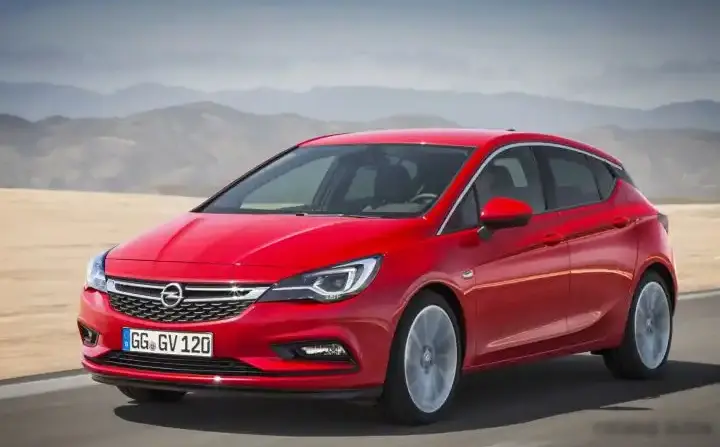
The Opel Astra K TCR 2.0 T (330 Hp) was a high-performance variant of the Astra K, produced between 2015 and 2018. Positioned as the flagship model within the K generation, it was specifically designed for track use and motorsport competition, though road-legal versions were also available. The “TCR” designation signifies its adherence to the Touring Car Racing regulations, making it a popular choice for privateer racing teams. This model represented a significant step up in performance compared to the standard Astra K trims, offering a substantially more powerful engine and a track-focused chassis setup.
Technical Specifications
| Brand | Opel |
| Model | Astra |
| Generation | Astra K |
| Type (Engine) | TCR 2.0 T (330 Hp) |
| Start of production | 2015 |
| End of production | 2018 |
| Powertrain Architecture | Internal Combustion engine |
| Body type | Hatchback |
| Seats | 2 |
| Doors | 5 |
| Fuel Type | Petrol (Gasoline) |
| Maximum speed | 250 km/h (155.34 mph) |
| Weight-to-power ratio | 3.6 kg/Hp, 275 Hp/tonne |
| Weight-to-torque ratio | 2.7 kg/Nm, 366.7 Nm/tonne |
| Power | 330 Hp @ 6300 rpm |
| Power per litre | 165.2 Hp/l |
| Torque | 440 Nm @ 4400 rpm (324.53 lb.-ft. @ 4400 rpm) |
| Engine layout | Front, Transverse |
| Engine displacement | 1998 cm3 (121.93 cu. in.) |
| Number of cylinders | 4 |
| Engine configuration | Inline |
| Cylinder Bore | 86 mm (3.39 in.) |
| Piston Stroke | 86 mm (3.39 in.) |
| Number of valves per cylinder | 4 |
| Fuel injection system | Direct injection |
| Engine aspiration | Turbocharger, Intercooler |
| Valvetrain | DOHC |
| Kerb Weight | 1200 kg (2645.55 lbs.) |
| Length | 4405 mm (173.43 in.) |
| Width | 1950 mm (76.77 in.) |
| Height | 1380 mm (54.33 in.) |
| Wheelbase | 2660 mm (104.72 in.) |
| Ride height (ground clearance) | 80 mm (3.15 in.) |
| Drivetrain Architecture | The Internal combustion engine (ICE) drives the front wheels of the vehicle. |
| Drive wheel | Front wheel drive |
| Number of gears and type of gearbox | 6 gears, manual transmission |
| Front suspension | Independent, type McPherson with coil spring and anti-roll bar |
| Front brakes | Ventilated discs |
| Rear brakes | Disc |
| Assisting systems | ABS (Anti-lock braking system) |
| Steering type | Steering rack and pinion |
| Power steering | Electric Steering |
Powertrain & Engine Architecture
The heart of the Astra K TCR is its 2.0-liter turbocharged inline-four cylinder engine. This engine, based on Opel’s family of gasoline engines, was extensively modified for racing purposes. Key upgrades included a larger turbocharger, a more efficient intercooler, and a reinforced crankshaft and connecting rods to handle the increased power output. The engine utilizes direct fuel injection, optimizing combustion efficiency and contributing to the engine’s responsiveness. The DOHC (Double Overhead Camshaft) valvetrain, coupled with four valves per cylinder, ensures optimal gas flow and high-revving capability. The engine code is not widely publicized, as many components were bespoke to the TCR specification. The six-speed manual transmission was chosen for its robustness and driver control, essential for competitive racing.
Driving Characteristics
The Astra K TCR delivers a significantly different driving experience compared to standard Astra K models. The 330 horsepower and 440 Nm (324.53 lb-ft) of torque provide exhilarating acceleration. The manual transmission allows for precise gear changes, maximizing control on the track. The TCR’s suspension is substantially stiffer than the standard Astra K, reducing body roll and improving handling. While this makes the ride less comfortable on public roads, it provides exceptional stability and responsiveness during cornering. The weight-to-power ratio of 3.6 kg/Hp contributes to the car’s nimble feel. The TCR’s braking system, featuring ventilated front discs and rear discs, offers strong stopping power, crucial for track driving.
Equipment & Trim Levels
The Astra K TCR was not offered with traditional trim levels. It was primarily sold as a ready-to-race package, with a focus on minimizing weight and maximizing performance. Standard features included a roll cage, racing seats with six-point harnesses, a fire suppression system, and a racing steering wheel. The interior was stripped of most non-essential components to reduce weight. Road-legal versions typically included basic amenities like air conditioning and a basic audio system, but these were often optional extras. The exterior featured aggressive aerodynamic enhancements, including a large rear wing, a front splitter, and side skirts, all designed to improve downforce and stability at high speeds.
Chassis & Braking
The Astra K TCR’s chassis was heavily modified to meet TCR regulations. The suspension features adjustable dampers and springs, allowing teams to fine-tune the car’s handling characteristics for different track conditions. The McPherson strut front suspension and multi-link rear suspension provide a good balance of handling and ride quality (though ride quality is firm). The braking system utilizes high-performance calipers and rotors, providing exceptional stopping power. The ABS (Anti-lock braking system) is calibrated for track use, allowing drivers to push the limits of braking performance without locking up the wheels. The steering system is a rack-and-pinion setup with electric power steering, providing precise and responsive steering feel.
Market Reception & Comparison
The Astra K TCR was well-received by motorsport enthusiasts and racing teams. Its competitive performance and relatively affordable price made it a popular choice in the TCR series. Critics praised its balanced handling, powerful engine, and robust construction. Compared to other TCR-spec cars, the Astra K TCR offered a good balance of performance and reliability. While some competitors, such as the Volkswagen Golf GTI TCR, may have offered slightly more power, the Astra K TCR was often praised for its superior handling and driver feedback. Fuel economy, while not a primary concern for racing teams, was reasonable for a high-performance vehicle.
Legacy
The Opel Astra K TCR played a significant role in Opel’s return to motorsport. It achieved numerous race victories and championships in the TCR series around the world. The car’s success helped to raise the profile of the Astra K model and demonstrate Opel’s engineering capabilities. In the used car market, the Astra K TCR commands a premium price, particularly for well-maintained examples with a documented racing history. The powertrain, while designed for high-performance use, has proven to be relatively reliable when properly maintained. The Astra K TCR remains a popular choice for track day enthusiasts and amateur racers, offering an exciting and rewarding driving experience.

