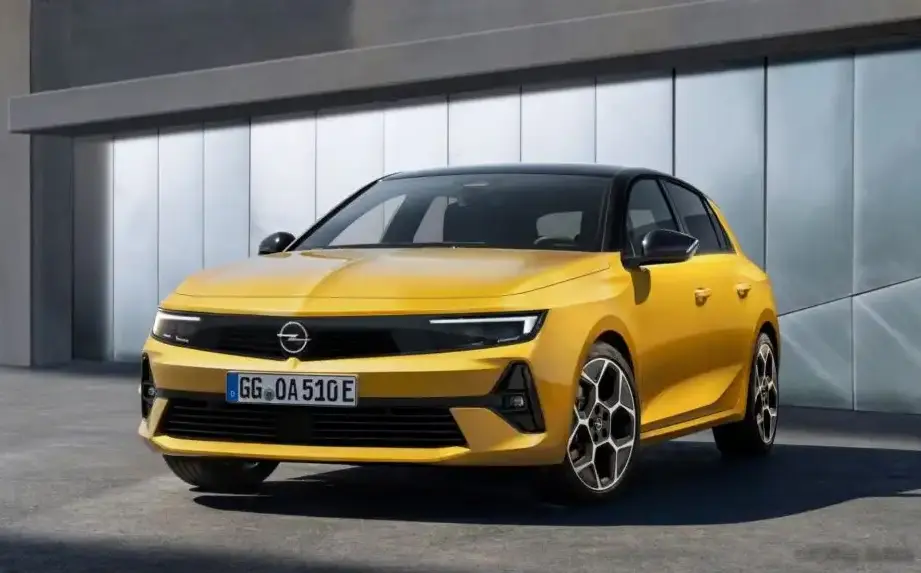
The Opel Astra L 1.2 Turbo, producing 110 horsepower, was a key variant within the sixth generation of the Astra (launched in October 2021 and produced through December 2024). Positioned as a mainstream offering within the Astra L lineup, it aimed to balance fuel efficiency with acceptable performance for everyday driving. This model represented Opel’s continued commitment to offering a practical and affordable compact hatchback in the European market, leveraging a downsized turbocharged engine to meet increasingly stringent emissions regulations. The Astra L platform, designated as a successor to the Astra K, brought a new level of technology and design to the compact segment.
Technical Specifications
| Brand | Opel |
| Model | Astra |
| Generation | Astra L |
| Type (Engine) | 1.2 Turbo (110 Hp) |
| Start of production | October, 2021 |
| End of production | December, 2024 |
| Powertrain Architecture | Internal Combustion engine |
| Body type | Hatchback |
| Seats | 5 |
| Doors | 5 |
| Fuel consumption at Low speed (WLTP) | 6.5-6.7 l/100 km (36.2 – 35.1 US mpg, 43.5 – 42.2 UK mpg, 15.4 – 14.9 km/l) |
| Fuel consumption at Medium speed (WLTP) | 5.4-5.6 l/100 km (43.6 – 42 US mpg, 52.3 – 50.4 UK mpg, 18.5 – 17.9 km/l) |
| Fuel consumption at high speed (WLTP) | 4.7-4.8 l/100 km (50 – 49 US mpg, 60.1 – 58.9 UK mpg, 21.3 – 20.8 km/l) |
| Fuel consumption at very high speed (WLTP) | 5.6-5.7 l/100 km (42 – 41.3 US mpg, 50.4 – 49.6 UK mpg, 17.9 – 17.5 km/l) |
| Combined fuel consumption (WLTP) | 5.4-5.5 l/100 km (43.6 – 42.8 US mpg, 52.3 – 51.4 UK mpg, 18.5 – 18.2 km/l) |
| CO2 emissions (WLTP) | 123-126 g/km |
| Fuel Type | Petrol (Gasoline) |
| Acceleration 0 – 100 km/h | 10.5 sec |
| Acceleration 0 – 62 mph | 10.5 sec |
| Acceleration 0 – 60 mph | 10 sec (Calculated) |
| Maximum speed | 199 km/h (123.65 mph) |
| Emission standard | Euro 6d |
| Weight-to-power ratio | 11.4 kg/Hp, 87.5 Hp/tonne |
| Weight-to-torque ratio | 6.1 kg/Nm, 163.1 Nm/tonne |
| Power | 110 Hp @ 5500 rpm |
| Power per litre | 91.7 Hp/l |
| Torque | 205 Nm @ 1750 rpm (151.2 lb.-ft. @ 1750 rpm) |
| Engine layout | Front, Transverse |
| Engine Model/Code | F12XHL |
| Engine displacement | 1199 cm3 (73.17 cu. in.) |
| Number of cylinders | 3 |
| Engine configuration | Inline |
| Number of valves per cylinder | 4 |
| Fuel injection system | Direct injection |
| Engine aspiration | Turbocharger, Intercooler |
| Engine oil capacity | 3.5 l (3.7 US qt | 3.08 UK qt) |
| Kerb Weight | 1257 kg (2771.21 lbs.) |
| Max. weight | 1820 kg (4012.41 lbs.) |
| Max load | 563 kg (1241.2 lbs.) |
| Trunk (boot) space – minimum | 422 l (14.9 cu. ft.) |
| Trunk (boot) space – maximum | 1339 l (47.29 cu. ft.) |
| Fuel tank capacity | 52 l (13.74 US gal | 11.44 UK gal) |
| Max. roof load | 75 kg (165.35 lbs.) |
| Permitted trailer load with brakes (12%) | 1250 kg (2755.78 lbs.) |
| Permitted trailer load without brakes | 660 kg (1455.05 lbs.) |
| Permitted towbar download | 70 kg (154.32 lbs.) |
| Length | 4374 mm (172.2 in.) |
| Width with mirrors folded | 1860 mm (73.23 in.) |
| Width including mirrors | 2062 mm (81.18 in.) |
| Height | 1441-1470 mm (56.73 – 57.87 in.) |
| Wheelbase | 2675 mm (105.31 in.) |
| Front track | 1551-1559 mm (61.06 – 61.38 in.) |
| Rear (Back) track | 1546-1554 mm (60.87 – 61.18 in.) |
| Minimum turning circle | 10.51 m (34.48 ft.) |
| Drivetrain Architecture | Front wheel drive |
| Number of gears and type of gearbox | 6 gears, manual transmission |
| Front brakes | Ventilated discs |
| Rear brakes | Disc |
| Tires size | 205/55 R16; 225/45 R17 |
| Wheel rims size | 6.5J x 16; 7J x 16; 7.5J x 17 |
Powertrain & Engine Architecture
The heart of the Astra L 1.2 Turbo is the F12XHL engine, a 1.2-liter, three-cylinder turbocharged gasoline engine. This engine is part of Opel’s (and subsequently Stellantis’) Small Engine Family, designed for efficiency and reduced emissions. The engine utilizes direct fuel injection, a technology that precisely meters fuel into the combustion chamber for improved combustion efficiency and reduced particulate matter. The turbocharger, coupled with an intercooler, forces more air into the engine, boosting power output despite the relatively small displacement. The engine’s valvetrain features four valves per cylinder, optimizing gas flow for enhanced performance. The 6-speed manual transmission was standard, providing a balance between fuel economy and driver engagement. The engine also incorporates a Start & Stop system to further reduce fuel consumption during city driving and is equipped with a particulate filter to minimize emissions.
Driving Characteristics
The 110 horsepower output of the 1.2 Turbo, combined with the manual transmission, provided adequate performance for typical commuting and highway driving. Acceleration from 0-60 mph took approximately 10 seconds, and the top speed was around 124 mph. While not a sporty configuration, the engine delivered a usable 205 Nm (151 lb-ft) of torque at 1750 rpm, providing sufficient pulling power for overtaking maneuvers. Compared to higher-output Astra L variants, such as those with larger engines, this version prioritized fuel economy over outright speed. The gear ratios were tuned to maximize efficiency, resulting in a slightly less responsive feel than the more performance-oriented models. The relatively light weight of the Astra L helped to mitigate the limitations of the smaller engine.
Equipment & Trim Levels
The 1.2 Turbo variant typically came with a respectable level of standard equipment. This included features like air conditioning, a touchscreen infotainment system with smartphone integration (Apple CarPlay and Android Auto), and a suite of safety systems such as automatic emergency braking, lane departure warning, and traffic sign recognition. Interior upholstery was generally cloth, with options for upgraded materials available. Trim levels varied by market, but generally offered progressively more features such as alloy wheels, parking sensors, a larger touchscreen display, and adaptive cruise control. Optional extras included a panoramic sunroof, heated seats, and a premium audio system.
Chassis & Braking
The Astra L 1.2 Turbo utilized a MacPherson strut front suspension and a torsion beam rear suspension. This setup provided a good balance between ride comfort and handling. The front brakes were ventilated discs, while the rear brakes were solid discs, providing adequate stopping power for the vehicle’s weight and performance. Electric power steering was standard, offering a light and precise steering feel. Stabilizer bars were fitted to both the front and rear axles to reduce body roll during cornering. The suspension tuning was geared towards comfort, making it well-suited for everyday driving conditions.
Market Reception & Comparison
The Astra L 1.2 Turbo was generally well-received by automotive critics as a practical and efficient option within the compact hatchback segment. Its fuel economy figures were competitive, and its driving dynamics were considered acceptable for its intended purpose. Compared to the diesel-powered Astra L variants, the 1.2 Turbo offered lower CO2 emissions but slightly less torque. Against higher-horsepower gasoline versions, it provided a more affordable entry point into the Astra L range, albeit with a trade-off in performance. Reliability reports have been generally positive, with the 1.2 Turbo engine proving to be a relatively robust unit.
Legacy
The Opel Astra L 1.2 Turbo represents a significant step in Opel’s efforts to offer fuel-efficient and technologically advanced vehicles. The F12XHL engine has become a mainstay in the Stellantis lineup, powering a range of vehicles across multiple brands. In the used car market, the Astra L 1.2 Turbo is considered a reliable and affordable option, offering a good balance of practicality, fuel economy, and features. Its relatively simple engine design and readily available parts contribute to its long-term maintainability. As a mainstream variant within a popular model range, the Astra L 1.2 Turbo has left a lasting impact on the European compact hatchback landscape.