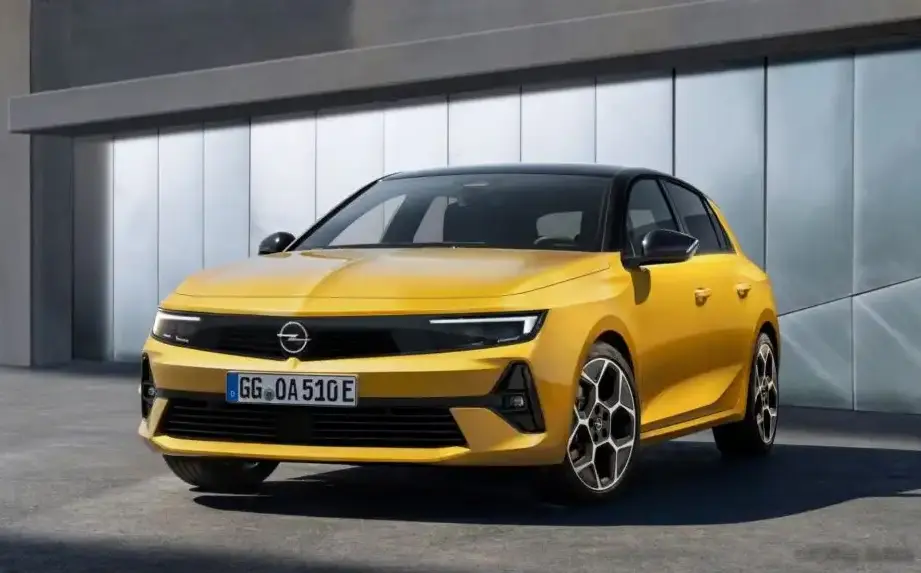
The Opel Astra L 1.5d (130 Hp) is a front-wheel-drive hatchback that was produced between October 2021 and October 2023. It represents a key variant within the Astra L generation (introduced in 2021), positioned as a fuel-efficient and practical option for European buyers. Built on the EMP2 platform, shared with other Stellantis vehicles like the Peugeot 308 and DS 4, the Astra L aimed to modernize Opel’s compact offering with updated technology and styling. The 1.5d variant specifically targeted customers prioritizing economy and reasonable performance, offering a balance between cost and capability within the broader Astra L lineup.
Technical Specifications
| Brand | Opel |
| Model | Astra |
| Generation | Astra L |
| Type (Engine) | 1.5d (130 Hp) |
| Start of production | October, 2021 |
| End of production | October, 2023 |
| Powertrain Architecture | Internal Combustion engine |
| Body type | Hatchback |
| Seats | 5 |
| Doors | 5 |
| Fuel consumption at Low speed (WLTP) | 5-5.1 l/100 km (47 – 46.1 US mpg, 56.5 – 55.4 UK mpg, 20 – 19.6 km/l) |
| Fuel consumption at Medium speed (WLTP) | 4.2-4.5 l/100 km (56 – 52.3 US mpg, 67.3 – 62.8 UK mpg, 23.8 – 22.2 km/l) |
| Fuel consumption at high speed (WLTP) | 3.8-4 l/100 km (61.9 – 58.8 US mpg, 74.3 – 70.6 UK mpg, 26.3 – 25 km/l) |
| Fuel consumption at very high speed (WLTP) | 4.6-4.8 l/100 km (51.1 – 49 US mpg, 61.4 – 58.9 UK mpg, 21.7 – 20.8 km/l) |
| Combined fuel consumption (WLTP) | 4.3-4.5 l/100 km (54.7 – 52.3 US mpg, 65.7 – 62.8 UK mpg, 23.3 – 22.2 km/l) |
| CO2 emissions (WLTP) | 113-119 g/km |
| Fuel Type | Diesel |
| Acceleration 0 – 100 km/h | 10.6 sec |
| Acceleration 0 – 62 mph | 10.6 sec |
| Acceleration 0 – 60 mph | 10.1 sec |
| Maximum speed | 209 km/h (129.87 mph) |
| Emission standard | Euro 6d |
| Weight-to-power ratio | 10.4 kg/Hp, 96.4 Hp/tonne |
| Weight-to-torque ratio | 4.5 kg/Nm, 222.4 Nm/tonne |
| Power | 130 Hp @ 3750 rpm |
| Power per litre | 86.8 Hp/l |
| Torque | 300 Nm @ 1750 rpm (221.27 lb.-ft. @ 1750 rpm) |
| Engine layout | Front, Transverse |
| Engine Model/Code | F15DTH |
| Engine displacement | 1498 cm3 (91.41 cu. in.) |
| Number of cylinders | 4 |
| Engine configuration | Inline |
| Number of valves per cylinder | 4 |
| Fuel injection system | Diesel Commonrail |
| Engine aspiration | Turbocharger, Intercooler |
| Engine oil capacity | 3.8 l (4.02 US qt | 3.34 UK qt) |
| Kerb Weight | 1349 kg (2974.04 lbs.) |
| Max. weight | 1920 kg (4232.88 lbs.) |
| Max load | 571 kg (1258.84 lbs.) |
| Trunk (boot) space – minimum | 422 l (14.9 cu. ft.) |
| Trunk (boot) space – maximum | 1339 l (47.29 cu. ft.) |
| Fuel tank capacity | 52 l (13.74 US gal | 11.44 UK gal) |
| AdBlue tank | 13 l (3.43 US gal | 2.86 UK gal) |
| Max. roof load | 75 kg (165.35 lbs.) |
| Permitted trailer load with brakes (12%) | 1550 kg (3417.17 lbs.) |
| Permitted trailer load without brakes | 710 kg (1565.28 lbs.) |
| Permitted towbar download | 70 kg (154.32 lbs.) |
| Length | 4374 mm (172.2 in.) |
| Width with mirrors folded | 1860 mm (73.23 in.) |
| Width including mirrors | 2062 mm (81.18 in.) |
| Height | 1441-1470 mm (56.73 – 57.87 in.) |
| Wheelbase | 2675 mm (105.31 in.) |
| Front track | 1551-1559 mm (61.06 – 61.38 in.) |
| Rear (Back) track | 1546-1554 mm (60.87 – 61.18 in.) |
| Minimum turning circle (turning diameter) | 10.51 m (34.48 ft.) |
| Drivetrain Architecture | The Internal combustion engine (ICE) drives the front wheels of the vehicle. |
| Drive wheel | Front wheel drive |
| Number of gears and type of gearbox | 6 gears, manual transmission |
| Front brakes | Ventilated discs |
| Rear brakes | Disc |
| Assisting systems | ABS (Anti-lock braking system) |
| Steering type | Steering rack and pinion |
| Power steering | Electric Steering |
| Tires size | 205/55 R16; 225/45 R17 |
| Wheel rims size | 7J x 16; 7.5J x 17 |
Powertrain & Engine Architecture
The Astra L 1.5d (130 Hp) is powered by the F15DTH engine, a 1.5-liter inline-four cylinder diesel engine. This engine is part of the DV5 family developed by Stellantis (formerly PSA Group). It utilizes a common-rail direct injection system, delivering fuel at extremely high pressure for optimized combustion. The engine features a turbocharger with an intercooler to increase power output and efficiency. The 16-valve configuration (four valves per cylinder) contributes to improved breathing and overall performance. The engine’s design prioritizes fuel economy and reduced emissions, meeting Euro 6d standards. The 6-speed manual transmission was standard, chosen for its efficiency and driver engagement, although an 8-speed automatic was available as an option in some markets.
Driving Characteristics
The 1.5d (130 Hp) variant of the Astra L offers a comfortable and practical driving experience. With 130 horsepower and 300 Nm (221 lb-ft) of torque, acceleration from 0-100 km/h takes approximately 10.6 seconds. While not a performance-oriented model, the engine provides sufficient power for everyday driving situations, including highway cruising and overtaking. The turbocharger provides a noticeable boost in power at lower engine speeds, making it responsive in urban environments. Compared to higher-output Astra L variants, such as those with gasoline engines, the 1.5d prioritizes fuel efficiency over outright speed. The manual transmission offers precise gear changes, allowing drivers to maintain control and optimize fuel consumption. The gear ratios are tuned for economy, with a relatively long final drive.
Equipment & Trim Levels
The Astra L 1.5d (130 Hp) was typically offered in mid-range trim levels, such as ‘Edition’ or ‘Business Edition’ depending on the market. Standard equipment generally included air conditioning, a touchscreen infotainment system with Apple CarPlay and Android Auto compatibility, Bluetooth connectivity, and a suite of safety features like automatic emergency braking, lane departure warning, and traffic sign recognition. Interior upholstery was typically cloth, with options for upgraded materials available. Optional extras included a larger touchscreen display, navigation system, adaptive cruise control, heated seats, and a panoramic sunroof. The dashboard layout was modern and driver-focused, with a digital instrument cluster available on higher trims.
Chassis & Braking
The Astra L utilizes a MacPherson strut front suspension and a torsion beam rear suspension. This setup provides a good balance between ride comfort and handling. The chassis is relatively lightweight, contributing to the car’s agility. The 1.5d variant typically featured ventilated front disc brakes and solid rear disc brakes. ABS (Anti-lock Braking System) was standard, along with electronic stability control. The suspension tuning was geared towards comfort, but the Astra L still offered decent handling characteristics for a compact hatchback. Stabilizer bars were fitted to both the front and rear axles to reduce body roll during cornering.
Market Reception & Comparison
The Opel Astra L 1.5d (130 Hp) was generally well-received by automotive critics for its fuel efficiency, comfortable ride, and practical interior. It was seen as a strong competitor to other compact hatchbacks in the European market, such as the Volkswagen Golf, Ford Focus, and Peugeot 308. Compared to the gasoline-powered Astra L variants, the 1.5d offered significantly better fuel economy, making it an attractive option for drivers covering long distances. However, some critics noted that the diesel engine was slightly noisier than the gasoline engines. The manual transmission was praised for its smooth operation, while the optional automatic transmission was considered less refined.
Legacy
The F15DTH engine has proven to be a relatively reliable powertrain, with few widespread issues reported. The Astra L 1.5d (130 Hp) continues to be a popular choice on the used car market, particularly for buyers seeking a fuel-efficient and practical compact hatchback. Maintenance costs are generally reasonable, and parts availability is good. The Astra L’s modern design and technology have helped it maintain its appeal in the years since its introduction. The 1.5d variant represents a solid all-around package, offering a good balance of performance, economy, and practicality.