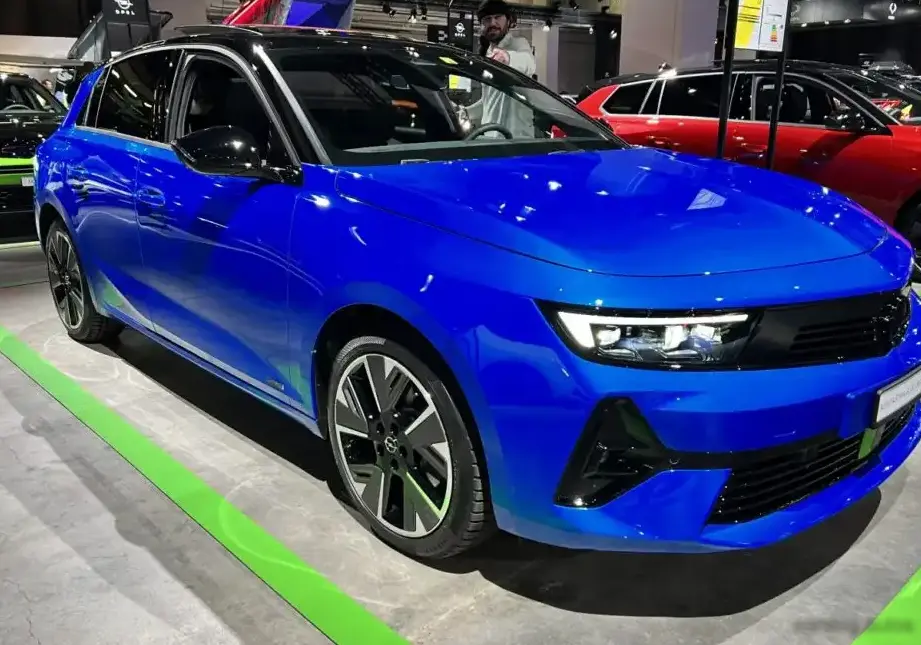
The Opel Astra L 54 kWh Electric, launched in 2023, represents Opel’s entry into the fully electric compact hatchback segment. Positioned as a mainstream offering within the broader Astra L generation (which also includes internal combustion engine variants), this model aims to provide a practical and affordable electric vehicle option for European consumers. Production is anticipated to continue through 2026. The Astra L utilizes the Stellantis CMP/eMP2 platform, shared with other Peugeot and Citroën models, allowing for a flexible approach to powertrain options. This variant specifically targets buyers seeking a balance between range, performance, and price in the increasingly competitive EV market.
Technical Specifications
| Brand | Opel |
| Model | Astra |
| Generation | Astra L |
| Type (Engine) | 54 kWh (156 Hp) Electric |
| Start of production | 2023 year |
| End of production | 2026 year |
| Powertrain Architecture | BEV (Electric Vehicle) |
| Body type | Hatchback |
| Seats | 5 |
| Doors | 5 |
| Fuel Type | Electricity |
| Acceleration 0 – 100 km/h | 9.2 sec |
| Acceleration 0 – 62 mph | 9.2 sec |
| Acceleration 0 – 60 mph | 8.7 sec |
| Maximum speed | 170 km/h (105.63 mph) |
| Weight-to-power ratio | 10.6 kg/Hp, 93.9 Hp/tonne |
| Weight-to-torque ratio | 6.2 kg/Nm, 162.6 Nm/tonne |
| Gross battery capacity | 54 kWh |
| Net (usable) battery capacity | 51 kWh |
| Battery technology | Lithium-ion (Li-Ion) |
| Battery weight | 339 kg (747.37 lbs.) |
| Battery location | Below the floor |
| All-electric range (WLTP) | 398-418 km (247.31 – 259.73 mi) |
| Average Energy consumption (WLTP) | 14.8-15.5 kWh/100 km (23.82 – 24.94 kWh/100 mi) |
| Average Energy consumption | 12.7 kWh/100 km (20.44 kWh/100 mi) |
| Electric motor power | 156 Hp @ 4070-7500 rpm |
| Electric motor Torque | 270 Nm @ 500-4060 rpm (199.14 lb.-ft. @ 500-4060 rpm) |
| Electric motor model/code | ZK02 |
| Electric motor location | Front axle, Transverse |
| Electric motor type | Synchronous |
| System power | 156 Hp @ 4070-7500 rpm |
| System torque | 270 Nm @ 500-4060 rpm (199.14 lb.-ft. @ 500-4060 rpm) |
| Kerb Weight | 1661 kg (3661.88 lbs.) |
| Max. weight | 2180 kg (4806.08 lbs.) |
| Max load | 519 kg (1144.2 lbs.) |
| Trunk (boot) space – minimum | 352 l (12.43 cu. ft.) |
| Trunk (boot) space – maximum | 1268 l (44.78 cu. ft.) |
| Permitted towbar download | 80 kg (176.37 lbs.) |
| Length | 4374 mm (172.2 in.) |
| Width with mirrors folded | 1860 mm (73.23 in.) |
| Width including mirrors | 2062 mm (81.18 in.) |
| Height | 1488 mm (58.58 in.) |
| Wheelbase | 2675 mm (105.31 in.) |
| Front track | 1551-1559 mm (61.06 – 61.38 in.) |
| Rear (Back) track | 1546-1554 mm (60.87 – 61.18 in.) |
| Front overhang | 906 mm (35.67 in.) |
| Rear overhang | 793 mm (31.22 in.) |
| Minimum turning circle | 10.51 m (34.48 ft.) |
| Drivetrain Architecture | One electric motor drives the front wheels. |
| Drive wheel | Front wheel drive |
| Number of gears and type of gearbox | 1 gears, automatic transmission |
| Front suspension | Independent, type McPherson with coil spring and anti-roll bar |
| Rear suspension | Coil spring, Torsion |
| Assisting systems | ABS (Anti-lock braking system) |
| Steering type | Steering rack and pinion |
| Power steering | Electric Steering |
| Tires size | 215/45 R18 |
| Wheel rims size | 7.5J x 18 |
Powertrain & Engine Architecture
The Astra L 54 kWh Electric utilizes a single, synchronous electric motor driving the front wheels. This motor, designated ZK02, produces 156 horsepower and 270 Nm (199 lb-ft) of torque. The power is delivered through a single-speed automatic transmission, typical of electric vehicles. The 54 kWh lithium-ion battery pack is located under the vehicle floor, contributing to a lower center of gravity and improved handling. The battery supports fast charging capabilities, allowing for an 80% charge in approximately 30 minutes using a compatible DC fast charger. The vehicle’s energy management system optimizes power delivery and battery usage to maximize range and efficiency.
Driving Characteristics
The 156 hp electric motor provides brisk acceleration, achieving 0-60 mph in around 8.7 seconds. While not a performance-oriented EV, the Astra L Electric offers sufficient power for everyday driving situations. The single-speed transmission provides seamless acceleration, and the instant torque characteristic of electric motors delivers a responsive driving experience. Compared to the gasoline-powered Astra L variants, the electric model offers quieter operation and a smoother ride. The weight of the battery pack does impact handling slightly, but the low center of gravity helps to mitigate this effect. The regenerative braking system allows for one-pedal driving in certain conditions, further enhancing efficiency and convenience.
Equipment & Trim Levels
The Astra L 54 kWh Electric typically comes standard with features such as a touchscreen infotainment system with Apple CarPlay and Android Auto compatibility, digital instrument cluster, automatic climate control, and a suite of advanced driver-assistance systems (ADAS) including lane keeping assist, automatic emergency braking, and adaptive cruise control. Interior upholstery is generally cloth, with options for leather upgrades. Trim levels vary by market, but commonly include ‘Edition’, ‘GS Line’, and ‘Ultimate’ variants, with increasing levels of equipment and luxury. Optional extras include a panoramic sunroof, premium audio system, and heated seats.
Chassis & Braking
The Astra L Electric utilizes an independent McPherson strut suspension at the front and a torsion beam suspension at the rear. This setup provides a good balance between ride comfort and handling. The vehicle is equipped with disc brakes on all four wheels, and an Anti-lock Braking System (ABS) is standard. The steering is electric power-assisted, providing light and precise control. The standard tire size is 215/45 R18, mounted on 7.5J x 18 alloy wheels. The suspension tuning is optimized for the added weight of the battery pack, ensuring stable and predictable handling.
Market Reception & Comparison
The Opel Astra L Electric has been generally well-received by automotive critics, praised for its comfortable ride, spacious interior, and competitive range. Compared to other EVs in its class, such as the Volkswagen ID.3 and Renault Megane E-Tech Electric, the Astra L Electric offers a compelling combination of value and features. Fuel economy, expressed as energy consumption, ranges from 14.8 to 15.5 kWh per 100 km (WLTP), translating to a range of 398-418 km. Reliability reports are still emerging, but early indications suggest that the Astra L Electric is a dependable vehicle.
Legacy
The Opel Astra L 54 kWh Electric represents a significant step forward for Opel in the electric vehicle market. As battery technology continues to improve and charging infrastructure expands, this model is expected to become increasingly popular. The powertrain’s long-term reliability remains to be fully assessed, but the use of proven components and Stellantis’s engineering expertise suggests a durable and dependable system. On the used car market, the Astra L Electric is likely to hold its value well, particularly as demand for electric vehicles continues to grow. Its blend of practicality, affordability, and environmental friendliness positions it as a strong contender in the compact EV segment.