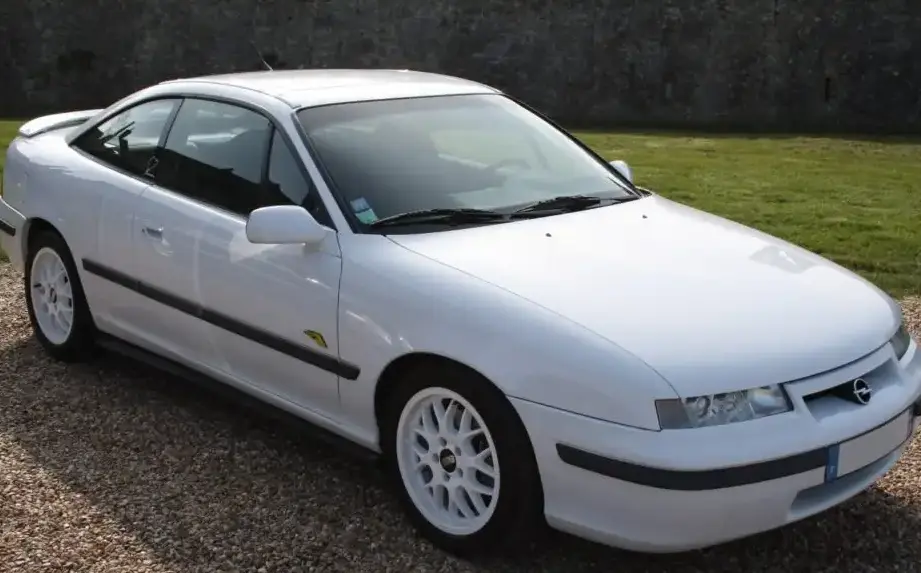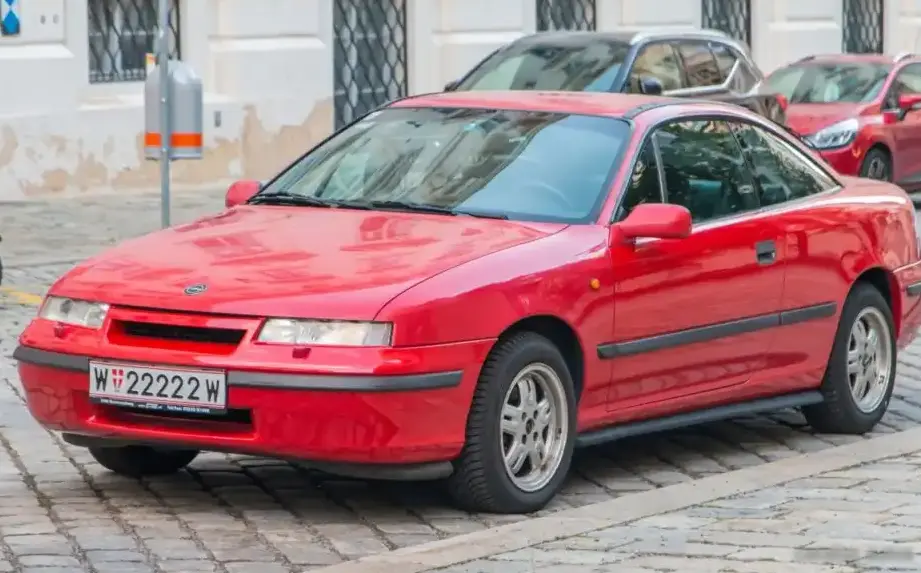
The Opel Calibra 2.0 4×4, produced between June 1990 and 1994, represented a performance-oriented variant within the Calibra range. Positioned as a more capable and engaging option, it distinguished itself from the base models with its all-wheel drive system and increased power output. The Calibra itself was a coupe based on the GM V60 platform, shared with the Vectra A, and aimed to provide a stylish and sporty alternative in the European market. This 2.0-liter, 115 horsepower, four-wheel drive configuration occupied a mid-range position in the Calibra lineup, offering a balance between performance and practicality.
Technical Specifications
| Brand | Opel |
| Model | Calibra |
| Type (Engine) | 2.0 (115 Hp) 4×4 |
| Start of production | June, 1990 |
| End of production | 1994 |
| Powertrain Architecture | Internal Combustion engine |
| Body type | Coupe |
| Seats | 4 |
| Doors | 2 |
| Fuel Type | Petrol (Gasoline) |
| Acceleration 0 – 100 km/h | 11 sec |
| Acceleration 0 – 62 mph | 11 sec |
| Acceleration 0 – 60 mph | 10.5 sec |
| Maximum speed | 198 km/h (123.03 mph) |
| Weight-to-power ratio | 11.2 kg/Hp, 89.5 Hp/tonne |
| Weight-to-torque ratio | 7.6 kg/Nm, 132.3 Nm/tonne |
| Power | 115 Hp @ 5200 rpm |
| Power per litre | 57.6 Hp/l |
| Torque | 170 Nm @ 2600 rpm (125.39 lb.-ft. @ 2600 rpm) |
| Engine layout | Front, Transverse |
| Engine Model/Code | C20NE |
| Engine displacement | 1998 cm3 (121.93 cu. in.) |
| Number of cylinders | 4 |
| Engine configuration | Inline |
| Cylinder Bore | 86 mm (3.39 in.) |
| Piston Stroke | 86 mm (3.39 in.) |
| Compression ratio | 9.2:1 |
| Number of valves per cylinder | 4 |
| Fuel injection system | Multi-port manifold injection |
| Engine aspiration | Naturally aspirated engine |
| Valvetrain | DOHC |
| Engine oil capacity | 4 l (4.23 US qt | 3.52 UK qt) |
| Coolant | 7.4 l (7.82 US qt | 6.51 UK qt) |
| Kerb Weight | 1285 kg (2832.94 lbs.) |
| Max. weight | 1705 kg (3758.88 lbs.) |
| Max load | 420 kg (925.94 lbs.) |
| Trunk (boot) space – minimum | 300 l (10.59 cu. ft.) |
| Trunk (boot) space – maximum | 980 l (34.61 cu. ft.) |
| Fuel tank capacity | 63 l (16.64 US gal | 13.86 UK gal) |
| Length | 4492 mm (176.85 in.) |
| Width | 1688 mm (66.46 in.) |
| Height | 1320 mm (51.97 in.) |
| Wheelbase | 2600 mm (102.36 in.) |
| Front track | 1426 mm (56.14 in.) |
| Rear (Back) track | 1446 mm (56.93 in.) |
| Ride height (ground clearance) | 140 mm (5.51 in.) |
| Drag coefficient (Cd) | 0.26 |
| Drive wheel | All wheel drive (4×4) |
| Number of gears and type of gearbox | 5 gears, manual transmission |
| Front suspension | Wishbone |
| Rear suspension | Coil spring |
| Front brakes | Ventilated discs |
| Rear brakes | Disc |
| Assisting systems | ABS (Anti-lock braking system) |
| Steering type | Steering rack and pinion |
| Power steering | Hydraulic Steering |
| Tires size | 195/60 R14 |
| Wheel rims size | 14 |
Powertrain & Engine Architecture
The heart of the Calibra 2.0 4×4 is the C20NE engine, an inline four-cylinder, naturally aspirated unit displacing 1998cc. This engine is a member of Opel’s Family II engine series, known for its robustness and relatively simple design. It features a cast iron block and an aluminum cylinder head with a dual overhead camshaft (DOHC) valvetrain operating four valves per cylinder. Fuel delivery is managed by a Bosch Motronic multi-port fuel injection system, providing precise control over the air-fuel mixture. The engine produces 115 horsepower at 5200 rpm and 170 Nm (125 lb-ft) of torque at 2600 rpm. The all-wheel drive system employed is a viscous coupling system, distributing power between the front and rear axles as needed, enhancing traction in slippery conditions. The transmission is a robust five-speed manual gearbox, chosen for its durability and driver engagement.
Driving Characteristics
The Calibra 2.0 4×4 offered a noticeable improvement in handling and acceleration compared to the front-wheel drive variants. The all-wheel drive system provided enhanced grip, particularly during cornering and acceleration out of bends. While not a particularly fast car by modern standards, the 11-second 0-60 mph time was respectable for its era. The engine’s torque curve provided adequate pulling power for everyday driving, but it did require the driver to work the gearbox to maintain momentum. The five-speed manual transmission offered precise shifts, contributing to a more engaging driving experience. Compared to the more powerful Calibra 2.0 16V, the 2.0 4×4 prioritized usability and all-weather capability over outright performance.
Equipment & Trim Levels
The Calibra 2.0 4×4 typically came equipped with a reasonable level of standard features. Interior appointments included cloth upholstery, a basic stereo system, and power windows. Optional extras included a sunroof, upgraded audio systems, and alloy wheels. The dashboard layout was functional and driver-focused, with clear instrumentation. The Calibra’s interior was known for its relatively spaciousness for a coupe, offering comfortable seating for four adults. The 4×4 variant often received slightly upgraded interior trim compared to the base models, reflecting its higher price point.
Chassis & Braking
The Calibra 2.0 4×4 utilized a MacPherson strut front suspension and a coil spring rear suspension. The suspension setup was tuned to provide a balance between comfort and handling. Braking duties were handled by ventilated discs at the front and solid discs at the rear, assisted by an Anti-lock Braking System (ABS). The ABS system enhanced braking performance and stability, particularly on slippery surfaces. The car’s curb weight of 1285 kg (2833 lbs) contributed to its balanced handling characteristics. The steering was a rack and pinion system with hydraulic power assistance, providing precise and responsive steering feel.
Market Reception & Comparison
The Calibra 2.0 4×4 was generally well-received by automotive critics, who praised its stylish design, improved handling, and all-weather capability. However, some critics noted that the engine’s performance was adequate but not exceptional. Compared to the front-wheel drive Calibra 2.0, the 4×4 offered a significant improvement in traction and handling, but at a higher price. Fuel economy was reasonable for its class, averaging around 28-32 mpg on the combined cycle. Reliability was generally good, although the all-wheel drive system did require periodic maintenance. The Calibra 2.0 4×4 competed with other sporty coupes of the era, such as the Ford Escort Cosworth and the Nissan 200SX.
Legacy
The Opel Calibra 2.0 4×4 has gained a cult following among car enthusiasts, particularly those who appreciate its unique blend of style, performance, and practicality. The C20NE engine is known for its durability and relatively simple maintenance requirements. Today, well-maintained examples of the Calibra 2.0 4×4 are becoming increasingly collectible. While not as highly sought after as some of its more powerful siblings, the 2.0 4×4 remains a popular choice for those seeking a classic coupe with all-weather capability. Parts availability is generally good, although some specific components may be difficult to find. The Calibra 2.0 4×4 represents a significant chapter in Opel’s history, showcasing the brand’s commitment to producing stylish and engaging vehicles.