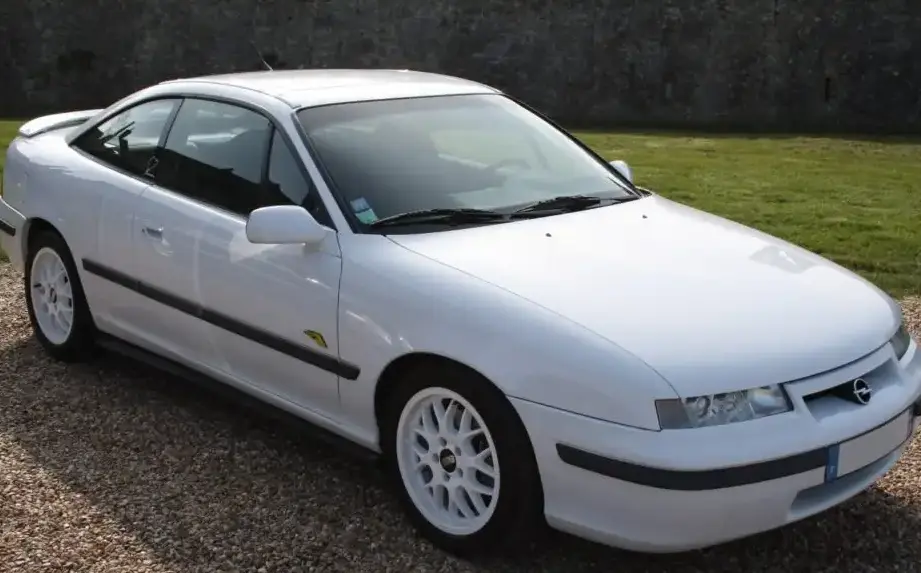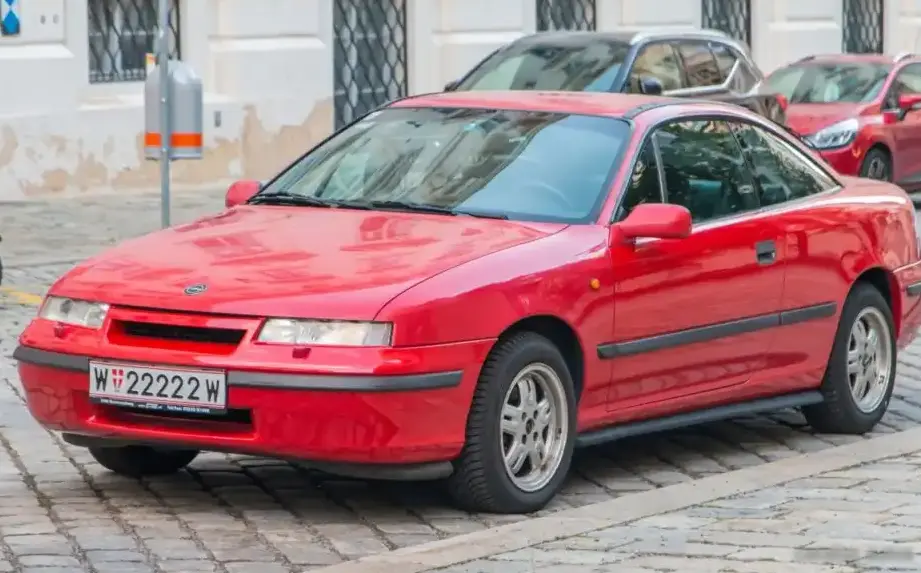
The Opel Calibra 2.0, equipped with a 115 horsepower engine and automatic transmission, was a significant variant within the Calibra range produced between June 1990 and 1994. Positioned as a comfortable and accessible entry point into the Calibra lineup, it offered a blend of coupe styling and convenience, appealing to buyers who prioritized ease of driving over outright performance. The Calibra itself was a groundbreaking vehicle for Opel, representing a departure from traditional designs with its sleek, aerodynamic fastback profile. It was built on the GM410 platform, shared with the Opel Vectra and Cavalier, and aimed to capture a younger, more style-conscious audience.
Technical Specifications
| Brand | Opel |
| Model | Calibra |
| Generation | Calibra |
| Type (Engine) | 2.0 (115 Hp) Automatic |
| Start of production | June, 1990 |
| End of production | 1994 |
| Powertrain Architecture | Internal Combustion engine |
| Body type | Coupe |
| Seats | 4 |
| Doors | 2 |
| Fuel consumption (urban) | 10.5 l/100 km (22.4 US mpg, 26.9 UK mpg, 9.5 km/l) |
| Fuel consumption (extra urban) | 8.7 l/100 km (27 US mpg, 32.5 UK mpg, 11.5 km/l) |
| Fuel consumption (combined) | 9.5 l/100 km (24.8 US mpg, 29.7 UK mpg, 10.5 km/l) |
| Fuel Type | Petrol (Gasoline) |
| Acceleration 0 – 100 km/h | 12 sec |
| Acceleration 0 – 62 mph | 12 sec |
| Acceleration 0 – 60 mph | 11.4 sec |
| Maximum speed | 200 km/h (124.27 mph) |
| Weight-to-power ratio | 10.3 kg/Hp, 96.6 Hp/tonne |
| Weight-to-torque ratio | 7 kg/Nm, 142.9 Nm/tonne |
| Power | 115 Hp @ 5200 rpm |
| Power per litre | 57.6 Hp/l |
| Torque | 170 Nm @ 2600 rpm (125.39 lb.-ft. @ 2600 rpm) |
| Engine layout | Front, Transverse |
| Engine Model/Code | C20NE |
| Engine displacement | 1998 cm3 (121.93 cu. in.) |
| Number of cylinders | 4 |
| Engine configuration | Inline |
| Cylinder Bore | 86 mm (3.39 in.) |
| Piston Stroke | 86 mm (3.39 in.) |
| Compression ratio | 9.2:1 |
| Number of valves per cylinder | 2 |
| Fuel injection system | Multi-port manifold injection |
| Engine aspiration | Naturally aspirated engine |
| Valvetrain | OHC |
| Engine oil capacity | 4 l (4.23 US qt | 3.52 UK qt) |
| Coolant | 7.4 l (7.82 US qt | 6.51 UK qt) |
| Kerb Weight | 1190 kg (2623.5 lbs.) |
| Max. weight | 1610 kg (3549.44 lbs.) |
| Max load | 420 kg (925.94 lbs.) |
| Trunk (boot) space – minimum | 300 l (10.59 cu. ft.) |
| Trunk (boot) space – maximum | 980 l (34.61 cu. ft.) |
| Fuel tank capacity | 63 l (16.64 US gal | 13.86 UK gal) |
| Length | 4492 mm (176.85 in.) |
| Width | 1688 mm (66.46 in.) |
| Height | 1320 mm (51.97 in.) |
| Wheelbase | 2600 mm (102.36 in.) |
| Front track | 1426 mm (56.14 in.) |
| Rear (Back) track | 1446 mm (56.93 in.) |
| Drag coefficient (Cd) | 0.26 |
| Drivetrain Architecture | The Internal combustion engine (ICE) drives the front wheels of the vehicle. |
| Drive wheel | Front wheel drive |
| Number of gears and type of gearbox | 4 gears, automatic transmission |
| Front suspension | Wishbone |
| Rear suspension | Coil spring |
| Front brakes | Ventilated discs |
| Rear brakes | Disc |
| Assisting systems | ABS (Anti-lock braking system) |
| Steering type | Steering rack and pinion |
| Power steering | Hydraulic Steering |
| Tires size | 195/60 R15 |
| Wheel rims size | 15 |
Powertrain & Engine Architecture
The heart of the Calibra 2.0 Automatic was the C20NE engine, an inline four-cylinder, naturally aspirated unit displacing 1998cc. This engine was a mainstay in Opel’s lineup during the early 1990s, known for its relative reliability and straightforward design. It featured a single overhead camshaft (OHC) valvetrain operating two valves per cylinder. Fuel delivery was handled by a multi-port fuel injection system, contributing to improved efficiency and smoother operation compared to earlier carbureted engines. The C20NE produced 115 horsepower at 5200 rpm and 170 Nm (125 lb-ft) of torque at 2600 rpm. Paired with a four-speed automatic transmission, the powertrain prioritized comfortable cruising over sporty acceleration. The automatic transmission was a conventional hydraulic unit, offering smooth shifts but lacking the responsiveness of a manual gearbox.
Driving Characteristics
The Calibra 2.0 Automatic offered a relaxed driving experience. Acceleration from 0 to 60 mph took around 11.4 seconds, and top speed was limited to 124 mph. While not particularly quick, the engine provided adequate power for everyday driving and highway cruising. The automatic transmission, while smooth, did detract from the overall driving engagement. Gear ratios were optimized for fuel economy and comfort, resulting in a noticeable delay during kickdown for overtaking maneuvers. Compared to the manual transmission versions of the Calibra 2.0, the automatic was demonstrably slower. The higher-performance Calibra variants, such as the 16V and Turbo models, offered significantly more exhilarating performance, but at a higher price point.
Equipment & Trim Levels
The Calibra 2.0 Automatic typically came with a reasonable level of standard equipment. This included power steering, central locking, electric front windows, and an adjustable steering column. Interior upholstery was usually cloth, with a relatively simple dashboard layout. Optional extras included a sunroof, alloy wheels, upgraded audio systems, and air conditioning. The trim level often dictated the availability of these options, with higher trims offering more features as standard. The Calibra aimed for a balance between affordability and comfort, making it an attractive option for buyers seeking a stylish coupe without breaking the bank.
Chassis & Braking
The Calibra’s chassis featured independent wishbone suspension at the front and a coil spring setup at the rear. This configuration provided a comfortable ride, although it wasn’t particularly sporty in its handling characteristics. Front brakes were ventilated discs, offering good stopping power, while rear brakes were solid discs. An anti-lock braking system (ABS) was often included as standard equipment, enhancing safety. The Calibra’s relatively lightweight construction (around 2623 lbs) helped to offset the modest power output of the 2.0-liter engine. Stabilizer bars were fitted front and rear to reduce body roll during cornering.
Market Reception & Comparison
The Calibra 2.0 Automatic received mixed reviews from automotive critics. While the styling was universally praised, the performance of the automatic transmission was often criticized as being sluggish. Fuel economy was considered average for the time, around 24.8 US mpg combined. Compared to other coupes in its class, such as the Ford Escort Cosworth or the Toyota Celica, the Calibra 2.0 Automatic offered a more affordable and practical option, but lacked the same level of performance. Within the Calibra range, the 2.0-liter automatic was positioned as the entry-level model, appealing to buyers who prioritized comfort and convenience over outright speed.
Legacy
The Opel Calibra 2.0 Automatic, while not the most powerful or dynamic variant of the Calibra, remains a popular choice among classic car enthusiasts. The C20NE engine is known for its durability and relatively simple maintenance requirements. However, age-related issues such as corrosion and wear on rubber components are common. Today, well-maintained examples of the Calibra 2.0 Automatic can be found on the used car market, offering a nostalgic glimpse into the early 1990s coupe scene. Its enduring appeal lies in its distinctive styling, comfortable ride, and relative affordability.