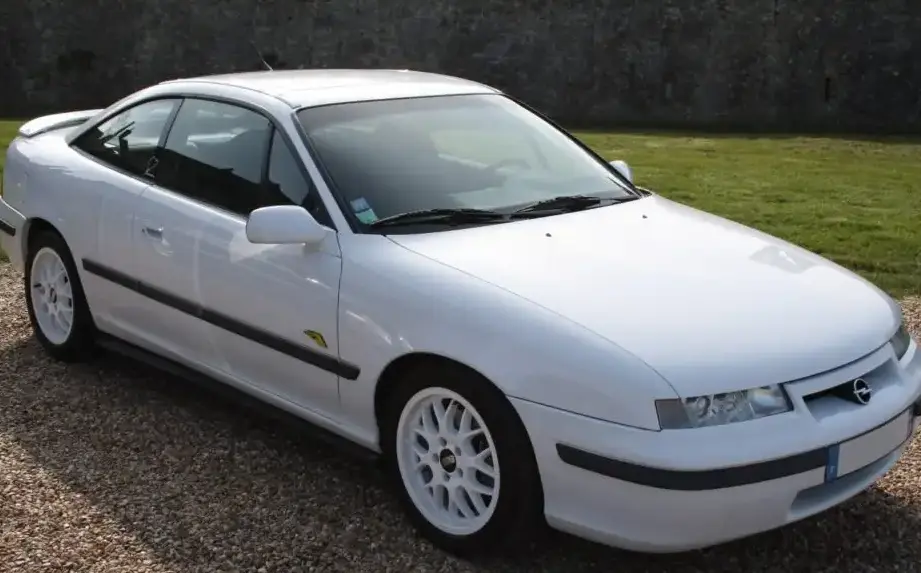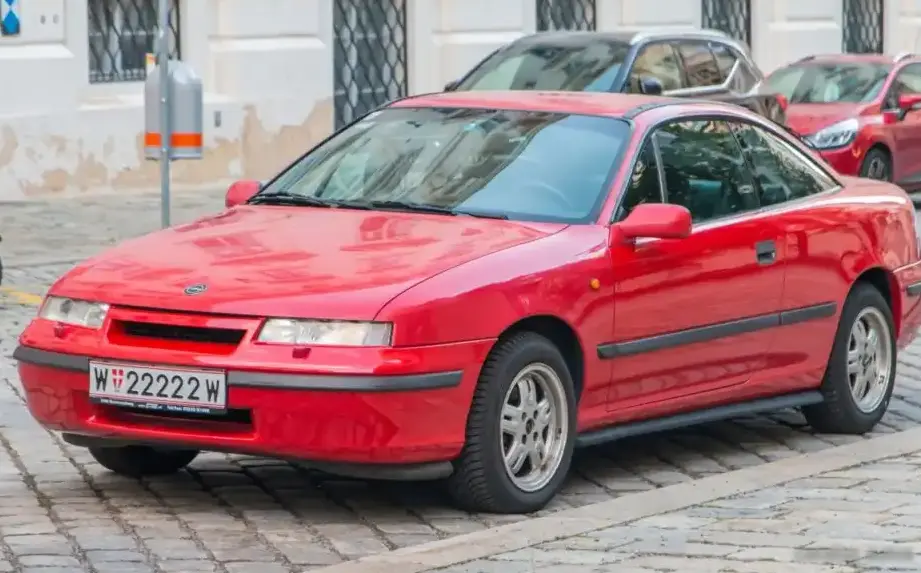
The Opel Calibra 2.0 16V, produced from June 1990 to July 1993, represented a significant offering within the Calibra range. Positioned as a performance-oriented variant, it aimed to deliver a more engaging driving experience than the base models while remaining accessible to a broader customer base. The Calibra itself was a coupe designed to appeal to buyers seeking a stylish and sporty vehicle, and it played a key role in Opel’s efforts to modernize its image during the early 1990s. It was built on the GM410 platform, shared with the Opel Vectra and Cavalier, but distinguished itself with its sleek, aerodynamic fastback design. This particular 2.0 16V model was a popular choice, offering a balance of performance and practicality.
Technical Specifications
| Brand | Opel |
| Model | Calibra |
| Generation | Calibra |
| Type (Engine) | 2.0 16V (150 Hp) |
| Start of production | June, 1990 |
| End of production | July, 1993 |
| Powertrain Architecture | Internal Combustion engine |
| Body type | Coupe |
| Seats | 4 |
| Doors | 2 |
| Fuel consumption (urban) | 11 l/100 km (21.4 US mpg, 25.7 UK mpg, 9.1 km/l) |
| Fuel consumption (extra urban) | 7 l/100 km (33.6 US mpg, 40.4 UK mpg, 14.3 km/l) |
| Fuel consumption (combined) | 9.2 l/100 km (25.6 US mpg, 30.7 UK mpg, 10.9 km/l) |
| CO2 emissions | 300 g/km |
| Fuel Type | Petrol (Gasoline) |
| Acceleration 0 – 100 km/h | 8.5 sec |
| Acceleration 0 – 62 mph | 8.5 sec |
| Acceleration 0 – 60 mph | 8.1 sec |
| Maximum speed | 223 km/h (138.57 mph) |
| Weight-to-power ratio | 8.1 kg/Hp, 123.5 Hp/tonne |
| Weight-to-torque ratio | 6.2 kg/Nm, 161.3 Nm/tonne |
| Power | 150 Hp @ 6000 rpm |
| Power per litre | 75.1 Hp/l |
| Torque | 196 Nm @ 4800 rpm (144.56 lb.-ft. @ 4800 rpm) |
| Engine layout | Front, Transverse |
| Engine Model/Code | C20XE |
| Engine displacement | 1998 cm3 (121.93 cu. in.) |
| Number of cylinders | 4 |
| Engine configuration | Inline |
| Cylinder Bore | 86 mm (3.39 in.) |
| Piston Stroke | 86 mm (3.39 in.) |
| Compression ratio | 10.8:1 |
| Number of valves per cylinder | 4 |
| Fuel injection system | Multi-port manifold injection |
| Engine aspiration | Naturally aspirated engine |
| Valvetrain | DOHC |
| Engine oil capacity | 4.5 l (4.76 US qt | 3.96 UK qt) |
| Coolant | 7.2 l (7.61 US qt | 6.34 UK qt) |
| Kerb Weight | 1215 kg (2678.62 lbs.) |
| Max. weight | 1635 kg (3604.56 lbs.) |
| Max load | 420 kg (925.94 lbs.) |
| Trunk (boot) space – minimum | 300 l (10.59 cu. ft.) |
| Trunk (boot) space – maximum | 980 l (34.61 cu. ft.) |
| Fuel tank capacity | 63 l (16.64 US gal | 13.86 UK gal) |
| Length | 4492 mm (176.85 in.) |
| Width | 1688 mm (66.46 in.) |
| Height | 1320 mm (51.97 in.) |
| Wheelbase | 2600 mm (102.36 in.) |
| Front track | 1426 mm (56.14 in.) |
| Rear (Back) track | 1446 mm (56.93 in.) |
| Ride height (ground clearance) | 140 mm (5.51 in.) |
| Drag coefficient (Cd) | 0.26 |
| Minimum turning circle (turning diameter) | 12 m (39.37 ft.) |
| Drivetrain Architecture | The Internal combustion engine (ICE) drives the front wheels of the vehicle. |
| Drive wheel | Front wheel drive |
| Number of gears and type of gearbox | 5 gears, manual transmission |
| Front suspension | Wishbone |
| Rear suspension | Coil spring |
| Front brakes | Ventilated discs |
| Rear brakes | Disc |
| Assisting systems | ABS (Anti-lock braking system) |
| Steering type | Steering rack and pinion |
| Power steering | Hydraulic Steering |
| Tires size | 195/60 R15 |
| Wheel rims size | 15 |
Powertrain & Engine Architecture
The heart of the Calibra 2.0 16V is the C20XE engine, a 1998cc inline-four cylinder powerplant. This engine is a member of Opel’s ‘E’ family of engines, known for their durability and tuneability. The ‘XE’ designation indicates a dual overhead camshaft (DOHC) configuration with four valves per cylinder, contributing to its relatively high specific output. Fuel delivery is managed by a Bosch Motronic multi-port fuel injection system, optimizing air-fuel mixture for both performance and efficiency. The engine’s 10.8:1 compression ratio further enhances its power output. The engine was transversely mounted, driving the front wheels. The standard transmission was a five-speed manual, although a four-speed automatic was also available, albeit less common. The automatic transmission, while offering convenience, did impact acceleration and fuel economy compared to the manual version.
Driving Characteristics
The Calibra 2.0 16V offered a noticeably more spirited driving experience than the lower-spec models. With 150 horsepower on tap, it could accelerate from 0 to 60 mph in around 8.1 seconds and achieve a top speed of 138.57 mph. While not a sports car in the purest sense, the Calibra 2.0 16V provided ample power for confident overtaking and enjoyable cruising. The five-speed manual transmission allowed drivers to fully exploit the engine’s powerband, while the automatic version, though smoother, felt somewhat less responsive. The suspension, tuned for a balance between comfort and handling, provided a reasonably controlled ride, although it could feel slightly soft in hard cornering. The aerodynamic bodywork contributed to stability at higher speeds.
Equipment & Trim Levels
The Calibra 2.0 16V typically came equipped with features such as power steering, central locking, electric windows, and an upgraded interior trim compared to the base models. Alloy wheels were also standard. Optional extras included a sunroof, air conditioning, and a more sophisticated audio system. Interior upholstery was generally cloth, with leather options available at extra cost. The dashboard layout was functional and driver-focused, with clear instrumentation. The Calibra’s interior, while not luxurious, was well-built and offered a comfortable environment for both driver and passengers.
Chassis & Braking
The Calibra’s chassis featured independent wishbone suspension at the front and a coil spring rear suspension. This setup provided a good balance of ride comfort and handling. Braking duties were handled by ventilated discs at the front and solid discs at the rear. Anti-lock braking system (ABS) was standard, enhancing safety by preventing wheel lockup during hard braking. The Calibra’s steering was a rack-and-pinion system with hydraulic power assistance, providing precise and responsive steering feel.
Market Reception & Comparison
The Calibra 2.0 16V was generally well-received by automotive critics. It was praised for its stylish design, strong performance, and relatively affordable price. Compared to its siblings, such as the 1.8 and 2.0 8V models, the 16V offered a significant performance upgrade. It also provided a more engaging driving experience than the diesel-powered variants. However, some critics noted that the Calibra’s handling could be improved with stiffer suspension components. Fuel economy was reasonable for a performance coupe of its era, but not exceptional.
Legacy
The Opel Calibra 2.0 16V has become a popular classic car among enthusiasts. The C20XE engine is known for its reliability and durability, making it a relatively easy engine to maintain. While some parts may be becoming scarce, a thriving aftermarket exists for Calibra components. Today, well-maintained examples of the Calibra 2.0 16V are sought after by collectors and enthusiasts who appreciate its stylish design and engaging driving experience. The car represents a significant moment in Opel’s history, showcasing the brand’s ability to produce attractive and capable coupes.