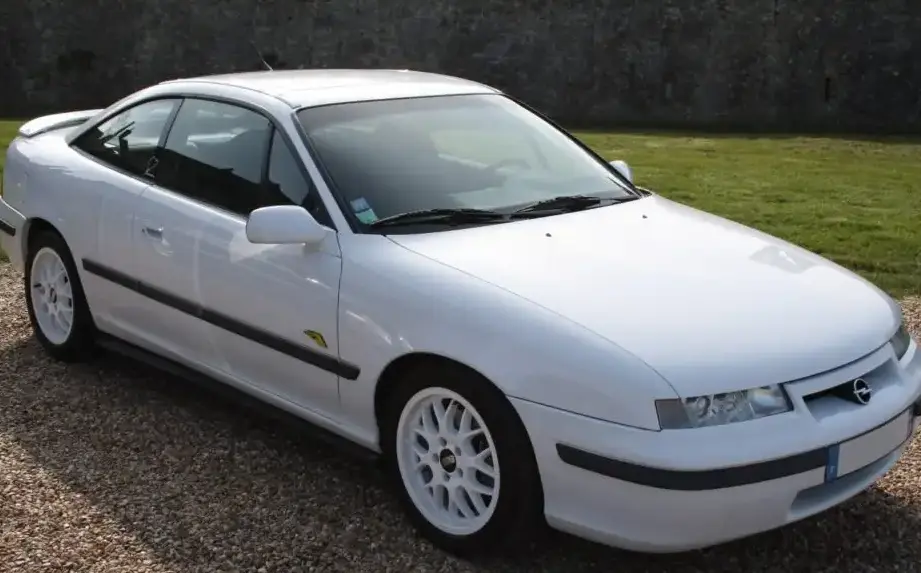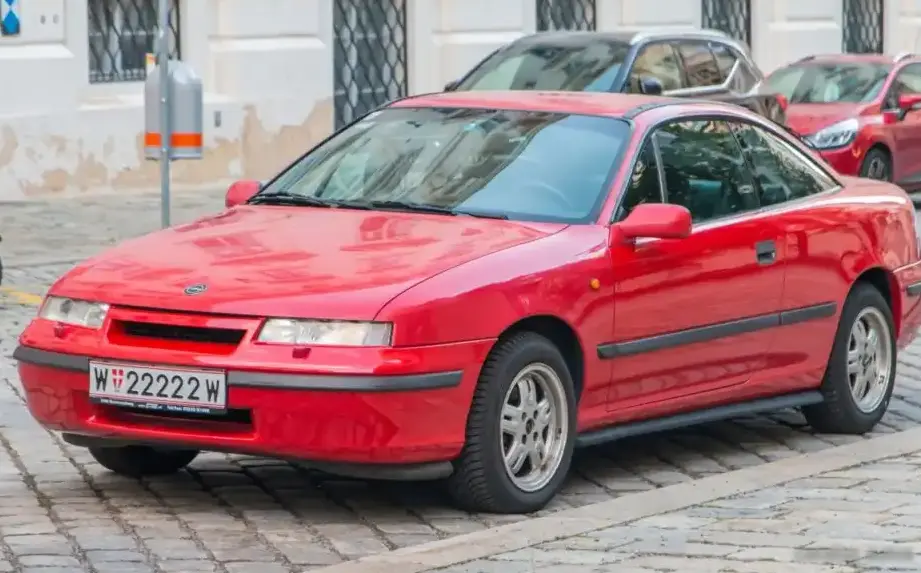
The Opel Calibra 2.0 Turbo 4×4, produced between March 1992 and 1994, represented the performance pinnacle of the Calibra range. Positioned as the flagship model, it combined a potent turbocharged engine with all-wheel drive, offering a compelling blend of speed and handling. The Calibra itself was a coupe based on the GM V60 platform, shared with the Vectra A, and aimed to provide a more stylish and sporty alternative to traditional family saloons. The 2.0 Turbo 4×4 was a relatively short-lived variant, but it cemented the Calibra’s reputation as a capable and desirable performance car, particularly in European markets.
Technical Specifications
| Brand | Opel |
| Model | Calibra |
| Generation | Calibra |
| Type (Engine) | 2.0 Turbo (204 Hp) 4×4 |
| Start of production | March, 1992 |
| End of production | 1994 |
| Powertrain Architecture | Internal Combustion engine |
| Body type | Coupe |
| Seats | 4 |
| Doors | 2 |
| Fuel consumption (urban) | 12.3 l/100 km (19.1 US mpg, 23 UK mpg, 8.1 km/l) |
| Fuel consumption (extra urban) | 6.8 l/100 km (34.6 US mpg, 41.5 UK mpg, 14.7 km/l) |
| Fuel consumption (combined) | 8.5 l/100 km (27.7 US mpg, 33.2 UK mpg, 11.8 km/l) |
| CO2 emissions | 212 g/km |
| Fuel Type | Petrol (Gasoline) |
| Acceleration 0 – 100 km/h | 6.8 sec |
| Acceleration 0 – 62 mph | 6.8 sec |
| Acceleration 0 – 60 mph | 6.5 sec |
| Maximum speed | 245 km/h (152.24 mph) |
| Weight-to-power ratio | 6.3 kg/Hp, 158.8 Hp/tonne |
| Weight-to-torque ratio | 4.6 kg/Nm, 218.7 Nm/tonne |
| Power | 204 Hp @ 5600 rpm |
| Power per litre | 102.1 Hp/l |
| Torque | 281 Nm @ 2400 rpm (207.25 lb.-ft. @ 2400 rpm) |
| Engine layout | Front, Transverse |
| Engine Model/Code | C20LET |
| Engine displacement | 1998 cm3 (121.93 cu. in.) |
| Number of cylinders | 4 |
| Engine configuration | Inline |
| Cylinder Bore | 86 mm (3.39 in.) |
| Piston Stroke | 86 mm (3.39 in.) |
| Compression ratio | 9:1 |
| Number of valves per cylinder | 4 |
| Fuel injection system | Multi-port manifold injection |
| Engine aspiration | Turbocharger |
| Valvetrain | DOHC |
| Engine oil capacity | 4.5 l (4.76 US qt | 3.96 UK qt) |
| Coolant | 7.2 l (7.61 US qt | 6.34 UK qt) |
| Kerb Weight | 1285 kg (2832.94 lbs.) |
| Max. weight | 1705 kg (3758.88 lbs.) |
| Max load | 420 kg (925.94 lbs.) |
| Trunk (boot) space – minimum | 300 l (10.59 cu. ft.) |
| Trunk (boot) space – maximum | 980 l (34.61 cu. ft.) |
| Fuel tank capacity | 63 l (16.64 US gal | 13.86 UK gal) |
| Length | 4492 mm (176.85 in.) |
| Width | 1688 mm (66.46 in.) |
| Height | 1320 mm (51.97 in.) |
| Wheelbase | 2600 mm (102.36 in.) |
| Front track | 1426 mm (56.14 in.) |
| Rear (Back) track | 1446 mm (56.93 in.) |
| Ride height (ground clearance) | 140 mm (5.51 in.) |
| Drag coefficient (Cd) | 0.26 |
| Drive wheel | All wheel drive (4×4) |
| Number of gears and type of gearbox | 6 gears, manual transmission |
| Front suspension | Wishbone |
| Rear suspension | Coil spring |
| Front brakes | Ventilated discs |
| Rear brakes | Disc |
| Assisting systems | ABS (Anti-lock braking system) |
| Steering type | Steering rack and pinion |
| Power steering | Hydraulic Steering |
| Tires size | 205/50 R16 |
| Wheel rims size | 16 |
Powertrain & Engine Architecture
The heart of the Calibra 2.0 Turbo 4×4 is the C20LET engine, a 1998cc inline-four cylinder unit. This engine is a derivative of the Opel/Vauxhall ‘Family II’ engine series, known for its robustness and tuning potential. The ‘LET’ designation signifies a turbocharged, low-emission variant. The engine utilizes multi-port fuel injection and a dual overhead camshaft (DOHC) valvetrain, contributing to its strong power output. A Garrett T25 turbocharger provides forced induction, boosting power to 204 horsepower at 5600 rpm and 281 Nm (207 lb-ft) of torque at 2400 rpm. The engine’s 9:1 compression ratio was a compromise between performance and reliability when used with a turbocharger. The six-speed manual transmission, sourced from Getrag, was the only gearbox option available with this engine, designed to handle the increased torque and provide precise gear changes.
Driving Characteristics
The Calibra 2.0 Turbo 4×4 offered a significantly different driving experience compared to the naturally aspirated versions. The turbocharger delivers a noticeable surge of power, particularly in the mid-range, resulting in strong acceleration. The 0-60 mph sprint was dispatched in around 6.5 seconds, making it a genuinely quick car for its time. The all-wheel drive system provides excellent traction, especially on slippery surfaces, enhancing stability and cornering grip. However, the all-wheel drive system does add weight, and some drivers noted a slight understeer bias. The six-speed gearbox is well-matched to the engine’s powerband, allowing for precise control and efficient cruising. Compared to the lower-powered Calibras, the 2.0 Turbo 4×4 felt considerably more responsive and engaging, offering a more rewarding driving experience.
Equipment & Trim Levels
The 2.0 Turbo 4×4 was typically well-equipped, reflecting its position as the range-topping model. Standard features included central locking, electric windows, power steering, and an anti-lock braking system (ABS). The interior featured sports seats upholstered in a unique cloth or leather trim, and a leather-wrapped steering wheel. Optional extras included a sunroof, upgraded audio system, and air conditioning. The dashboard layout was functional and driver-focused, with clear instrumentation and logically placed controls. The Calibra’s distinctive fastback styling and frameless windows contributed to its sporty and modern appearance.
Chassis & Braking
The Calibra 2.0 Turbo 4×4 utilized a MacPherson strut front suspension and a semi-independent torsion beam rear suspension. The suspension was tuned to provide a balance between comfort and handling, offering a reasonably compliant ride without sacrificing cornering stability. The all-wheel drive system necessitated a more robust rear axle. Braking duties were handled by ventilated discs at the front and solid discs at the rear, providing adequate stopping power. The ABS system helped to maintain control during hard braking. The Calibra’s chassis was relatively lightweight, contributing to its agile handling characteristics.
Market Reception & Comparison
The Calibra 2.0 Turbo 4×4 was generally well-received by automotive critics, who praised its performance, handling, and stylish design. However, some reviewers noted the relatively high price compared to other coupes in its class. Compared to the naturally aspirated Calibras, the 2.0 Turbo 4×4 offered a significant performance upgrade, but at the cost of increased fuel consumption and complexity. The 2.0 Turbo 4×4 was often compared to rivals such as the Ford Escort Cosworth and the Mitsubishi Galant VR-4, offering a similar level of performance and all-wheel drive capability. Fuel economy was reasonable for a performance car of the era, averaging around 27.7 US mpg on the combined cycle.
Legacy
The Opel Calibra 2.0 Turbo 4×4 has become a sought-after classic car, particularly among enthusiasts. The C20LET engine is known for its durability and tuning potential, and many examples have been modified to produce even more power. While the Calibra’s bodywork can be susceptible to rust, well-maintained examples are becoming increasingly rare and valuable. The Calibra 2.0 Turbo 4×4 remains a testament to Opel’s engineering prowess and a reminder of a time when coupes offered a compelling blend of style, performance, and practicality. Today, it’s a popular choice for classic car rallies and shows, and continues to turn heads with its distinctive design and spirited driving experience.