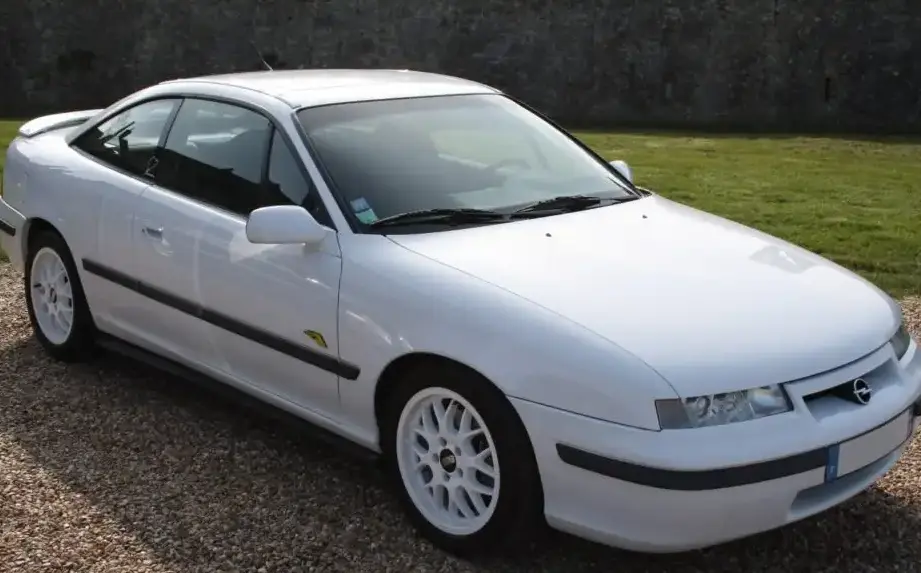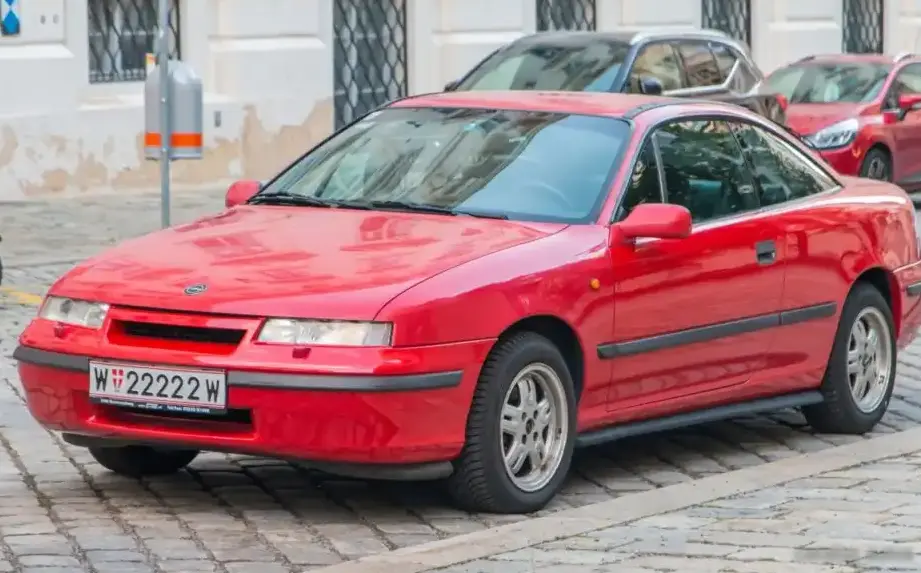
The Opel Calibra 2.5 V6, produced from August 1993 to 1994, represented the performance pinnacle of the Calibra range. Positioned as the flagship model, it offered a significant step up in power and driving experience compared to the more common four-cylinder variants. The Calibra itself was a coupe based on the GM410 platform, shared with the Opel Vectra and Opel Cavalier, and was intended to offer a more sporty and aerodynamic alternative to traditional family cars. The 2.5 V6 model aimed to compete with rivals like the Ford Probe and Mazda MX-6, offering a blend of style, performance, and relatively affordable pricing within the European market.
Technical Specifications
| Brand | Opel |
| Model | Calibra |
| Generation | Calibra |
| Type (Engine) | 2.5 V6 (170 Hp) |
| Start of production | August, 1993 |
| End of production | 1994 |
| Powertrain Architecture | Internal Combustion engine |
| Body type | Coupe |
| Seats | 4 |
| Doors | 2 |
| Fuel consumption (urban) | 14.4 l/100 km (16.3 US mpg, 19.6 UK mpg, 6.9 km/l) |
| Fuel consumption (extra urban) | 7.8 l/100 km (30.2 US mpg, 36.2 UK mpg, 12.8 km/l) |
| Fuel consumption (combined) | 10.2 l/100 km (23.1 US mpg, 27.7 UK mpg, 9.8 km/l) |
| CO2 emissions | 243 g/km |
| Fuel Type | Petrol (Gasoline) |
| Acceleration 0 – 100 km/h | 7.8 sec |
| Acceleration 0 – 62 mph | 7.8 sec |
| Acceleration 0 – 60 mph | 7.4 sec |
| Maximum speed | 237 km/h (147.26 mph) |
| Weight-to-power ratio | 8 kg/Hp, 125.5 Hp/tonne |
| Weight-to-torque ratio | 6 kg/Nm, 166.8 Nm/tonne |
| Power | 170 Hp @ 6000 rpm |
| Power per litre | 68.1 Hp/l |
| Torque | 226 Nm @ 4200 rpm (166.69 lb.-ft. @ 4200 rpm) |
| Engine layout | Front, Transverse |
| Engine Model/Code | C25XE |
| Engine displacement | 2498 cm3 (152.44 cu. in.) |
| Number of cylinders | 6 |
| Engine configuration | V-engine |
| Cylinder Bore | 81.6 mm (3.21 in.) |
| Piston Stroke | 79.6 mm (3.13 in.) |
| Compression ratio | 10.8:1 |
| Number of valves per cylinder | 4 |
| Fuel injection system | Multi-port manifold injection |
| Engine aspiration | Naturally aspirated engine |
| Valvetrain | DOHC |
| Engine oil capacity | 4.5 l (4.76 US qt | 3.96 UK qt) |
| Coolant | 7.5 l (7.93 US qt | 6.6 UK qt) |
| Kerb Weight | 1355 kg (2987.26 lbs.) |
| Max. weight | 1775 kg (3913.21 lbs.) |
| Max load | 420 kg (925.94 lbs.) |
| Trunk (boot) space – minimum | 300 l (10.59 cu. ft.) |
| Trunk (boot) space – maximum | 980 l (34.61 cu. ft.) |
| Fuel tank capacity | 63 l (16.64 US gal | 13.86 UK gal) |
| Length | 4492 mm (176.85 in.) |
| Width | 1688 mm (66.46 in.) |
| Height | 1320 mm (51.97 in.) |
| Wheelbase | 2600 mm (102.36 in.) |
| Front track | 1426 mm (56.14 in.) |
| Rear (Back) track | 1446 mm (56.93 in.) |
| Ride height (ground clearance) | 140 mm (5.51 in.) |
| Drag coefficient (Cd) | 0.26 |
| Minimum turning circle | 12 m (39.37 ft.) |
| Drivetrain Architecture | The Internal combustion engine (ICE) drives the front wheels of the vehicle. |
| Drive wheel | Front wheel drive |
| Number of gears and type of gearbox | 5 gears, manual transmission |
| Front suspension | Wishbone |
| Rear suspension | Coil spring |
| Front brakes | Ventilated discs |
| Rear brakes | Disc |
| Assisting systems | ABS (Anti-lock braking system) |
| Steering type | Steering rack and pinion |
| Power steering | Hydraulic Steering |
| Tires size | 205/55 R15 |
| Wheel rims size | 15 |
Powertrain & Engine Architecture
The heart of the Calibra 2.5 V6 is the C25XE engine, a 2.5-liter, 60-degree V6. This engine was a derivative of the 30° V6 family used in various Opel and Vauxhall models, but with a revised cylinder head design for improved breathing. It featured a cast iron block and aluminum cylinder heads, contributing to a relatively lightweight construction for its displacement. The engine employed multi-port fuel injection and a double overhead camshaft (DOHC) valvetrain, operating four valves per cylinder. This configuration allowed for efficient combustion and a broad powerband. The C25XE produced 170 horsepower at 6,000 rpm and 226 Nm (166.69 lb-ft) of torque at 4,200 rpm. The engine was paired exclusively with a five-speed manual transmission, prioritizing driver engagement and performance. The transverse engine layout, common for front-wheel-drive vehicles, helped to optimize packaging within the Calibra’s chassis.
Driving Characteristics
The Calibra 2.5 V6 offered a noticeably different driving experience compared to the four-cylinder models. The V6 engine provided strong acceleration, achieving 0-60 mph in approximately 7.4 seconds and a top speed of 147 mph. The five-speed manual transmission allowed drivers to fully exploit the engine’s powerband. Gear ratios were well-chosen to provide brisk acceleration in each gear, while still offering comfortable cruising at highway speeds. While the Calibra wasn’t a dedicated sports car, the V6 engine delivered a satisfying amount of power and torque, making it enjoyable to drive on winding roads. The front-wheel-drive configuration, while effective, could exhibit some torque steer under hard acceleration. The suspension, tuned for a balance between comfort and handling, provided a reasonably compliant ride without sacrificing too much stability in corners.
Equipment & Trim Levels
The Calibra 2.5 V6 was generally well-equipped, reflecting its position as the range-topping model. Standard features typically included power windows, central locking, power steering, and an upgraded audio system. Interior upholstery was typically cloth, but leather options were available. The dashboard featured a sporty design with clear instrumentation. Optional extras included air conditioning, a sunroof, and alloy wheels. The Calibra’s interior, while functional, wasn’t particularly luxurious, focusing more on a driver-oriented layout. The distinctive fastback styling of the Calibra was further enhanced by the V6 model’s often-equipped alloy wheels and subtle badging.
Chassis & Braking
The Calibra 2.5 V6 utilized a MacPherson strut front suspension and a coil spring rear suspension. The suspension was tuned to provide a balance between ride comfort and handling. The braking system consisted of ventilated discs on the front wheels and solid discs on the rear wheels. Anti-lock braking system (ABS) was standard, enhancing safety and control during hard braking. The Calibra’s chassis was relatively lightweight, contributing to its agile handling characteristics. The steering was a rack-and-pinion system with hydraulic power assistance, providing precise and responsive steering feel.
Market Reception & Comparison
The Calibra 2.5 V6 was generally well-received by automotive critics, who praised its performance, styling, and value for money. However, some critics noted the front-wheel-drive configuration limited its handling potential compared to rear-wheel-drive rivals. Compared to the Calibra 2.0 16V, the V6 offered significantly more power and torque, but at the expense of slightly higher fuel consumption. The V6 was also more expensive to purchase and maintain. The 1.8L and 2.0L models were aimed at buyers prioritizing fuel economy and affordability, while the 2.5 V6 catered to those seeking a more engaging and powerful driving experience.
Legacy
The Opel Calibra 2.5 V6 remains a popular choice among enthusiasts today. The C25XE engine is known for its reliability and durability, provided it is properly maintained. Parts availability can be a challenge, but a dedicated aftermarket exists to support Calibra owners. The Calibra’s distinctive styling and strong performance have ensured its status as a modern classic. While not as widely celebrated as some other performance coupes of the 1990s, the Calibra 2.5 V6 offers a unique blend of style, performance, and affordability that continues to appeal to car enthusiasts.