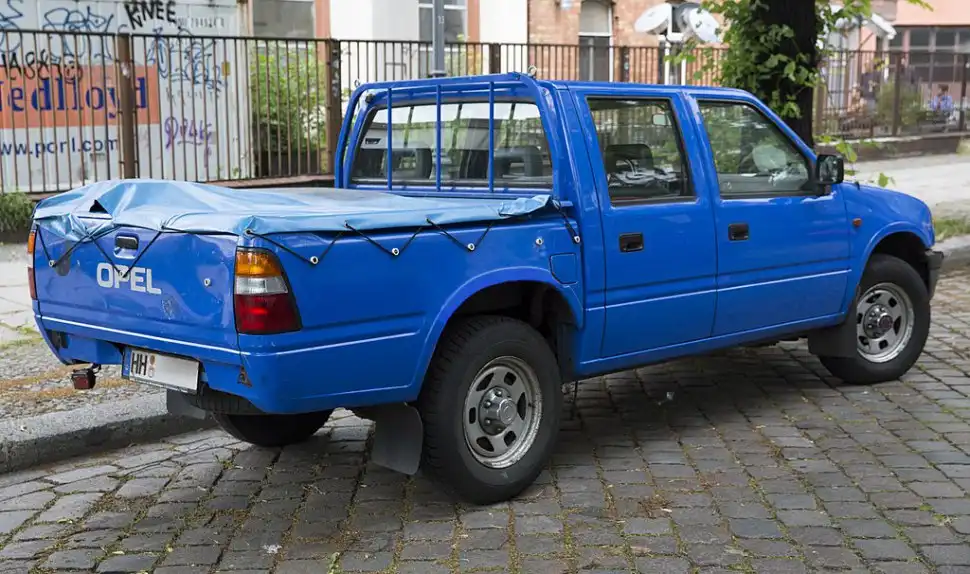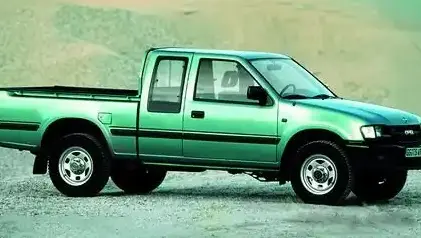
The Opel Campo Half Cab 2.3, produced between 1991 and 1995, represented a utilitarian offering in the European pickup truck market. Positioned as a workhorse vehicle, the Half Cab distinguished itself with a shortened cab design compared to the full cab version, prioritizing bed space over passenger comfort. It was part of the broader Campo range, which itself was based on the Isuzu Faster platform following a collaboration between Opel and Isuzu. The 2.3-liter, 94 horsepower variant occupied the lower end of the Campo lineup, aimed at buyers seeking affordability and basic functionality rather than outright performance.
Technical Specifications
| Brand | Opel |
| Model | Campo |
| Generation | Campo Half Cab |
| Type (Engine) | 2.3 (94 Hp) |
| Start of production | 1991 |
| End of production | 1995 |
| Powertrain Architecture | Internal Combustion engine |
| Body type | Pick-up |
| Seats | 4 |
| Doors | 2 |
| Fuel Type | Petrol (Gasoline) |
| Acceleration 0 – 100 km/h | 23.1 sec |
| Acceleration 0 – 62 mph | 23.1 sec |
| Acceleration 0 – 60 mph | 21.9 sec |
| Maximum speed | 135 km/h (83.89 mph) |
| Power | 94 Hp @ 5000 rpm |
| Power per litre | 41.7 Hp/l |
| Torque | 170 Nm @ 2600 rpm (125.39 lb.-ft. @ 2600 rpm) |
| Engine Model/Code | 4ZD1 |
| Engine displacement | 2255 cm3 (137.61 cu. in.) |
| Number of cylinders | 4 |
| Engine configuration | Inline |
| Cylinder Bore | 89.3 mm (3.52 in.) |
| Piston Stroke | 90 mm (3.54 in.) |
| Number of valves per cylinder | 2 |
| Engine aspiration | Naturally aspirated engine |
| Valvetrain | SOHC |
| Engine oil capacity | 3.5 l (3.7 US qt | 3.08 UK qt) |
| Coolant | 9 l (9.51 US qt | 7.92 UK qt) |
| Length | 4980 mm (196.06 in.) |
| Width | 1690 mm (66.54 in.) |
| Height | 1710 mm (67.32 in.) |
| Wheelbase | 3025 mm (119.09 in.) |
| Drivetrain Architecture | Rear wheel drive |
| Number of gears and type of gearbox | 5 gears, manual transmission |
| Front suspension | Independent coil spring |
| Rear suspension | dependent spring suspension |
| Front brakes | Ventilated discs |
| Rear brakes | Drum |
Powertrain & Engine Architecture
The heart of the Campo Half Cab 2.3 was the 4ZD1 engine, a 2.3-liter inline-four cylinder gasoline engine. This engine, sourced from Isuzu as part of the collaborative agreement, featured a single overhead camshaft (SOHC) valvetrain operating two valves per cylinder. Fuel delivery was managed by a carburetor system, a relatively simple and cost-effective solution for the time, but less efficient and precise than fuel injection. The engine produced 94 horsepower at 5000 rpm and 170 Nm (125.39 lb-ft) of torque at 2600 rpm. The engine’s design prioritized durability and low-end torque over high-revving performance. The standard transmission was a five-speed manual gearbox, chosen for its robustness and suitability for hauling and off-road use. An automatic transmission was not offered with this engine.
Driving Characteristics
The Campo Half Cab 2.3, with its 94 horsepower and relatively low torque output, offered modest performance. Acceleration was slow, taking approximately 23.1 seconds to reach 100 km/h (62 mph). Top speed was limited to around 135 km/h (84 mph). The five-speed manual transmission helped to keep the engine within its optimal power band, but the vehicle felt strained when fully loaded or climbing hills. The gear ratios were geared towards utility, prioritizing hauling power over quick acceleration. Compared to potential higher-output versions (which were not widely available in the European market), the 2.3-liter engine provided a more economical, albeit less exciting, driving experience. The focus was on providing a reliable and capable work vehicle, not a performance machine.
Equipment & Trim Levels
The Campo Half Cab 2.3 was sparsely equipped, reflecting its utilitarian purpose and price point. Standard features typically included a basic dashboard with analog gauges, vinyl upholstery, and a simple two-speaker audio system. Power steering was often an optional extra, as were features like a rear window defogger. The Half Cab’s interior was designed for practicality and ease of cleaning, rather than luxury. Trim levels were minimal, with most variations stemming from optional equipment packages. The emphasis was on providing a functional and durable interior that could withstand the rigors of work-related use.
Chassis & Braking
The Campo Half Cab featured a body-on-frame construction, typical of pickup trucks of the era, providing a robust and durable platform. Front suspension consisted of independent coil springs, offering a reasonable level of ride comfort. The rear suspension utilized a dependent leaf spring setup, designed to handle heavier loads. Braking was accomplished via ventilated discs on the front wheels and drum brakes on the rear. This configuration was common for vehicles in this class at the time, balancing cost and effectiveness. The steering was a recirculating ball system, providing a direct but somewhat unrefined feel.
Market Reception & Comparison
The Opel Campo Half Cab 2.3 was generally well-received as a no-frills, affordable pickup truck. Critics acknowledged its durability and practicality, but noted its lack of refinement and modest performance. Compared to other pickups available in Europe at the time, such as the Toyota Hilux or Nissan Datsun, the Campo offered a competitive price point but lacked the same level of reputation for long-term reliability. The 2.3-liter engine provided reasonable fuel economy for a vehicle of its type, but was less efficient than diesel-powered alternatives. The manual transmission was praised for its robustness, but some drivers found it to be notchy and imprecise.
Legacy
The Opel Campo Half Cab 2.3, while not a groundbreaking vehicle, served as a dependable workhorse for many owners. The 4ZD1 engine, while simple in design, proved to be relatively durable and easy to maintain. Today, surviving examples are relatively rare and are often sought after by enthusiasts looking for a classic, affordable pickup truck. The vehicle’s simplicity makes it relatively easy to repair and maintain, and parts availability, while diminishing, is still reasonable. The Campo Half Cab 2.3 represents a bygone era of utilitarian vehicles, prioritizing functionality and affordability over luxury and performance. Its legacy lies in its honest and dependable nature, making it a fondly remembered vehicle for those who relied on it for work.