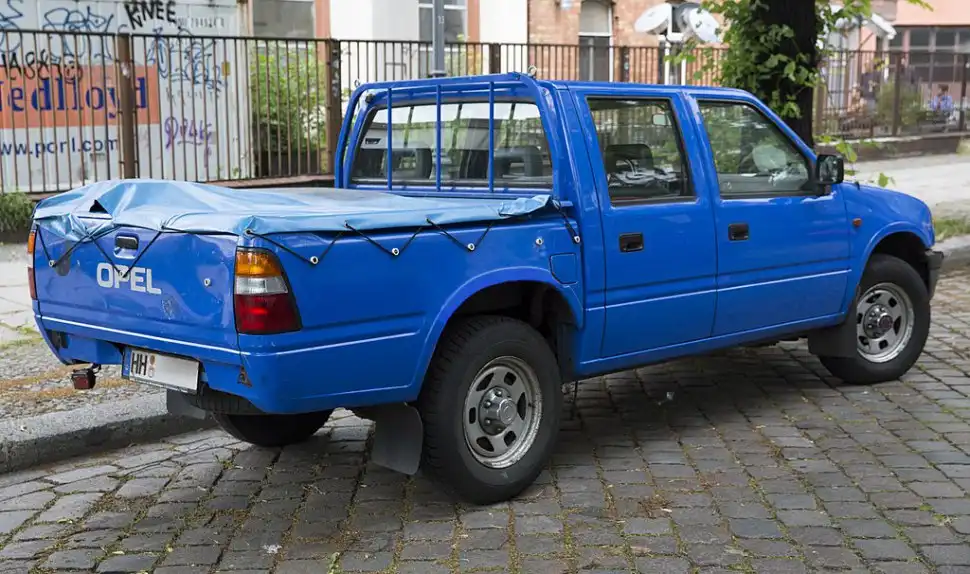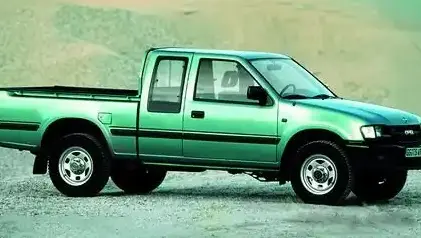
The Opel Campo Half Cab 2.3 (94 hp) Automatic, produced between 1991 and 1995, represented a practical and affordable entry point into the pickup truck market for European buyers. Positioned as a workhorse vehicle, it offered a compromise between the full-sized Campo and the need for a more manageable, economical vehicle. The “Half Cab” designation refers to its extended cab configuration, offering limited seating for passengers behind the driver and front passenger, differentiating it from the standard cab versions. This variant played a role in Opel’s attempt to capture a segment of the light commercial vehicle market, appealing to small business owners, farmers, and those needing a versatile vehicle for both work and personal use.
Technical Specifications
| Brand | Opel |
| Model | Campo |
| Generation | Campo Half Cab |
| Type (Engine) | 2.3 (94 Hp) Automatic |
| Start of production | 1991 |
| End of production | 1995 |
| Powertrain Architecture | Internal Combustion engine |
| Body type | Pick-up |
| Seats | 4 |
| Doors | 2 |
| Fuel Type | Petrol (Gasoline) |
| Acceleration 0 – 100 km/h | 23.1 sec |
| Acceleration 0 – 62 mph | 23.1 sec |
| Acceleration 0 – 60 mph | 21.9 sec |
| Maximum speed | 135 km/h (83.89 mph) |
| Power | 94 Hp @ 5000 rpm |
| Power per litre | 41.7 Hp/l |
| Torque | 170 Nm @ 2600 rpm (125.39 lb.-ft. @ 2600 rpm) |
| Engine Model/Code | 4ZD1 |
| Engine displacement | 2255 cm3 (137.61 cu. in.) |
| Number of cylinders | 4 |
| Engine configuration | Inline |
| Cylinder Bore | 89.3 mm (3.52 in.) |
| Piston Stroke | 90 mm (3.54 in.) |
| Number of valves per cylinder | 2 |
| Engine aspiration | Naturally aspirated engine |
| Valvetrain | SOHC |
| Engine oil capacity | 3.5 l (3.7 US qt | 3.08 UK qt) |
| Coolant | 9 l (9.51 US qt | 7.92 UK qt) |
| Length | 4980 mm (196.06 in.) |
| Width | 1690 mm (66.54 in.) |
| Height | 1710 mm (67.32 in.) |
| Wheelbase | 3025 mm (119.09 in.) |
| Drivetrain Architecture | Rear wheel drive |
| Number of gears and type of gearbox | 4 gears, automatic transmission |
| Front suspension | Independent coil spring |
| Front brakes | Ventilated discs |
Powertrain & Engine Architecture
The Campo Half Cab 2.3 Automatic was powered by the 4ZD1 engine, a 2.3-liter inline four-cylinder gasoline engine. This engine, while not known for its high performance, was chosen for its reliability and relatively low maintenance costs. It featured a single overhead camshaft (SOHC) valvetrain operating two valves per cylinder. Fuel delivery was managed by a throttle body injection system, a relatively simple and robust system common for the era. The 94 horsepower output at 5000 rpm and 170 Nm (125 lb-ft) of torque at 2600 rpm were adequate for typical light-duty tasks, but the engine was noticeably strained when carrying heavy loads or tackling steep inclines. The four-speed automatic transmission, while providing ease of use, further impacted performance, with wider gear ratios prioritizing fuel economy over acceleration. This transmission was a common unit used in various Opel and Isuzu vehicles of the time, known for its durability but not its responsiveness.
Driving Characteristics
The driving experience in the Campo Half Cab 2.3 Automatic was characterized by its utilitarian nature. Acceleration was slow, with 0-60 mph times hovering around 22 seconds. The automatic transmission contributed to this sluggishness, often hunting for the correct gear, especially under load. The gear ratios were optimized for fuel efficiency and low-speed torque, making it suitable for hauling and towing, but less enjoyable for spirited driving. The suspension, while providing a reasonably comfortable ride on smooth surfaces, could feel bouncy and unsettled on rough roads. Steering was relatively vague, typical of trucks of this era. Compared to the manual transmission versions of the Campo, the automatic suffered a noticeable performance penalty, but offered a more convenient driving experience for those prioritizing ease of use over outright speed.
Equipment & Trim Levels
The Campo Half Cab 2.3 Automatic was generally offered with a basic level of equipment, reflecting its positioning as a work-oriented vehicle. Standard features typically included a vinyl interior, basic instrumentation, and a simple AM/FM radio. The “Half Cab” configuration provided limited rear seating, primarily intended for occasional use. Optional extras included upgraded upholstery, power steering, and a more sophisticated audio system. The trim level was relatively consistent across the model range, with few opportunities for significant customization. The focus was on providing a functional and durable vehicle at an affordable price point.
Chassis & Braking
The Campo Half Cab utilized a body-on-frame construction, providing a robust and durable chassis. The front suspension consisted of independent coil springs, offering a degree of ride comfort. The rear suspension employed leaf springs, a common design for pickup trucks, prioritizing load-carrying capacity over refinement. Braking was provided by ventilated discs on the front wheels and drum brakes on the rear. While adequate for normal driving conditions, the braking system lacked the stopping power and modulation of more modern systems. The vehicle’s relatively high center of gravity and basic suspension setup contributed to noticeable body roll during cornering.
Market Reception & Comparison
The Opel Campo Half Cab 2.3 Automatic received mixed reviews from automotive critics. While praised for its practicality and affordability, it was often criticized for its slow performance and basic interior. Compared to other pickup trucks available in Europe at the time, such as the Ford Courier or the Volkswagen Caddy, the Campo offered a larger cargo bed and a more robust chassis, but lacked the refinement and driving dynamics of its competitors. Fuel economy was reasonable for a vehicle of its size and type, but not exceptional. Reliability was generally good, with the 4ZD1 engine proving to be a durable and long-lasting unit. However, the automatic transmission was sometimes prone to issues if not properly maintained.
Legacy
The Opel Campo Half Cab 2.3 Automatic, while not a groundbreaking vehicle, holds a place in automotive history as a practical and affordable workhorse. Today, it is a relatively rare sight on the roads, but a growing number of enthusiasts are recognizing its charm and simplicity. The 4ZD1 engine, when properly maintained, continues to offer reliable service. The automatic transmission, however, can be a potential source of problems for prospective buyers. In the used car market, these vehicles are typically valued for their utilitarian appeal and relatively low purchase price. They represent a simpler era of automotive design, where functionality and durability were prioritized over luxury and performance.